Categories
Blog Microsoft
How Organizations Are Expanding Dynamics 365 Beyond Traditional CRM and ERP
Microsoft

How Organizations Are Expanding Dynamics 365 Beyond Traditional CRM and ERP

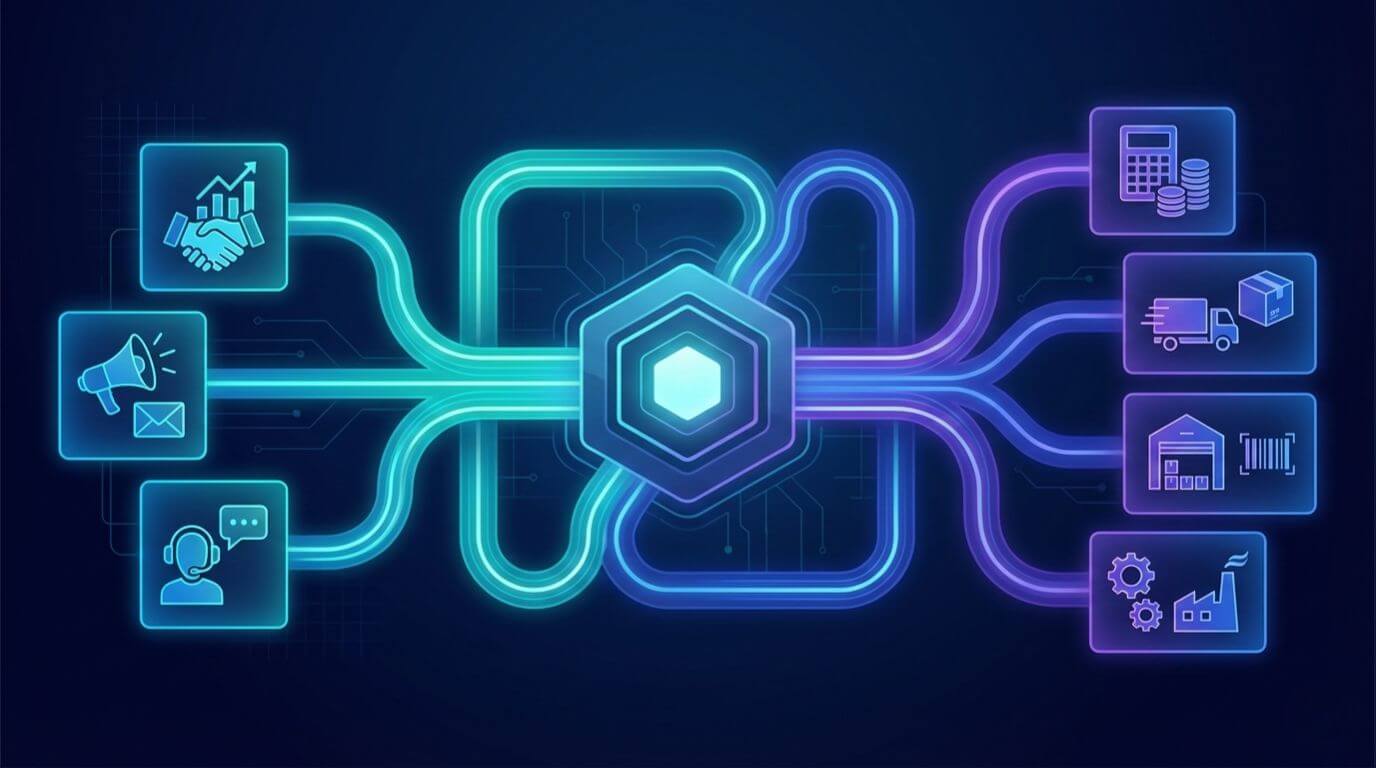
Microsoft Dynamics 365 integrates CRM, ERP, and operations on one platform

GEt in Touch


    Why Traditional CRM and ERP Are No Longer Enough

    The traditional CRM and ERP systems were designed for a different time, when departments worked separately, and data moved slowly between systems. Modern enterprises, however, need real-time visibility, cross-functional collaboration, and predictive insights. Sales teams need operational data to close deals faster, finance teams need customer insights for accurate revenue forecasting, and leadership needs a consolidated view of the entire business. Old CRM and ERP systems cannot provide the integrated levels of agility and intelligence required, resulting in data silos, manual workarounds, and delayed decision-making. As businesses modernise, they often look for platforms that can be customised and scaled by an experienced ERP software development company in India, ensuring the system adapts to regional compliance, industry workflows, and global growth needs.

    Dynamics 365 as a Unified Business Ecosystem

    Microsoft Dynamics 365 is a unified data platform designed to combine CRM, ERP, and operational data on a single cloud foundation, eliminating data silos between sales and finance. Dynamics 365 doesn’t isolate sales, finance, customer service, and operations; instead, it connects them through data models, standard security, and seamless integration with Microsoft’s broader ecosystem. Organisations adopting enterprise-grade Microsoft Dynamics 365 development services leverage a unified data platform in Dynamics 365 to integrate CRM, ERP, analytics, and automation into a single ecosystem that supports end-to-end business operations.
    This allows organisations to shift focus from isolated systems to business outcomes, customer experience, and operational efficiency.

    Breaking Down Silos: CRM, ERP, and Operations on One Platform
    Microsoft Dynamics 365 CRM Beyond Sales Automation

    Dynamics 365 CRM has grown significantly and now offers many more features than just basic sales tracking and lead management. Companies are turning it into end-to-end customer journeys across sales, marketing, and service. Customer data is enhanced with insights into behaviour, interaction history, and AI recommendations, resulting in more personalised engagement.
    To tailor CRM workflows, automate customer journeys, and integrate AI-driven insights, many companies choose to hire Microsoft Dynamics CRM developers who understand both business processes and platform capabilities.
    Customer service departments use CRM to win customers over by resolving their issues before they occur, while marketing departments also benefit from unified customer profiles when running their campaigns, as the campaigns are more precise and thus more effective. The new CRM platform helps shape the customer experience strategy rather than merely supporting sales operations.

    Microsoft Dynamics 365 Finance & Supply Chain Management

    On the ERP front, Dynamics 365 caters to diverse financial management, supply chain, and project-based workflow needs. Organizations now use ERP for more than accounting and procurement, relying on it for deeper operational intelligence. The finance team, for instance, is using real-time data to enhance forecasting and cash flow management, while the operations team utilizes integrated planning tools to optimise logistics, production, and inventory. The ERP becomes a strategic partner in achieving operational excellence rather than just a transaction record-keeping system.
    For advanced operational integrations and cross-functional automation, organisations frequently hire Dynamics 365 developers to extend standard modules and build custom business logic.

    How Dynamics 365 Finance & Supply Chain Management Connects the Business

    Dynamics 365 Finance & Supply Chain Management serves as the primary link between the front and back offices. Financial integration, supply chain, manufacturing, and project operations, together with CRM data, enable organisations to see the entire process from start to finish, ensuring seamless integration. Moreover, this connection allows for predictive planning, quicker responses to market changes, and better synchronisation between customer demand and operational execution. Therefore, companies no longer need to deal with management that only reacts; they can now apply proactive management techniques for optimisation.

    Expanding Dynamics 365 Capabilities with the Power Platform

    Expanding Dynamics 365 Capabilities with the Power Platform in Microsoft Dynamics 365

    Power BI and Dynamics 365 Integration for Decision Intelligence

    The interactive dashboards and detailed analytics are the result of Power BI transforming Dynamics 365 data. The trends in sales performance, financial health, customer behaviour, and operational efficiency are represented by organisations that use Power BI. Integrating CRM and ERP data into a single analytics layer provides business leaders with a complete view. These insights not only support data-driven decision-making, scenario analysis, and performance enhancements but also extend across all levels of the organisation.

    Power Automate with Dynamics 365 for Process Automation

    Power Automate automates tedious, time-consuming tasks across all Dynamics 365 modules within an organisation. The most frequently seen cases include automated approvals, notifications, data sync-ups, and exception handling. Businesses can enhance efficiency and consistency by eliminating human effort and errors while allowing teams to focus on more value-added activities. In addition, the automation ensures that processes expand without hassle as the organisation grows.

    Custom Applications on Dynamics 365 Using Power Apps

    Power Apps empowers the organisation to create bespoke applications using Dynamics 365 data. The applications solve specific business problems that the standard modules may only partially address, such as field service tools, compliance tracking, or internal workflow management. Since Power Apps uses the same data as Dynamics 365, custom applications can easily integrate with existing processes while securing and controlling data.

    AI-Driven Insights in Microsoft Dynamics 365
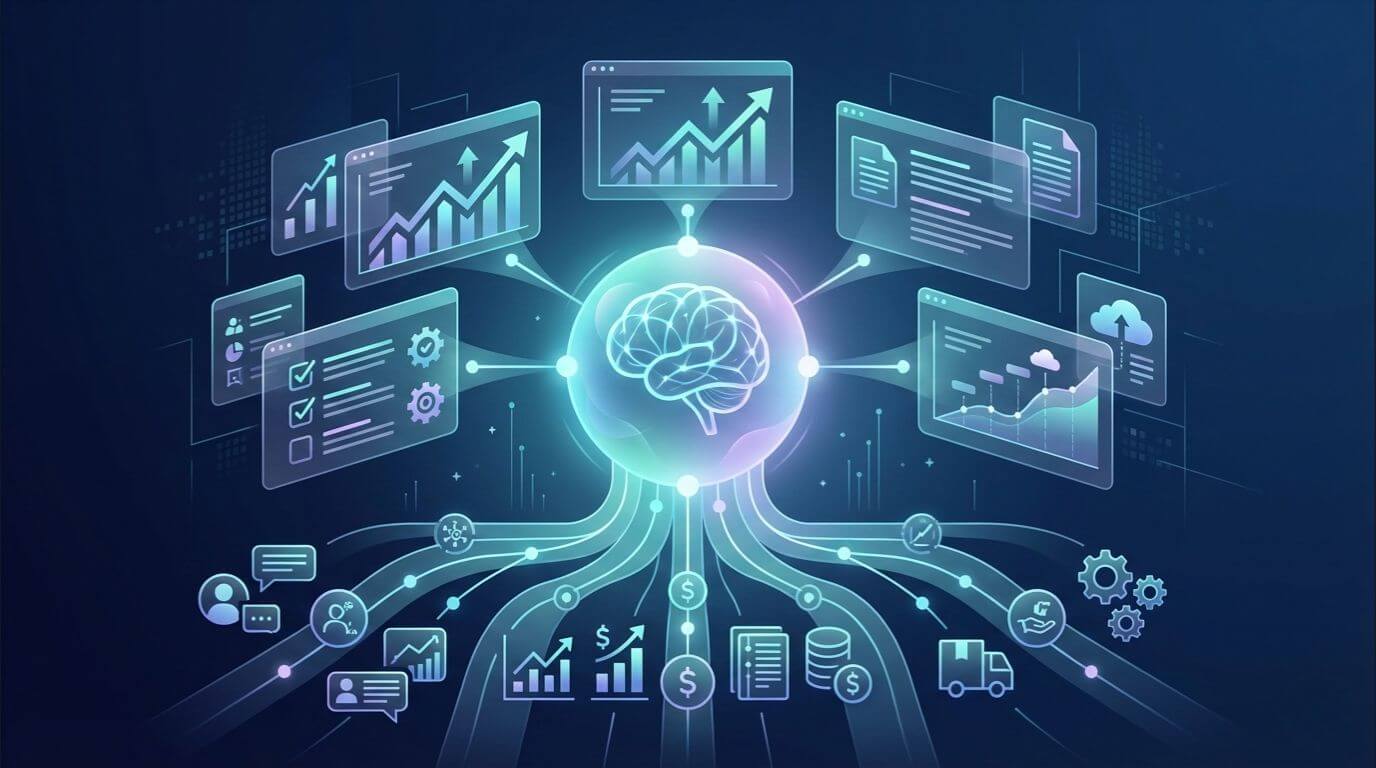
    Dashboard showing AI-driven insights and predictive analytics within the Microsoft Dynamics 365 ecosystem

    Microsoft Copilot in Dynamics 365

    With Microsoft Copilot, generative AI is integrated directly into Dynamics 365 workflows. Users can leverage Microsoft Copilot in Dynamics 365 to automatically generate sales meeting summaries, draft email responses, and visualize supply chain disruptions using natural language queries directly within their daily apps. With Copilot, users will be more productive, as time spent on manual tasks is reduced, allowing them to focus on more important activities. This AI-powered support is changing the way that teams communicate with the enterprise systems.

    AI-Driven Insights Across CRM and ERP Data

    AI in Dynamics 365, by analysing combined datasets from CRM and ERP, provides insights that were previously hard to obtain. Sales predictions are becoming more realistic, customer churn is detected earlier, and supply chain disruptions can be predicted. Organisations can act more quickly and make more informed choices by leveraging real-time intelligence rather than relying solely on historical data.

    Dynamics 365 Governance, Security, and Compliance at Scale

    Governance, security, and compliance framework in Microsoft Dynamics 365

    Dynamics 365 Governance Best Practices

    Effective governance encompasses identifying clear ownership, managing environments, and controlling customisation and automation. Organisations that put in place governance frameworks early can not only avoid technical debt but also ensure long-term scalability. Additionally, governance enables Power Platform extensions to align with corporate standards and the business’s objectives. As organisations scale their Dynamics 365 environments, managing security, regulatory compliance, and data governance becomes critical to protect sensitive information and maintain operational trust.

    Security Standards in Microsoft Dynamics ERP & CRM

    Dynamics 365 is fully compliant with Microsoft’s enterprise-grade security standards, including role-based access control, data encryption, and adherence to global regulations. The organisations receive a centralised identity management system and consistent application of security rules across CRM, ERP, and custom applications. The adoption of this unified security model simplifies risk management and compliance efforts.

    From ERP Platform to Business Intelligence Engine

    When fully leveraged, Dynamics 365 transforms from a typical ERP platform into a comprehensive business intelligence system. Organisations that combine transactional data, analytics, automation, and AI gain endless insights into performance and opportunities. This step is what company leaders can rely on to guide strategy.

    Real-World Use Cases: How Organisations Expand Dynamics 365
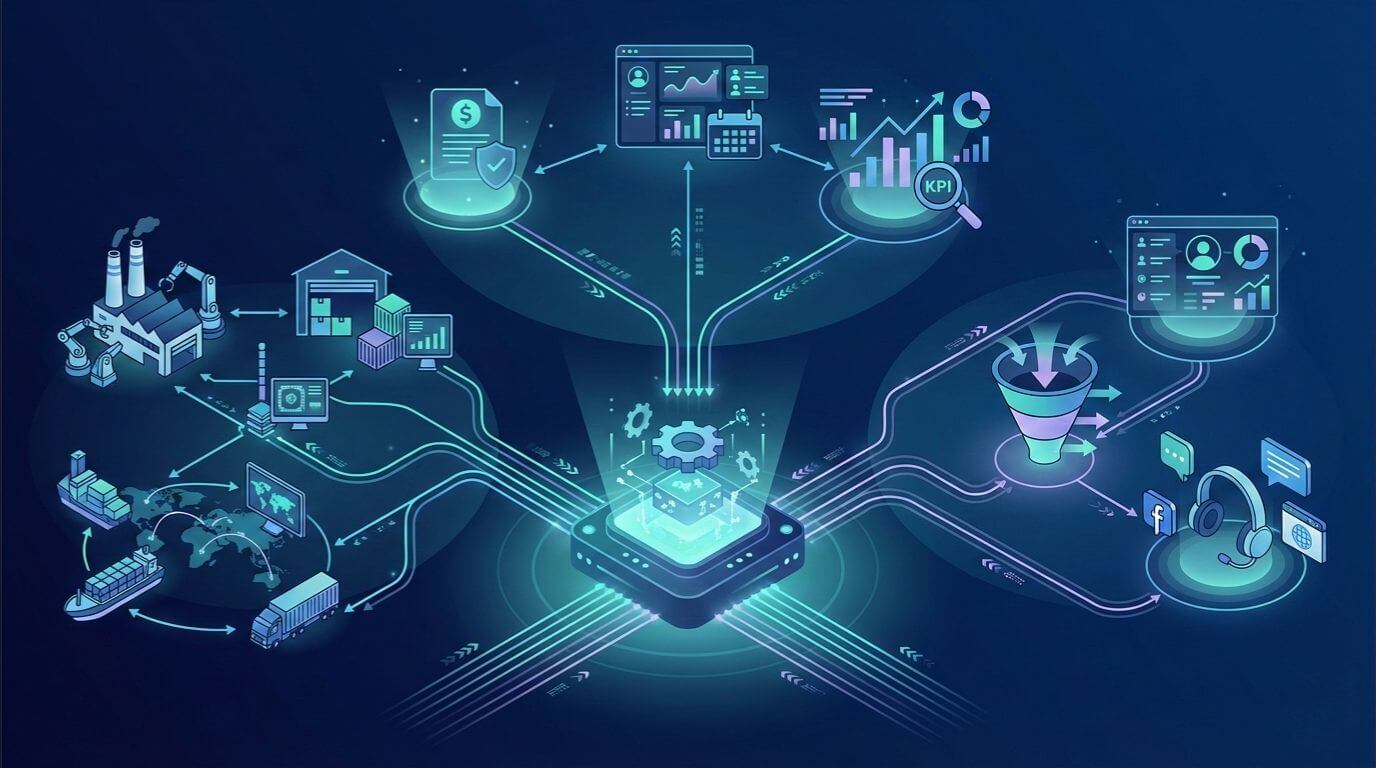
    Real-world business use cases of Microsoft Dynamics 365 across industries

    Manufacturing & Supply Chain

    In manufacturing and supply chains, companies are opting for Dynamics 365 to synchronise demand forecasting, production planning, and inventory management with customer data. The result is that deliveries are on time, waste is kept at a minimum, and customer happiness is at its peak.

    Professional Services & Finance

    Professional services and finance management companies use Dynamics 365 to integrate assignments, billing, resource allocation, and financial performance into a single platform. This results in better profitability analysis and improved client delivery outcomes.

    Sales, Marketing & Customer Experience

    Dynamics 365 is a tool used by sales, marketing, and customer experience teams to develop personalised, data-driven engagement strategies. By integrating customer interactions across channels, companies can deliver consistent experiences while improving conversion and retention rates.

    Common Mistakes Organisations Make with Dynamics 365

    An error often made is treating Dynamics 365 as a mere system swap rather than a total transformation. The companies that do not integrate their business strategy with the platform’s capabilities are the ones that mostly fail to realise its potential. Lack of governance is another problem that causes unregulated customisations and automation. The successful expansion of Dynamics 365 requires a clear plan, stakeholder alignment, and ongoing optimisation. Many challenges with Dynamics 365 arise when updates, upgrades, and ongoing maintenance are overlooked, leading to performance gaps, compatibility issues, and security risks over time.

    Conclusion

    Microsoft Dynamics 365 has become a compelling platform that has removed the limitations of traditional CRM and ERP. The companies that take the whole ecosystem of Microsoft products, including CRM, ERP, Power Platform, and AI, along with the Analytics, will experience a tremendous increase in their productivity, intelligence, and scalability.
    Many organisations today partner with a reliable software development company in India to support complex implementations, integrations, and ongoing improvements across their Dynamics 365 environments.
    Shaligram Infotech works with global businesses to design and evolve Microsoft Dynamics 365 solutions that align technology with real operational goals.
    By treating Dynamics 365 as a business platform rather than a collection of applications, companies can make smarter decisions, provide better customer service, and achieve sustainable growth.

    Ready to build? Contact our global teams:

    🇺🇸 USA: +1 (919) 629-9671
    🇬🇧 UK: +44 20 3581 6366
    🇮🇳 India: +91 99099 84567
    🇦🇺 AUS: +61 07 3121 3147

    💬 Interested in Regular Insights on Microsoft Dynamics 365?

    📲 Follow Shaligram Infotech on LinkedIn
    Let’s build the future of applications together.

    FAQs

    What is Microsoft Dynamics 365 beyond traditional CRM and ERP?

    Dynamics 365 is a single business platform that unifies CRM, ERP, analytics, automation, and AI to power entire processes and decisions. If you’re looking to extend Dynamics 365 beyond basic CRM or ERP use cases, working with an experienced implementation partner can help you tailor it to your specific workflows and growth goals.
    It connects customer, financial, and operational data in real-time across applications using a standard data model and cloud infrastructure.
    AI provides future-like insights, suggestions, and automated tasks through shared intelligence and tools such as Microsoft Copilot.
    Power BI turns Dynamics 365 data into actionable insights, enabling better forecasting, performance assessment, and strategic decision-making.
    It encompasses CRM, ERP, Power Platform, AI capabilities, and Microsoft tools integrations such as Azure and Microsoft 365.
    Real-time data, in-depth analytics, and AI-driven insights combine to form a very effective support system for faster, wiser, and more informed decision-making throughout the entire organisation.