
How Businesses Modernise Legacy Systems Without Interrupting Daily Operations
GEt in Touch
Technology is at the heart of how modern businesses operate, compete, and serve customers. Yet a significant proportion of organisations continue to run on legacy systems that were built for a different era. According to industry research, over 70% of enterprise IT environments still contain applications that are more than a decade old, and the cost of maintaining them continues to rise year on year.
The challenge for most businesses is not whether to modernise, but how to do so without bringing operations to a halt. Extended downtime, failed data migrations, and integration failures are among the most common reasons legacy modernisation projects lose momentum or are abandoned altogether. Businesses that succeed are those that treat modernisation as a structured, phased process rather than a single large-scale overhaul.
Thinking carefully about tech upgrades before committing to a full modernisation programme is essential. This guide covers the strategies, approaches, and best practices that allow organisations to modernise legacy systems confidently, without disrupting the daily operations that depend on them.
Why Legacy Systems Hold Back Business Growth
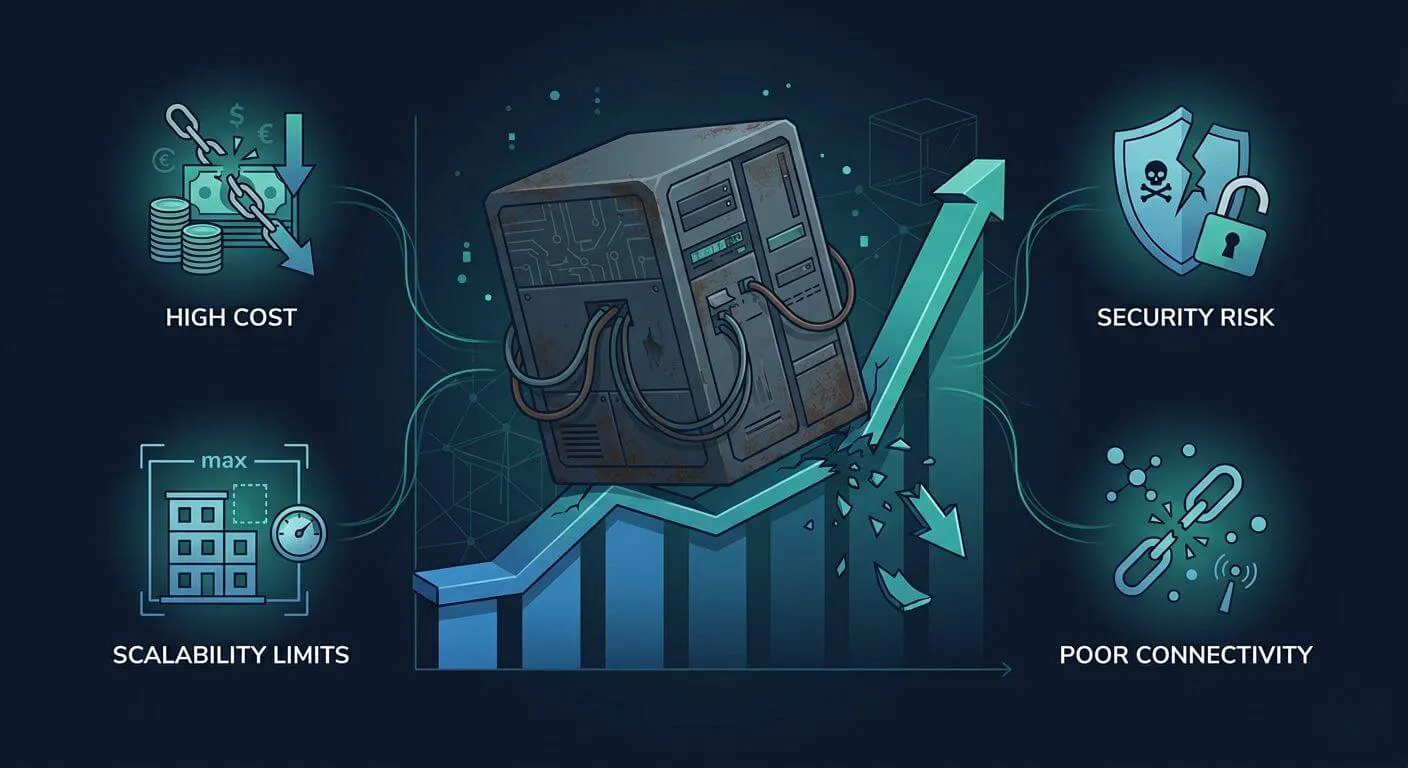
Legacy systems create friction at every level of an organisation. The longer they remain in place, the more they compound the problems they create.
- High maintenance costs. Specialist knowledge and ageing infrastructure drive up support and upkeep expenses considerably.
- Limited scalability. Older platforms cannot accommodate the demands of modern workloads or rapid business growth.
- Security risks. Unpatched, unsupported systems are prime targets for cyberattacks and data breaches.
- Poor integration capabilities. Legacy applications frequently fail to connect with modern tools, platforms, or APIs, creating costly silos.
Each of these constraints directly limits a business’s ability to innovate, respond to market changes, and deliver a quality experience to customers and employees alike.
What Is Legacy System Modernisation?
Legacy Application Modernisation Explained
Legacy application modernisation refers to the process of updating, re-engineering, or replacing older software systems to improve their performance, usability, and long-term viability. This can involve migrating applications to the cloud, redesigning underlying architecture, replacing outdated components, or rebuilding systems from the ground up where necessary.
The goal is not simply to upgrade technology for its own sake. It is to ensure that the systems supporting your business are fit for purpose, capable of integrating with modern platforms, and able to scale as your organisation grows.
Partnering with a specialist legacy software modernisation company ensures that the modernisation process is planned and executed in a way that minimises risk and delivers measurable business value.
Enterprise System Modernisation vs IT Modernisation
These two terms are often used interchangeably, but they refer to distinct scopes of work.
Enterprise system modernisation focuses specifically on the core business systems that underpin day-to-day operations, such as ERP, CRM, and supply chain management platforms. These systems are deeply embedded in business processes, making modernisation particularly complex and consequential.
IT modernisation is a broader term that encompasses the upgrade of the wider technology environment, including infrastructure, networking equipment, servers, and the general IT estate. It supports enterprise modernisation but extends well beyond individual business applications.
Role of Digital Transformation in Modernisation
Legacy modernisation and digital transformation are closely intertwined. Modernising your systems is frequently both a precondition for and a component of a wider digital transformation programme. Understanding how Dynamics 365 supports digital transformation is one example of how modernising a specific enterprise platform can accelerate broader organisational change.
A well-executed modernisation programme ensures that upgraded systems align with strategic business objectives, improve the customer experience, and support data-driven decision making across the organisation.
Key Challenges in Legacy System Transformation
Risk of Downtime and Business Disruption
The most cited concern among organisations considering legacy modernisation is the risk of operational disruption. For businesses where systems run continuously, even a brief period of unplanned downtime can damage customer confidence, reduce productivity, and result in direct revenue loss.
This is why the most successful modernisation programmes are built around continuity from the start, with phased rollouts, parallel running environments, and robust rollback plans as standard components of the migration approach.
Data Migration Complexity
Moving large volumes of data from legacy systems to modern platforms is one of the most technically demanding aspects of any modernisation project. Data accumulated over years or decades is often inconsistent, poorly documented, or stored in formats that are incompatible with target systems.
Understanding the cost factors of software migrations before starting is essential. Maintaining data integrity, consistency, and security throughout the migration process requires careful planning, thorough validation at each stage, and specialist expertise in data transformation and cleansing.
Integration with Modern Systems
Legacy systems were frequently built in isolation, without consideration for how they might connect to external platforms or future technology. This creates significant integration complexity when businesses attempt to connect legacy applications with modern software, cloud services, or third-party APIs.
Bridging this gap requires a thoughtful integration strategy that may involve building adaptor layers, implementing API gateways, or using middleware to enable communication between old and new systems while minimising disruption to live operations.
How to Modernise Legacy Systems Without Disrupting Operations
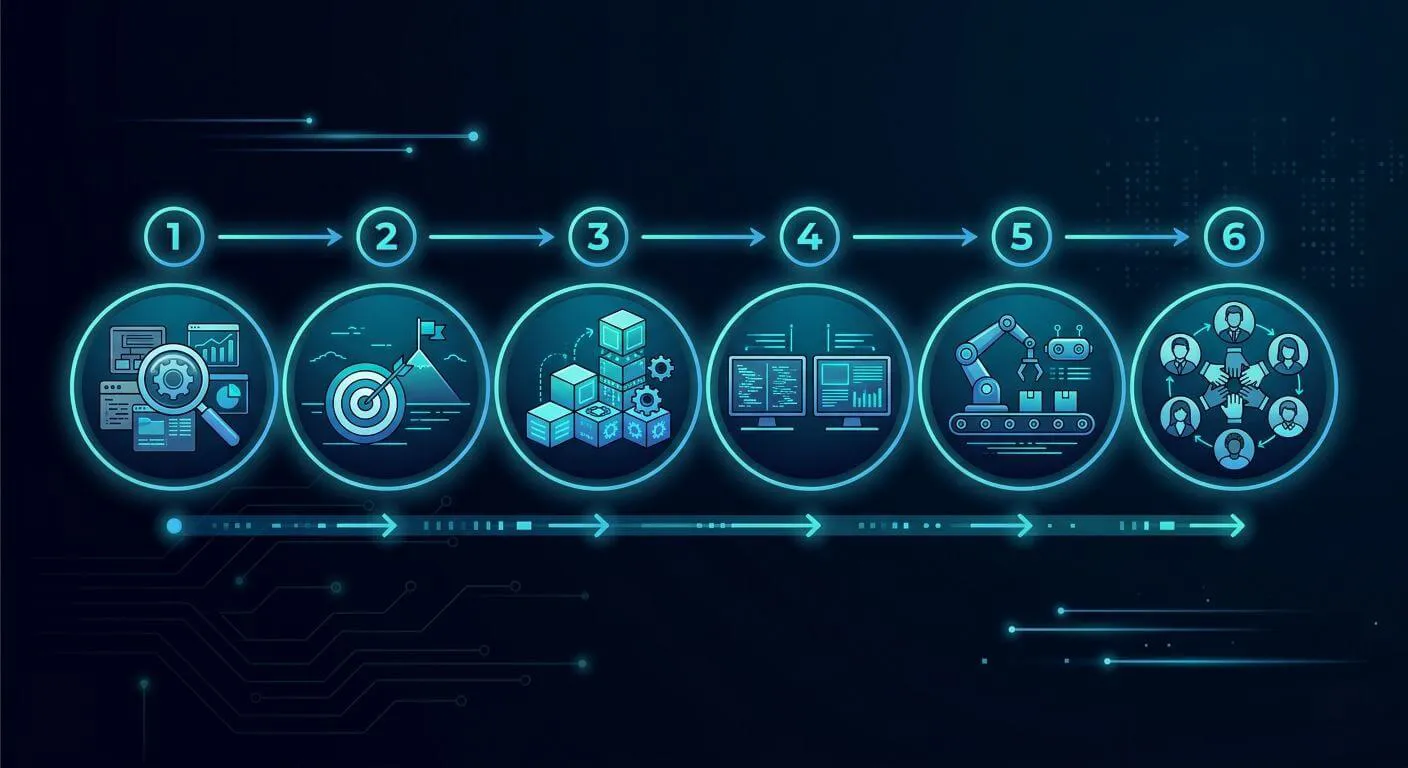
A structured, methodical approach is the foundation of any successful modernisation programme. Organisations that try to modernise everything at once almost always encounter problems. Those that follow a clear, phased methodology are significantly more likely to succeed.
- Evaluate current systems. Conduct a thorough audit of your existing applications. Map dependencies, identify critical business functions, document known limitations, and flag systems with the highest risk or cost burden.
- Set clear modernisation goals. Define what success looks like before any technical work begins. Objectives might include improved scalability, reduced maintenance costs, better security posture, or faster time-to-market for new features.
- Implement incrementally. Break the modernisation programme into smaller, manageable phases rather than attempting a large-scale change all at once. Tackle lower-risk systems first to build confidence and establish proven processes.
- Utilise parallel environments. Run both the legacy and modernised systems simultaneously during transition periods. This provides a safety net, allows validation of the new system under real conditions, and makes it possible to revert quickly if issues arise.
- Employ automation tools. Automate testing, deployment pipelines, and monitoring processes to reduce manual errors, increase release velocity, and maintain visibility over system behaviour throughout the migration.
- Align stakeholders. Keep business leaders, IT teams, and end users informed and engaged throughout the program. Resistance to change is one of the most common reasons modernisation initiatives stall: early and sustained communication makes adoption significantly smoother.
Legacy System Migration Strategy for Zero Downtime
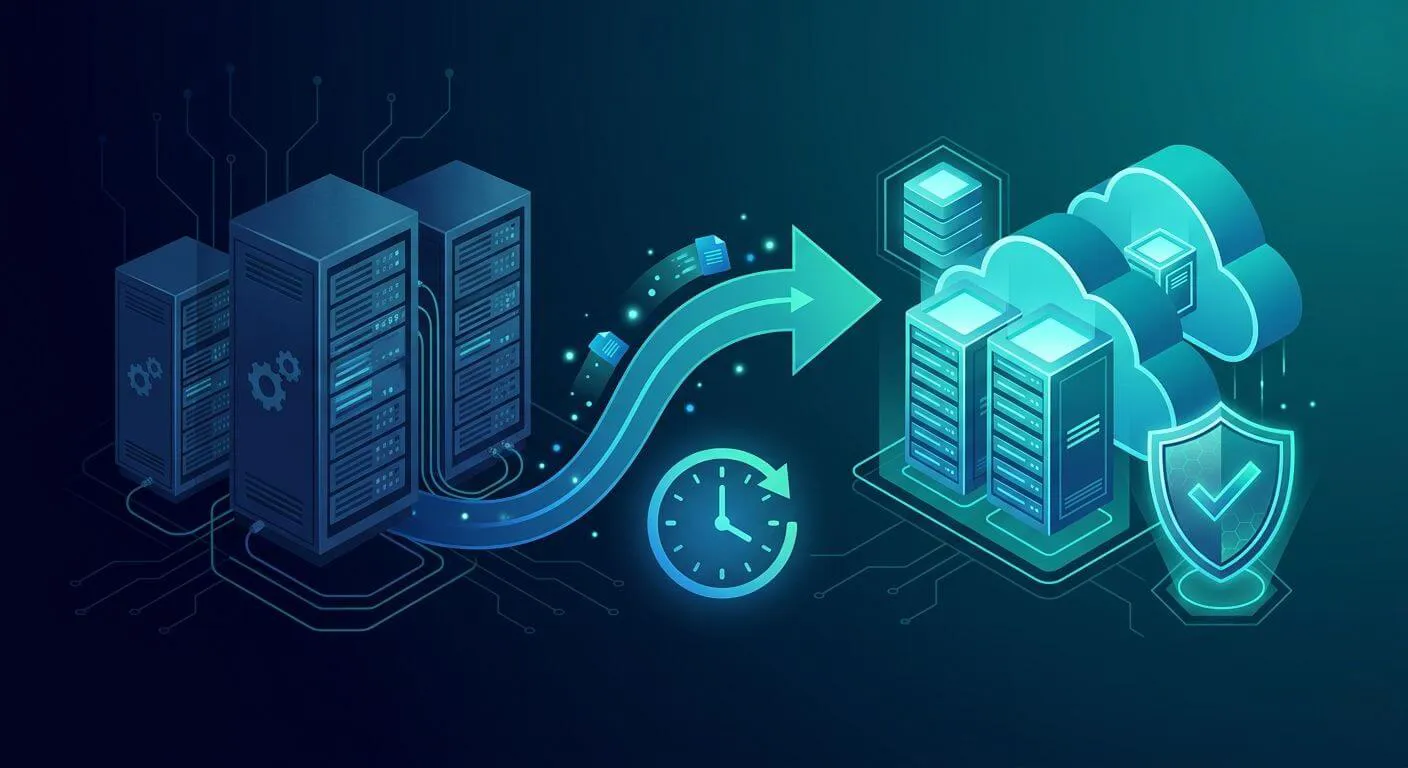
For organisations that must maintain continuous availability, a zero-downtime migration strategy is not optional; it is a fundamental requirement. This means designing the migration approach from the outset to ensure that service is maintained without interruption, even as significant changes are being made to underlying systems.
Effective zero-downtime migration strategies typically incorporate the following:
- Blue-green deployments, where two identical production environments are maintained and traffic is switched between them, allowing the new environment to be validated before the old one is decommissioned.
- Continuous data replication, ensuring that both the legacy and target systems remain synchronised throughout the migration period.
- Incremental workload migration, moving workloads across in stages rather than in a single cutover event, reducing the blast radius of any issues that arise.
- Robust rollback capabilities, so that if an unforeseen problem occurs in the new environment, the business can revert to the legacy system quickly and without data loss.
This approach is closely aligned with how smooth business operations with Dynamics 365 Business Process Automation are maintained during system transitions within Microsoft environments.
Application Modernisation Approaches Businesses Use
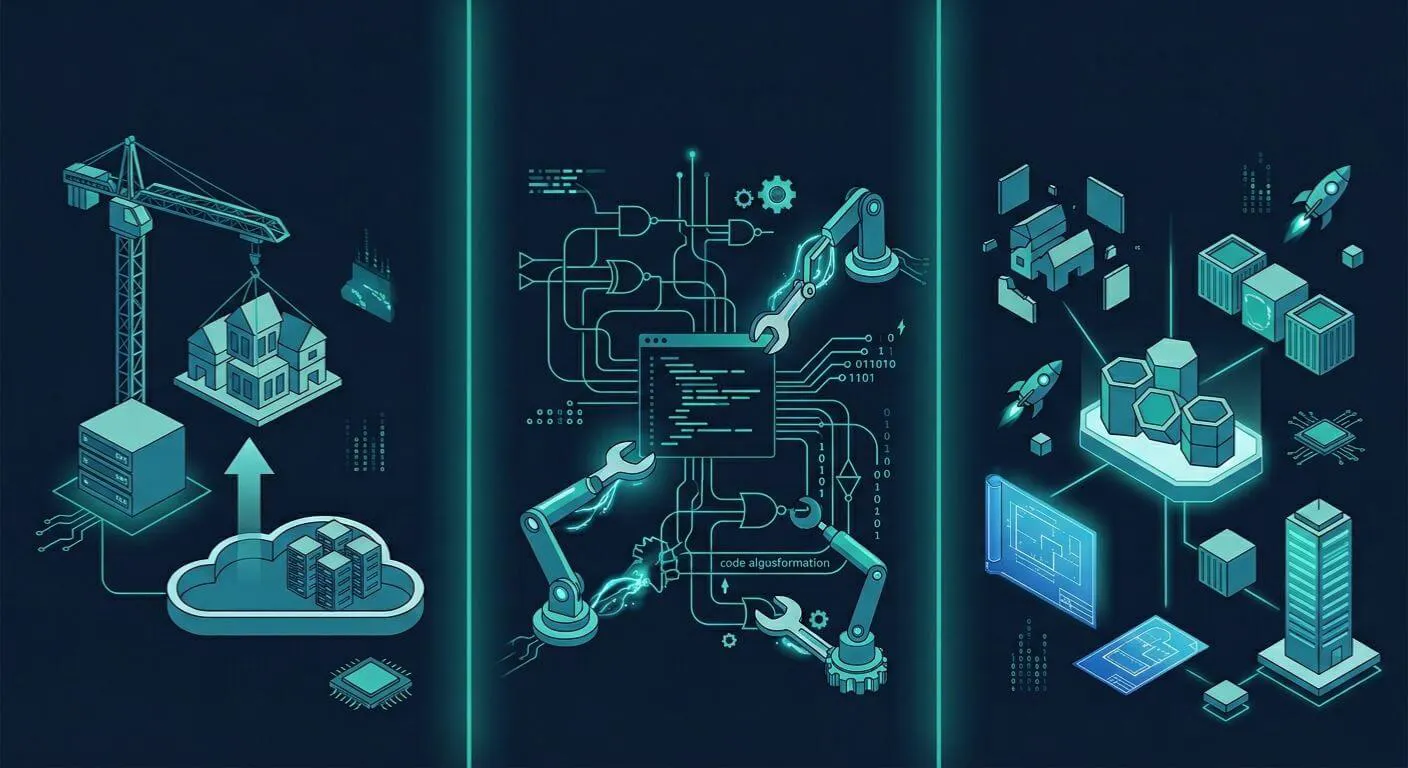
There is no single right way to modernise a legacy system. The most appropriate approach depends on the age and condition of the system, the degree of transformation required, available budget and timeline, and the long-term architectural direction of the business.
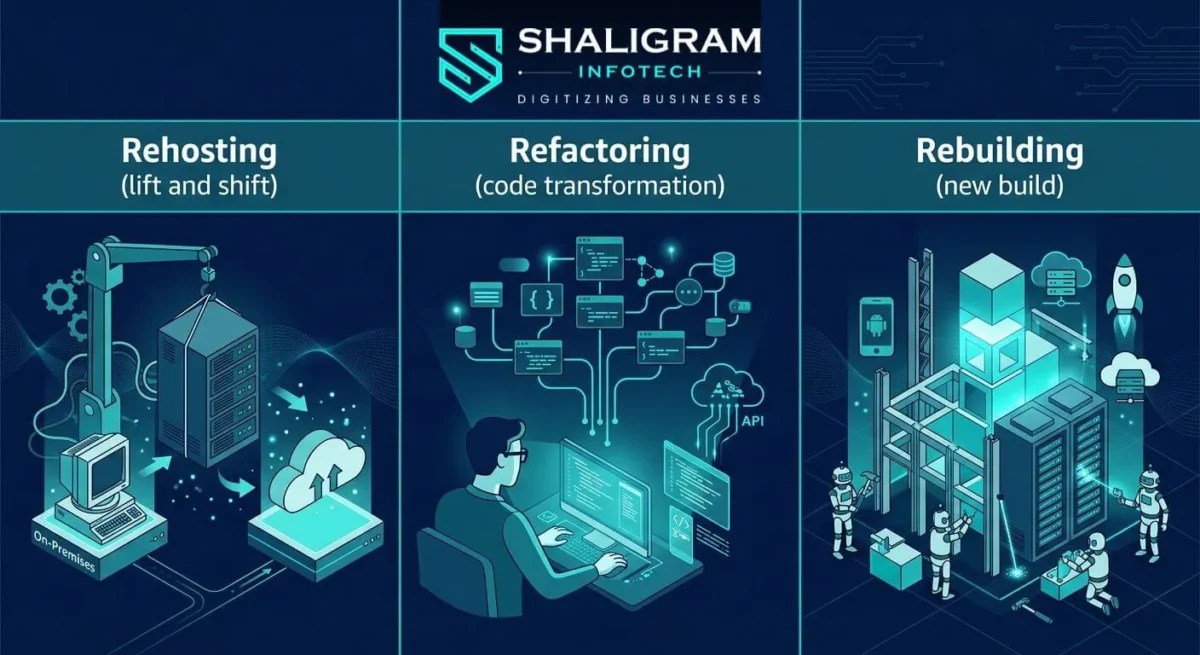
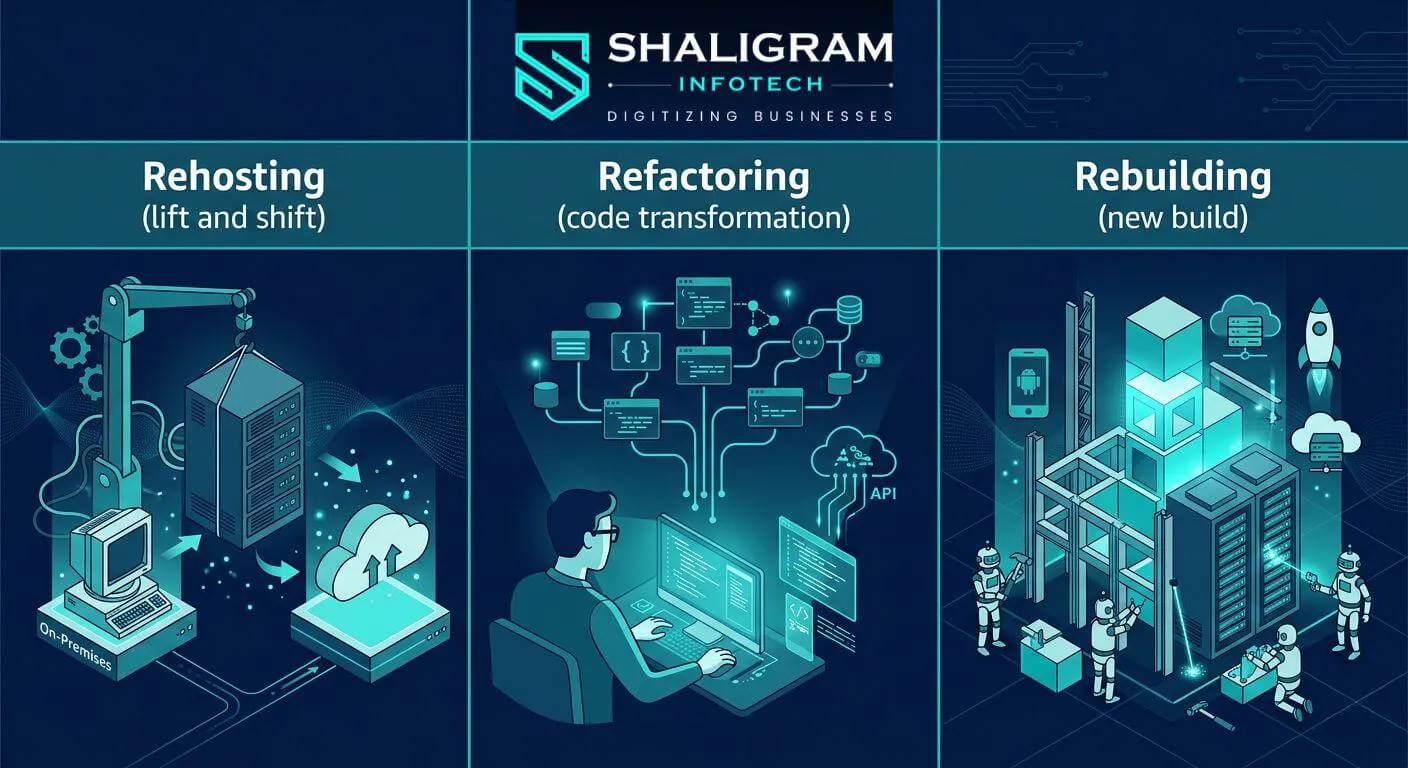
Rehosting (Lift and Shift)
Rehosting involves migrating an application from on-premises infrastructure to the cloud with minimal changes to the application itself. The core code and architecture remain largely intact; only the hosting environment changes.
Key benefits of rehosting include:
- Fast implementation with relatively low complexity
- Lower upfront costs compared to more transformative approaches
- Minimal disruption to existing processes and workflows
The trade-off is that rehosting does not take full advantage of cloud-native capabilities such as auto-scaling, managed services, or microservices architecture. It is best suited to systems that need to be moved quickly or where deeper transformation will follow in a subsequent phase.
Refactoring and Re-architecting
Refactoring involves modifying the application’s code or architecture to improve performance, scalability, and compatibility with cloud platforms, without changing its core functionality. Re-architecting goes further, restructuring the application to take advantage of cloud-native patterns such as containers, microservices, and serverless computing.
Key benefits include:
- Significantly improved performance and flexibility
- Full access to cloud-native capabilities and managed services
- Greater return on investment over the medium to long term
This approach requires more time and technical expertise than rehosting, but delivers substantially more value for systems that are central to business operations.
Rebuilding or Replacing Systems
In some cases, the most appropriate course of action is to retire the legacy system entirely and replace it with a purpose-built modern solution. This is typically the right choice when the existing system is too constrained to be meaningfully improved, when the codebase is insufficiently documented to be safely refactored, or when a better-fit commercial solution now exists in the market.
For example, businesses managing complex financial or operational workflows may benefit from working with a specialist ERP software development company in India to replace a legacy ERP with a modern, integrated platform. A notable example of this in practice is NAV to Business Central migration, where organisations replace ageing Microsoft Dynamics NAV deployments with the modern Business Central platform.
Key benefits of rebuilding include:
- Complete elimination of legacy constraints and technical debt
- Access to modern features, integrations, and architecture
- Full alignment with current and future business requirements
This approach is the most resource-intensive but typically delivers the most significant long-term benefit.
Role of Digital Transformation Framework in Modernisation
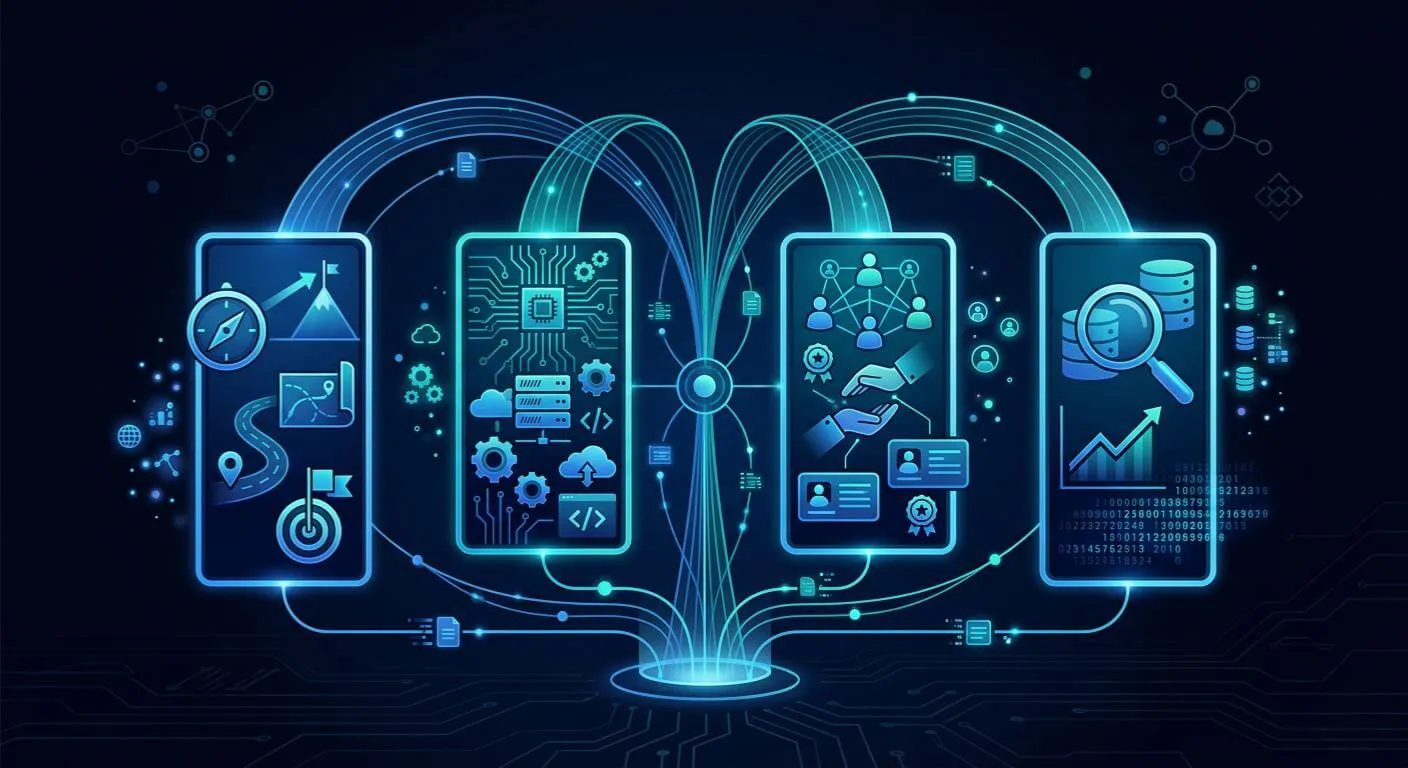
Modernising individual systems in isolation, without a broader strategic framework, frequently produces inconsistent results. A structured digital transformation framework provides the planning scaffolding that ensures each modernisation initiative supports the organisation’s wider goals rather than creating new silos.
The key benefits of using a structured framework include:
- A clear implementation roadmap that sequences initiatives in the right order
- Improved risk management through defined governance and escalation processes
- Better cross-functional collaboration between IT, operations, and business leadership
- Faster adoption of modern technologies, because the organisation is prepared structurally and culturally to absorb change
Without this framework, modernisation efforts tend to be reactive and fragmented, addressing immediate pain points without building towards a coherent, future-ready architecture.
Improving Operational Efficiency Through System Modernisation
One of the most tangible and immediate benefits of legacy modernisation is a measurable improvement in operational efficiency. Outdated systems are typically slow, manually intensive, and prone to errors that consume significant staff time and resources to manage.
When those systems are modernised and integrated with current platforms, organisations typically experience:
- Faster data processing and reduced time required for decision making
- Improved system reliability and uptime, reducing unplanned interruptions to operations
- A better user experience for both employees and customers interacting with digital services
- Reduced operational and maintenance costs as manual workarounds are eliminated
Businesses that replace outdated processes with automated, integrated systems see productivity and agility gains that compound over time. Modernisation is not simply a technical exercise; it is a direct enabler of operational performance.
Enterprise System Modernisation Best Practices
Successful enterprise modernisation programmes consistently follow a set of proven practices. Organisations that take shortcuts in these areas tend to experience delays, cost overruns, and disruption that could have been avoided.
- Prioritise business-critical systems. Focus initial modernisation efforts on the systems most central to customer experience and operational continuity. Starting with lower-risk peripheral systems builds capability and confidence before tackling the core.
- Use a hybrid modernisation approach. Maintain a mix of legacy and modern systems during the transition period to minimise risk. Forcing a hard cutover before the new system is fully validated is one of the most common causes of modernisation failures.
- Invest in skilled resources. Legacy modernisation requires a combination of domain knowledge, cloud architecture expertise, and hands-on development capability. Engaging a specialist software development company in India provides access to experienced teams at a cost structure that makes large programmes commercially viable.
- Build security and compliance into every stage. Security cannot be retrofitted after the fact. Compliance requirements, data protection obligations, and security controls must be defined and implemented throughout the modernisation process.
Test and validate continuously. Regular, automated testing throughout each phase of the programme keeps systems stable, catches issues before they reach production, and provides the evidence base needed to move forward with confidence.
Common Mistakes in Legacy Application Migration
Understanding where modernisation programmes commonly fail is as valuable as knowing what best practice looks like. The most frequently encountered and avoidable mistakes include:
- Attempting to modernise the entire estate simultaneously rather than in carefully sequenced phases
- Neglecting data quality and migration planning until the technical build is already underway
- Underestimating the complexity of integrating legacy applications with modern systems and platforms
- Starting technical work without a clearly defined strategy, roadmap, or governance structure
- Conducting insufficient testing before deploying changes to production environments
Each of these mistakes significantly increases programme risk and cost. Awareness of them at the planning stage is the most effective way to avoid them.
Future-Ready IT Modernisation Strategy
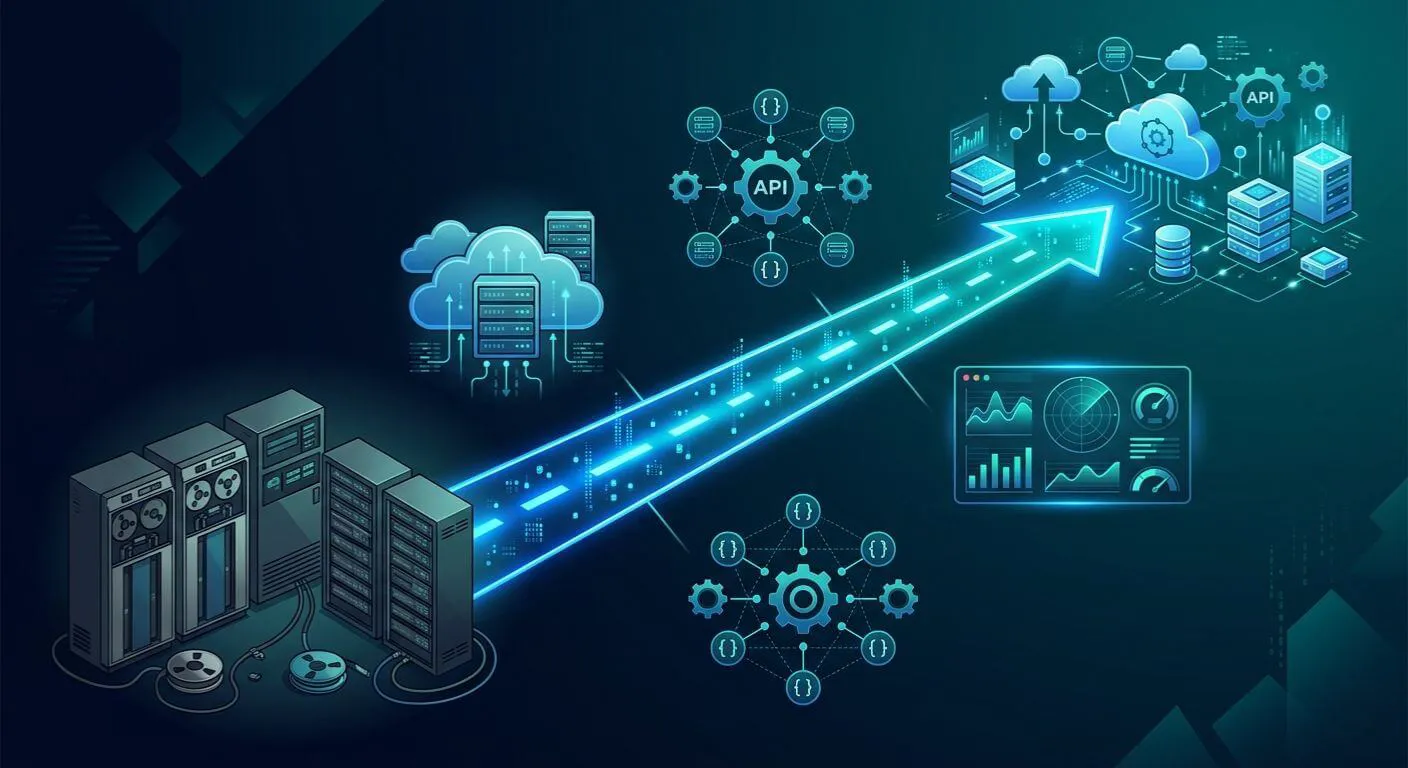
A modernisation programme that addresses today’s constraints without building towards a future-ready architecture is only solving half the problem. Organisations that invest in the right strategic foundations now will be better positioned to adopt emerging technologies and respond to change as it comes.
Cloud-First Approach
Adopting a cloud-first mindset means evaluating cloud-hosted solutions before considering on-premises alternatives for any new or modernised workload. Cloud platforms offer flexibility, elastic scalability, and cost efficiency that on-premises infrastructure cannot match. They also support remote and distributed working models, which have become a permanent feature of enterprise operations.
A cloud-first strategy does not mean moving everything to the cloud immediately. It means ensuring that architecture decisions are made with cloud compatibility and portability in mind, so that future migrations are straightforward rather than complex.
API-Driven Architecture
APIs are the connective tissue of modern software architecture. An API-driven approach enables legacy applications to communicate with modern platforms, third-party services, and other systems without requiring a complete rebuild of the underlying application. This is particularly valuable during transitional periods, when legacy and modern systems must coexist and share data.
Building versioned, well-documented APIs from the outset of a modernisation programme creates a reusable integration layer that supports both current requirements and future expansion.
Continuous Monitoring and Optimisation
A modernised system that is not monitored will degrade over time. Implementing continuous monitoring from day one of any modernisation programme provides real-time visibility into system performance, error rates, and user behaviour. This data informs ongoing optimisation decisions and enables teams to identify and resolve issues before they affect users.
Continuous monitoring also supports compliance reporting, capacity planning, and the evidence base needed to make the case for further modernisation investment.
Conclusion
Staying competitive in today’s digital environment means ensuring that the technology underpinning your business is fit for purpose, secure, and capable of scaling with growth. For most organisations, that journey begins with modernising legacy systems that have long since become a liability rather than an asset.
At Shaligram Infotech, our team of experienced engineers and modernisation specialists works with businesses to plan and execute legacy system transformations that protect operational continuity at every stage. Whether you are rehosting applications to the cloud, re-architecting a core enterprise system, or replacing an end-of-life platform entirely, we bring the technical depth and delivery experience to do it right. Get in touch with our Legacy Software Modernisation Services team to discuss what a structured modernisation programme could look like for your business.
Ready to build? Contact Our Global Teams
🇺🇸 USA: +1 (919) 629-9671
🇬🇧 UK: +44 20 3581 6366
🇮🇳 India: +91 99099 84567
🇦🇺 AUS: +61 07 3121 3147

💬 Interested in Regular Insights on Microsoft Dynamics 365?
📲 Follow Shaligram Infotech on LinkedIn
Let’s build the future of applications together.
FAQs
What are the key steps in the application modernisation process?
What are the key steps in the application modernisation process?
The application modernisation process typically begins with a thorough assessment of existing systems to understand their current state, dependencies, and limitations. From there, organisations define their modernisation objectives, prioritise which systems to address first, build a phased migration roadmap, allocate the necessary technical and financial resources, and execute the programme in stages with continuous testing and validation at each phase.
 Get In Touch