Categories
Blog Software Development
How to Choose Between Custom Software and Off-the-Shelf Solutions
Software

How to Choose Between Custom Software and Off-the-Shelf Solutions
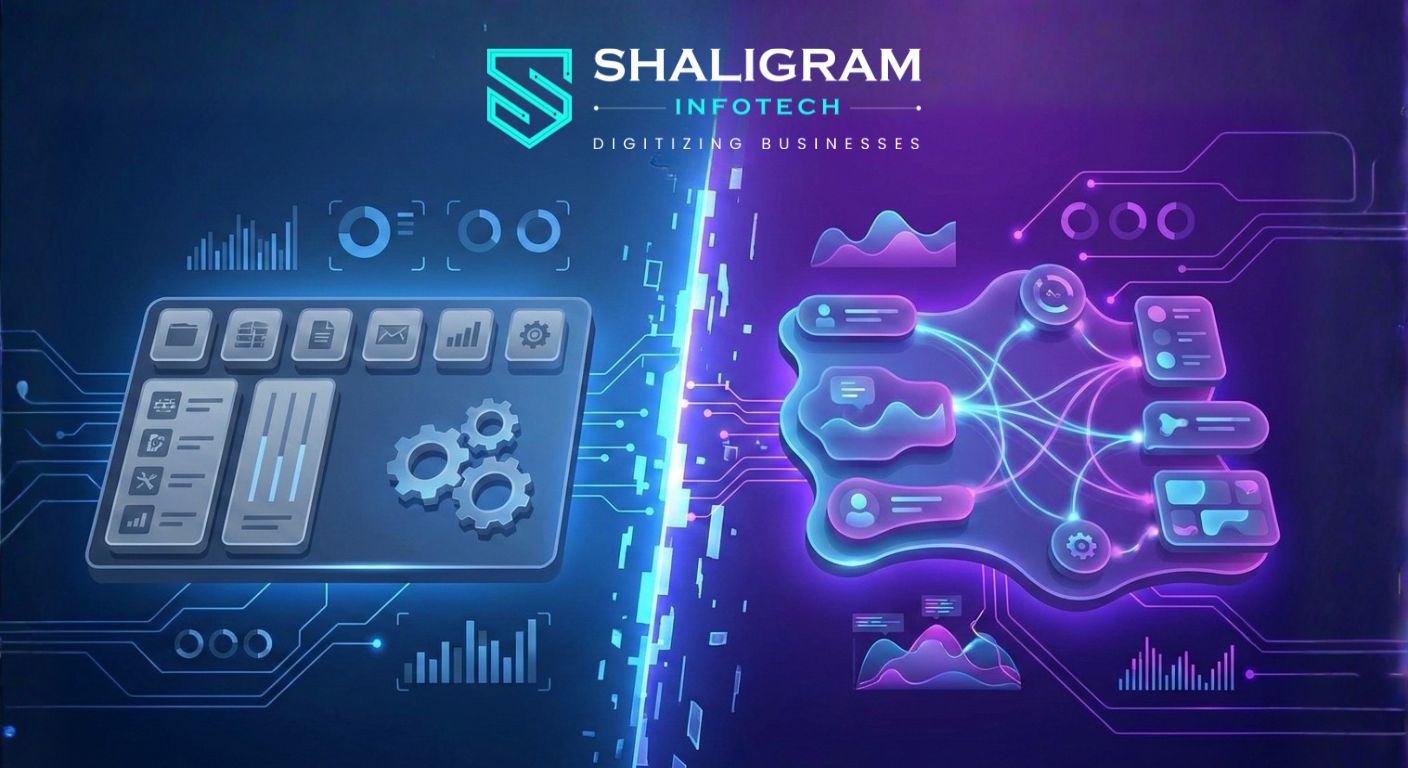
A detailed custom vs off the shelf software comparison for enterprise business solutions

GEt in Touch


    Off-the-Shelf vs Custom Software: Key Differences

    At a high level, off-the-shelf software is pre-built for a broad audience with common use cases, while custom software is designed to meet the organisation’s specific needs. Off-the-shelf tools enable fast, low-cost installation, while custom solutions enable businesses to create unique products that can be expanded to meet their specific needs.

    Businesses need to evaluate not just features but also adaptability, long-term costs, integration complexity, and control over ownership before deciding. 

    Off-the-Shelf Software: When Speed and Simplicity Matter
    What Off-the-Shelf Solutions Offer

    The software delivers pre-built solutions that users can implement without delay. The software tools serve as standard solutions that businesses use to manage their operations through CRM, accounting, project management, and HR systems. The vendors manage maintenance tasks alongside update processes and security patching, enabling teams to focus on system adoption rather than their development work.

    Startups and small teams find these systems essential because they provide reliable operations at a cost that requires no substantial upfront expenses. The subscription pricing model, which operates on a fixed schedule, enables businesses to manage their financial resources more effectively during the initial period. 

    Limitations of Off-the-Shelf Software

    Off-the-shelf tools offer users greater convenience, but they provide essential functional capabilities that remain confined to specific boundaries. Businesses need to modify their work processes to operate in accordance with software requirements rather than following their original procedures. The system allows users to perform customisations, but they must use third-party tools or plugins to achieve additional system integrations.

    The regular use of standard features by businesses creates scaling problems as they expand their operations. The system enforces licensing fees that restrict user access and permit vendors to determine system development priorities, thereby limiting system flexibility and driving innovation. 

    Custom Software Development: Built Around Your Business
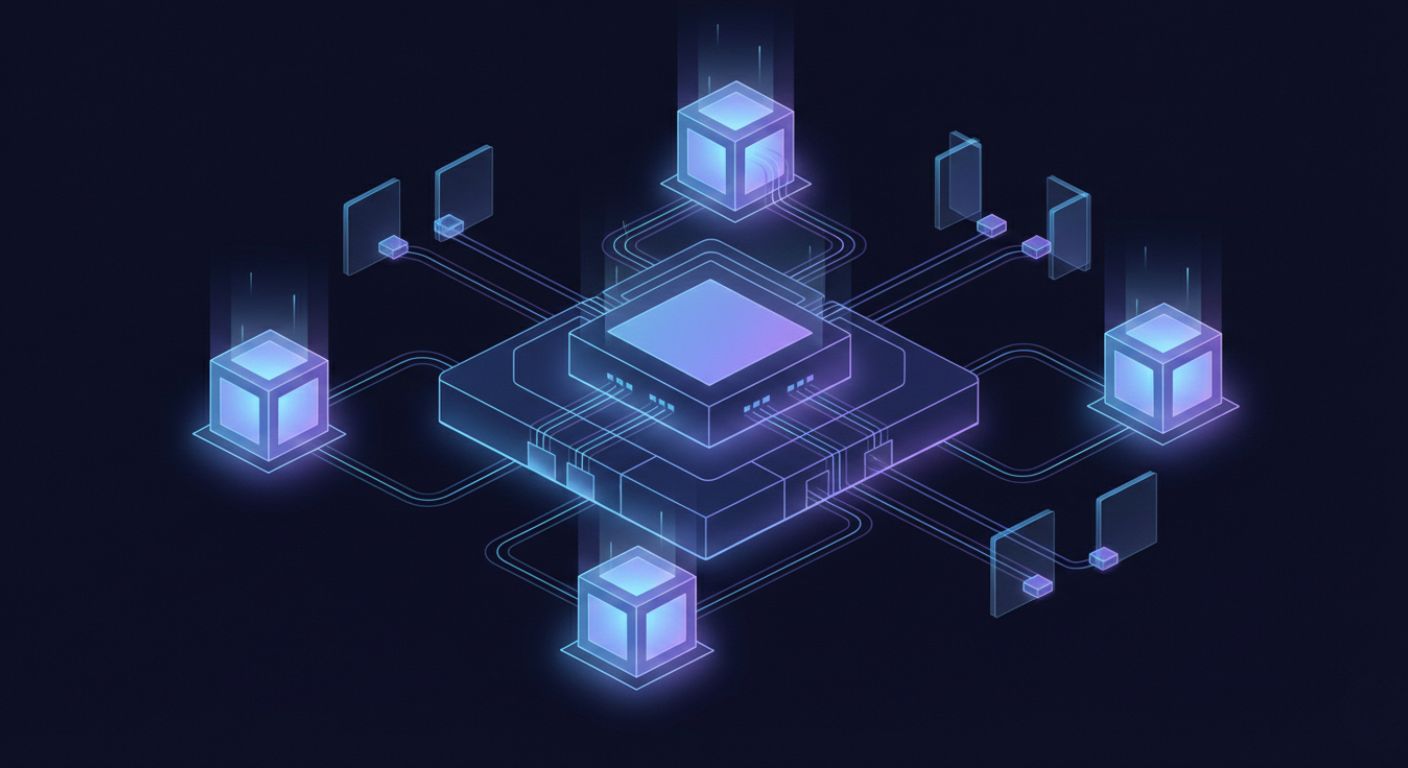
    Scalable custom software supporting business growth

    What Custom Software Development Delivers

    Custom software is developed to meet the specific requirements of a particular business, its operational processes, and industry standards. The company provides customised solutions that enable its teams to work according to their existing methods rather than following fixed operational procedures.

    Custom development enables organisations to define their own business rules and automate processes, resulting in unique product features that set them apart from competitors. The solution provides complete control of all product elements and upcoming system enhancements. 

    Scalability of Custom Software

    The true scalability of custom software lies in its ability to allow businesses to expand their operations seamlessly and without artificial limitations. The system enables businesses to grow their operations by adding new features, managing higher demand, and incorporating advanced technologies. Custom systems maintain their market relevance through ongoing development, which meets current requirements without necessitating complete platform changes. 

    Custom Software vs Off-the-Shelf Software Comparison

    Comparison Factor

    Off-the-Shelf Software

    Custom Software Development

    Cost Comparison: Short-Term vs Long-Term Lower upfront cost; recurring subscription and licensing fees increase over time Higher initial investment; potentially lower long-term costs with ownership and efficiency gains
    Time-to-Market Fast deployment; ready-to-use solutions with minimal setup Longer development cycle due to planning, design, testing, and deployment
    Scalability & Performance Limited scalability; built for general use cases and standard workloads Designed for business-specific growth, performance optimization, and future scalability
    Integration Capabilities Basic integrations; may require plugins or middleware for complex systems Built to integrate seamlessly with existing systems, APIs, and internal workflows
    Security & Compliance Control Vendor-controlled security standards; limited custom compliance configurations Full control over security architecture, compliance requirements, and data governance

    Cost Comparison: Short-Term vs Long-Term

    The initial costs of off-the-shelf tools appear economical because they require only subscription fees and basic installation expenses. The total costs for the extended period will increase due to licensing charges, user-based fees, and additional integration costs.
    The initial costs of custom software development require businesses to spend more money. The custom software solution will deliver financial benefits through reduced licensing expenses and improved operational performance throughout its lifespan. The ROI from business growth is higher for companies with advanced requirements.

    Time-to-Market

    Companies can use off-the-shelf solutions to achieve their deployment goals. Businesses can implement systems within days or weeks. The custom development process takes longer because it involves multiple phases: design, development, testing, and deployment. The custom development process delivers more precise functionality that matches operational objectives.

    Scalability & Performance

    The pre-built solutions provide general functionality, but they fail to meet the specific scaling requirements of the cases. Custom software can be designed to meet specific performance requirements, data processing needs, and user growth projections.

    Integration Capabilities

    The need for integration arises when businesses operate through multiple systems. The off-the-shelf tools provide APIs as their main feature, but they need extra middleware for proper functionality. From the first day of development, custom solutions can build their system to enable integration.

    Security & Compliance Control

    The security settings of pre-built software products are managed by their respective vendors, which means these tools fail to meet the compliance requirements of different industries. Custom software enables organisations to establish their own security measures, data-handling protocols, and compliance standards.

    Software Integration Challenges Businesses Often Ignore
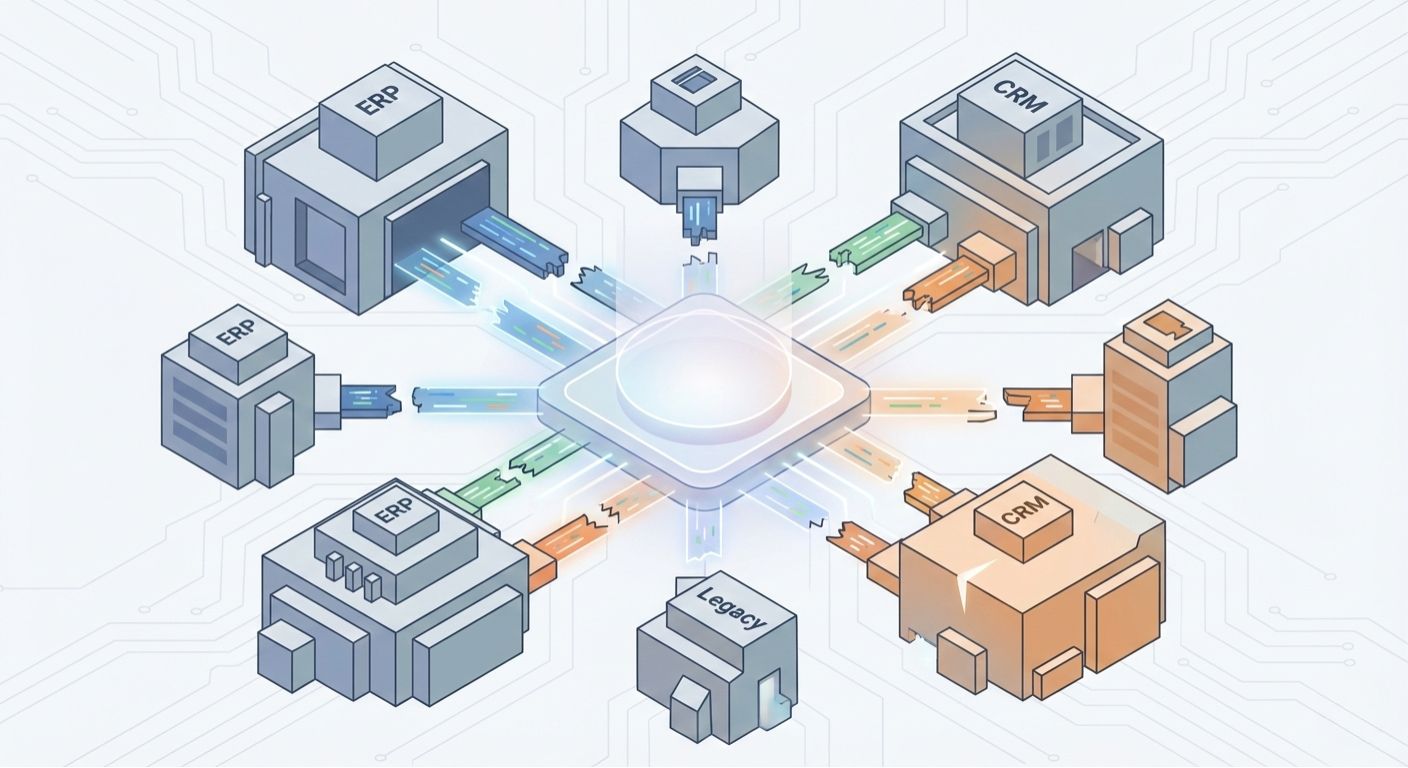
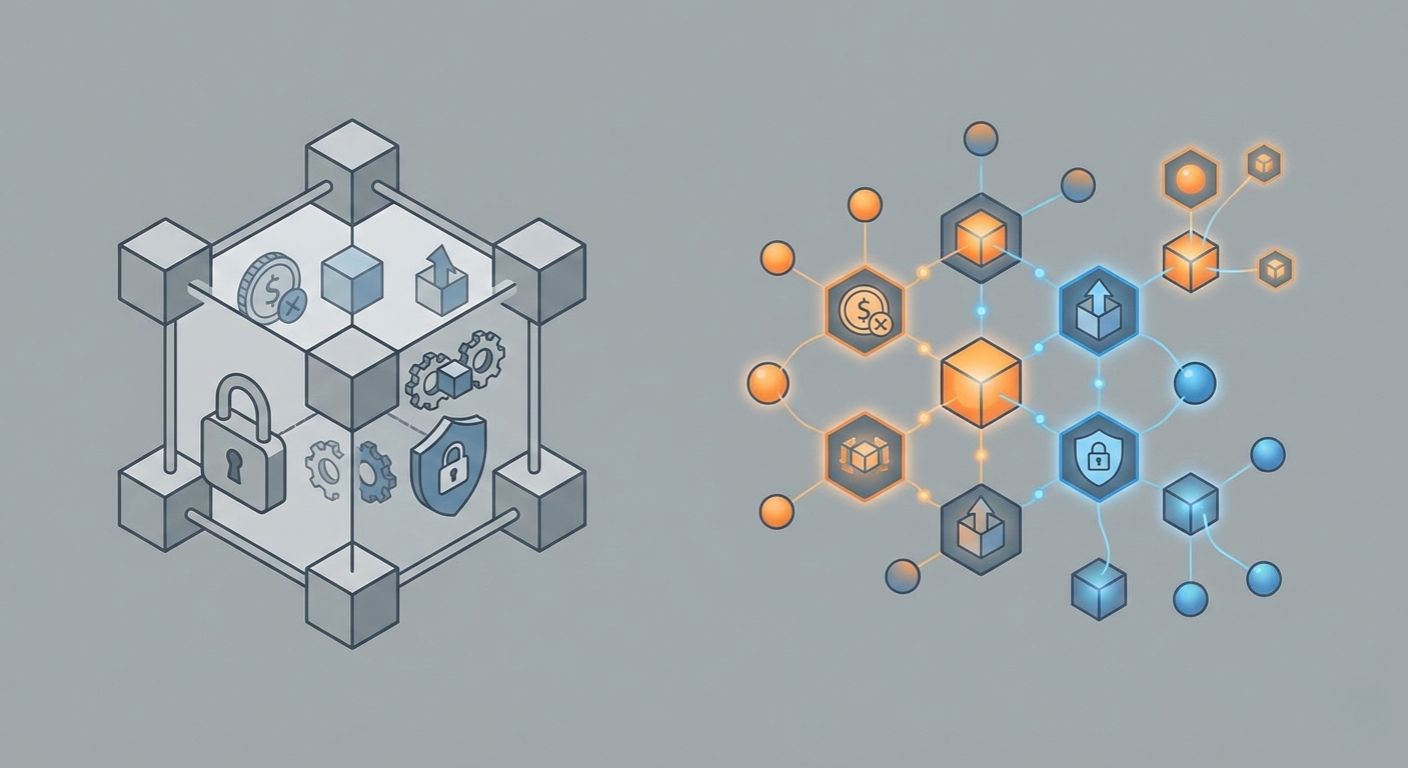
    Software integration challenges across enterprise systems
    Many organizations underestimate the software integration challenges that arise when adopting new tools. The combination of compatibility problems, data silos, inconsistent APIs, and inadequate system interoperability often leads to operational disruptions. Whether you are using off the shelf vs custom software, seamless integration is essential for maintaining efficiency.
    The absence of effective planning leads to greater integration difficulties, resulting in higher costs and delayed software adoption. Businesses should evaluate how new software will integrate with legacy systems, data sources, and third-party tools before making a decision.
    For organisations relying on legacy ERP systems, understanding the process of migrating from NAV to Business Central is important to provide seamless integration, improved scalability, and long-term system reliability.

    Vendor Lock-In Risks with Off-the-Shelf Software
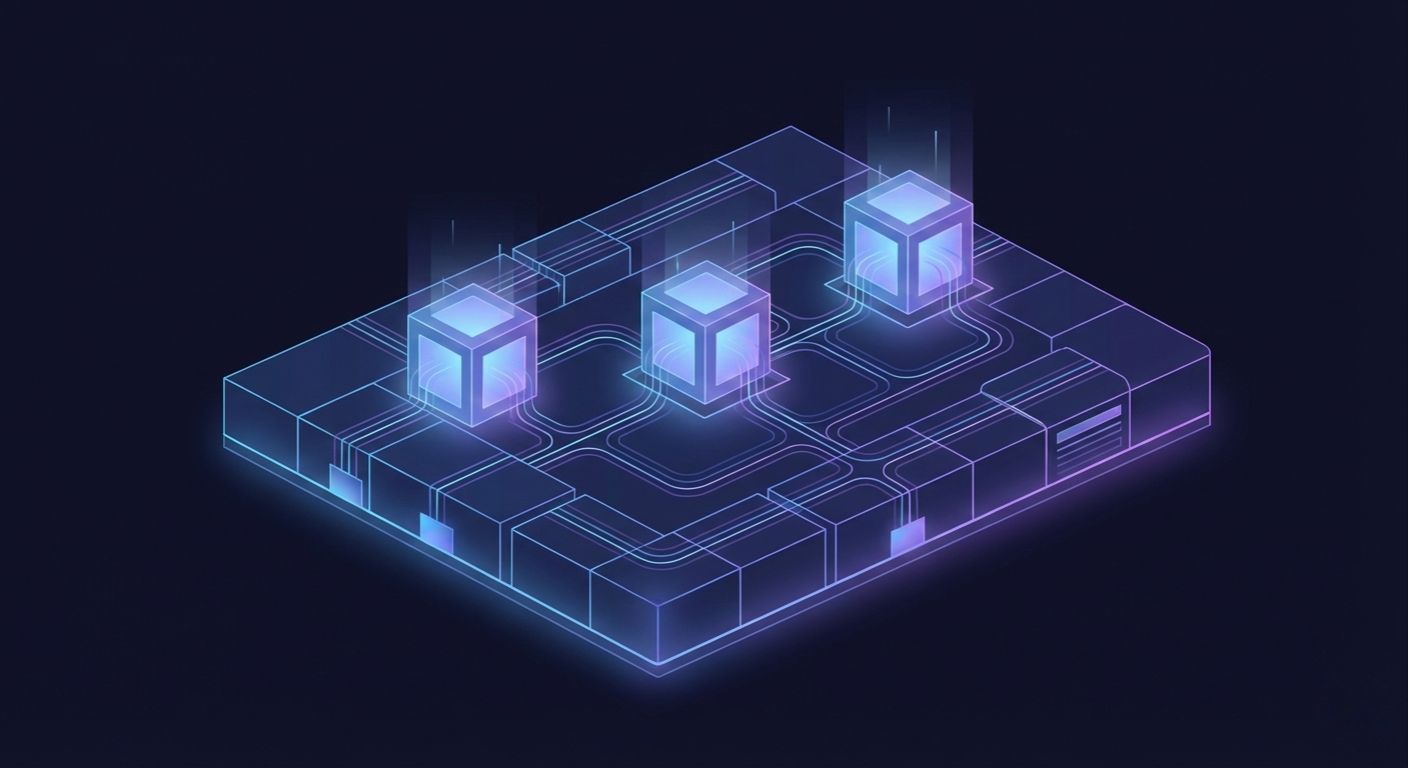
    Vendor lock-in risks with off-the-shelf software platforms

    Pricing Dependency

    The vendors determine both their pricing systems and their subscription programs. The budget will face major shifts in the event of unexpected cost increases and changes to product features.

    Limited Roadmap Control

    Vendor development priorities determine the features that businesses need to implement. The requested features might not be developed, as system updates will cause workflow interruptions.

    Migration & Exit Challenges

    One of the most significant vendor lock-in risks is the difficulty of switching platforms. Moving away from a rigid system presents major hurdles in data migration, integration, and team training, often causing unexpected operational downtime. Business operations will experience shutdown periods during system switches.

    Custom Software Development Cost: What You're Really Paying For
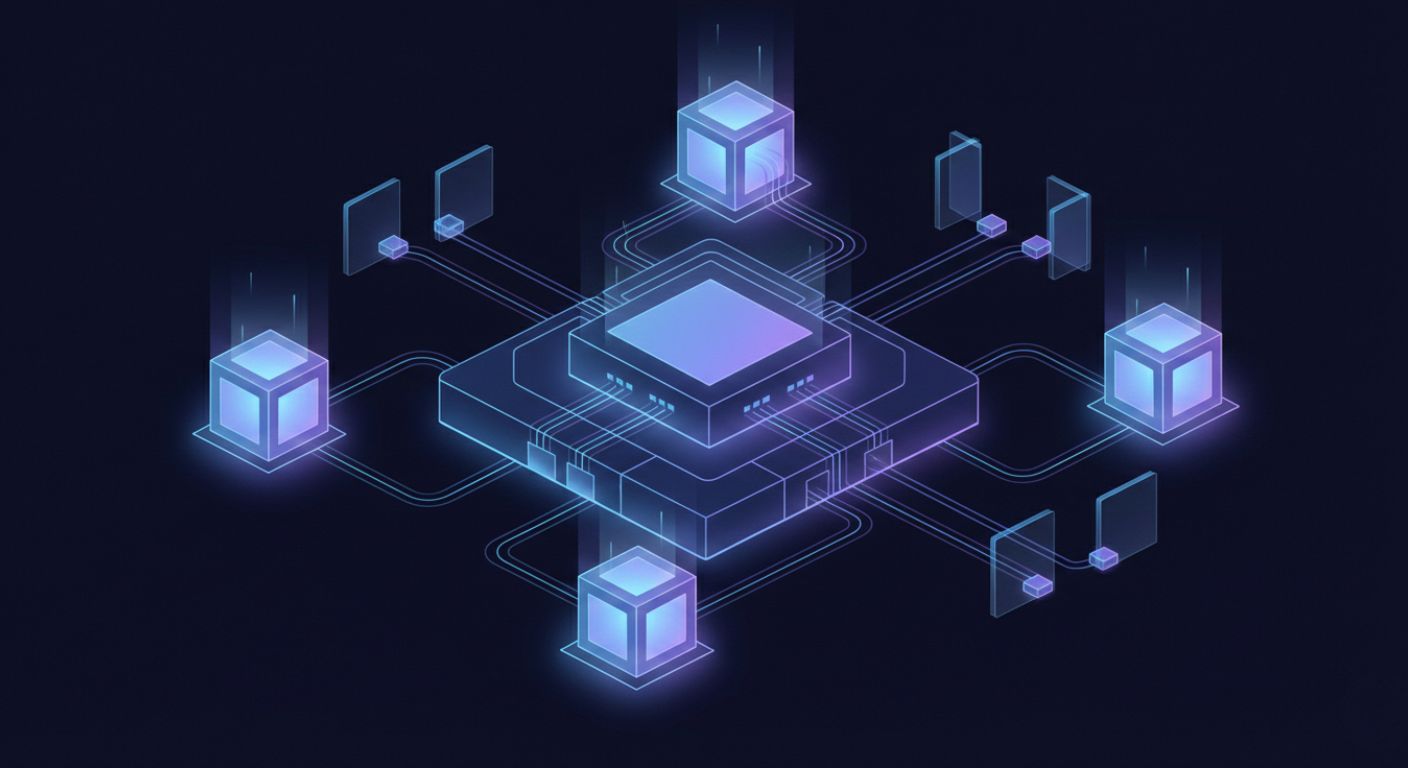
    Scalable custom software supporting business growth
    The expenses for developing custom software cover all activities from business analysis through UI/UX design and software development to software testing, software deployment, and ongoing software maintenance. Businesses benefit from higher upfront costs because they receive ownership rights, operational flexibility, and the ability to adapt to future changes.
    The costs demonstrate how improved efficiency, reduced manual operations, and streamlined processes result in financial benefits. Custom solutions reduce hidden costs stemming from licensing restrictions and persistent operational inefficiencies.

    When to Choose Off-the-Shelf Software

    • Your organisation requires an immediate implementation framework.   
    • Your business processes follow standard industry workflows.   
    • Budget constraints require minimal upfront investment.   
    • You require only basic features without the need for extensive customisation.   
    • Your organisation operates as a small or early-stage company that needs basic operational support.

    When to Choose Custom Software

    • Your business operates with distinct operational methods and specialised work activities.   
    • You need comprehensive system integrations that work across your various platforms.   
    • The ability to scale and maintain performance efficiency is essential for your business expansion.  
    • You want to have total control over your product’s functionalities.   
    • Your organisation considers technological advancements its primary means of establishing itself as a unique competitor in the market.

    How to Choose Between Custom and Off-the-Shelf Software

    Step 1: Define Business Requirements

    Document your current workflows, operational issues, and business goals so you can see where your existing tools can help and whether you need a custom solution.

    Step 2: Evaluate Growth & Scalability Needs

    When planning for growth, choose software that meets your long-term needs. For custom solutions, select the right delivery platform. Understanding mobile and web apps can improve performance and user experience, supporting your business goals.

    Step 3: Assess Integration Requirements

    Map out your technology landscape to see how new software interfaces with CRM’s, ERPs, Data Analytics tools, and other internal applications.

    Step 4: Compare Total Cost of Ownership

    Look at the upfront costs and the total cost of ownership, including licenses, maintenance, updates, infrastructure, and training.

    Step 5: Identify Risk Tolerance & Vendor Dependency

    Decide how much control you would like over your technology roadmap. Understand the associated risks of vendor pricing, data ownership, and platform flexibility before deciding.

    Decision Matrix: Custom Software vs Off-the-Shelf Solutions

    Decision matrix comparing custom and off-the-shelf software
    Companies use a systematic decision matrix to choose among alternatives based on factors such as scalability, cost, delivery time, and competition. By assigning weights, these decision matrices enable leaders to make objective decisions that align with their company’s strategic goals.
    For instance, startups are interested in getting their products or services to market as quickly as possible and at the lowest possible cost; however, larger businesses that concentrate on innovation may prefer custom development because it offers greater flexibility and allows them to differentiate themselves from competitors.

    Conclusion

    Ultimately, the debate of custom software vs off the shelf software depends entirely on your company’s strategy, operational complexity, and growth vision. By carefully evaluating the custom software development cost alongside potential software integration challenges, you can make a secure, future-proof technology decision.
    Off-the-shelf software offers fast deployment and cost-effectiveness for typical use cases. In contrast, custom software can provide you with scalability, flexibility, and differentiation in your marketplace if you’re an organisation with a unique workflow style and future digital transformation goals.
    For organizations that want to save money and find skilled workers, working with an offshore software development company in India is a smart way to create custom solutions. This approach helps maintain flexibility and allows for growth over time.
    By taking the time to properly assess the need, cost, risk, and integration of either type of software, your organisation, with guidance from Shaligram Infotech, will be able to make a software selection that not only serves present-day needs but also supports future growth and innovation.

    Ready to build? Contact Our Global Teams

    🇺🇸 USA: +1 (919) 629-9671
    🇬🇧 UK: +44 20 3581 6366
    🇮🇳 India: +91 99099 84567
    🇦🇺 AUS: +61 07 3121 3147

    💬 Interested in Regular Insights on Software Development?

    📲 Follow Shaligram Infotech on LinkedIn
    Let’s build the future of applications together.

    FAQs

    Custom software vs off-the-shelf software: Which is better for business growth?

    Custom software supports long-term business growth by enabling scalability, tailored workflows, and system ownership, while off-the-shelf software is better for short-term needs and standard operations. Contact us to discuss which software approach best supports your business growth.
    Scalability is critical for complex workflows, as it enables an organisation to leverage technology to gain a competitive edge.

    Organisations require rapid deployment, budget certainty, and repeatable solutions for their day-to-day operations. 

    While custom software development cost requires a higher initial investment, it often delivers a superior long-term return on investment by eliminating recurring licensing fees and avoiding costly software integration challenges.
    Yes, organisations can become reliant on vendor prices and the release of new features to migrate from one vendor to another.
    Return on investment will vary depending on the complexity of the business. Organisations that grow steadily often derive greater long-term value from custom software, whereas they can achieve faster returns with off-the-shelf solutions.

    Custom development is often advantageous for businesses with industry-specific workflows such as healthcare, logistics, fintech, manufacturing, and enterprise SaaS.