
Categories
Blog Mobile App Development
Key Considerations Before Starting a Mobile App Development Project
Mobile App Development

Key Considerations Before Starting a Mobile App Development Project

Mobile app development planning ecosystem

GEt in Touch


    TABLE

      Why Proper Mobile App Development Planning Matters

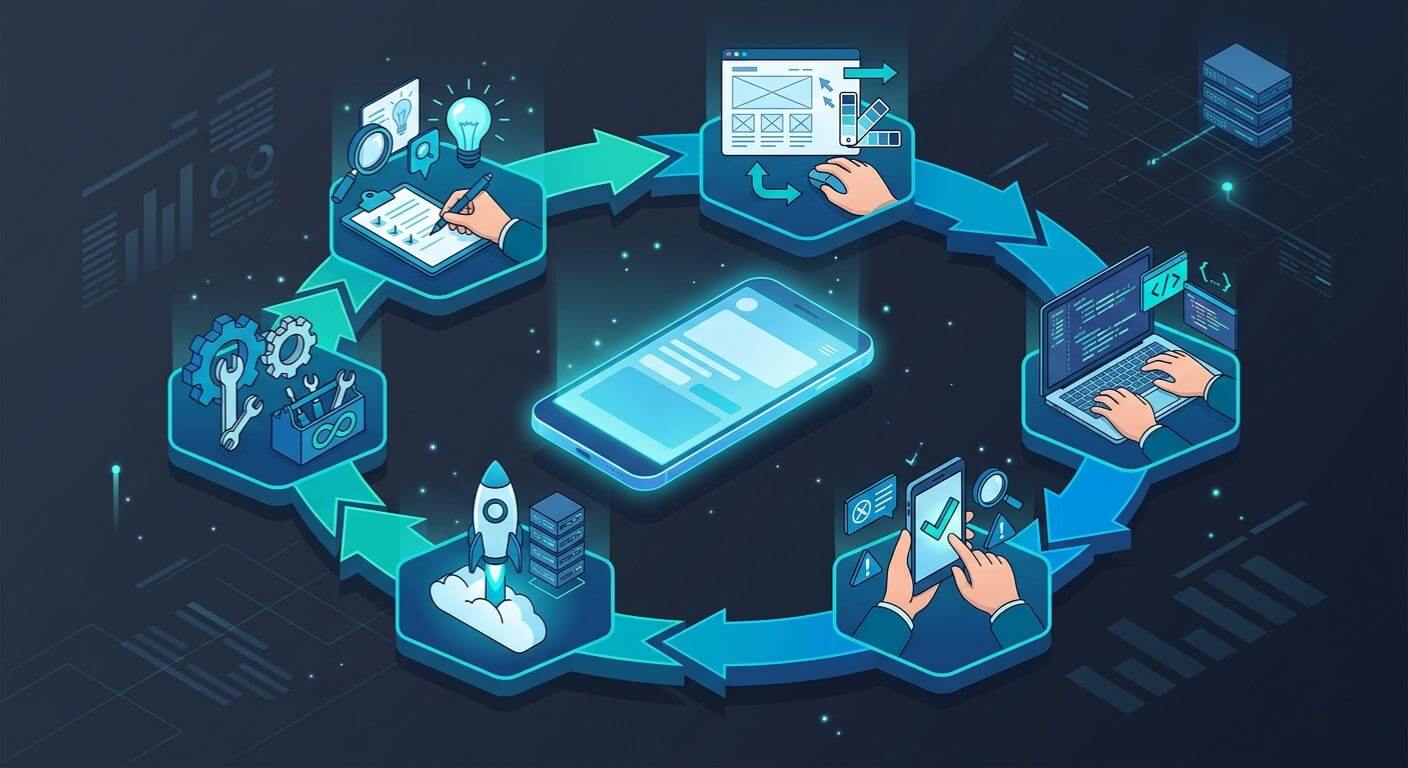
      Strategic mobile app development planning illustrated with a roadmap and connected development phase icons
      Mobile app development is far more than writing code. It is a structured process that brings together business strategy, user experience design, technical architecture, and ongoing iteration. Businesses that invest in thoughtful planning before development begins are significantly more likely to deliver apps that users adopt and that meet commercial objectives.

      When you plan properly, it helps your business in ways.

      For example:  

      • You can avoid problems that might come up later and cost a lot of money  
      • You can clearly say what you want your product to do and how you will know if it is successful
      • You can make sure that everyone involved in the project is on the same page  
      • You can make a schedule and a budget that works
      • You can build a product that will work well and be easy to maintain 

      It is really important to have a plan. This way you can make sure that your mobile app actually helps people and is good for your business. A good mobile app development strategy makes sure that your app solves problems for users while helping your business grow.

      Define the Goals of Your Mobile App Development Project

      Before any technical work begins, you must be clear about what you want to achieve. Vague objectives lead to vague products.

      Identify Business Objectives

      Your mobile application must map directly to your company’s commercial goals.

      Some common goals are:  

      • Increasing customer engagement and retention
      • Generating new revenue streams through digital products or services
      • Automating internal workflows to reduce operational costs
      • Strengthening your online presence and brand reach
      • Providing faster, more accessible customer support 
      Documenting these objectives at the outset gives the development team a reference point for every decision made throughout the project.

      Understand Your Target Users

      Understanding target users for mobile app development with persona cards and research data icons
      To make an application that people really like, you need to know who is going to use it. Companies should think about who will use the app, what kind of problems they have, and how the mobile application can help solve those problems.

      There are some things to think about:  

      • User demographics: Age group, location, language, and digital literacy
      • Behavioural patterns: When, where, and how frequently they use mobile apps
      • Platform preferences: Whether your audience skews towards iOS or Android
      • Pain points: What problems they currently face that your app will solve
      • Expectations: What features or experiences they consider standard
      When developers know about the people who will use the application, they can make something that is really useful. The mobile application can be made to give people experience by using user personas and doing research on how people behave. This helps the mobile application do what people want it to do.

      Define the Core Features and User Journey

      A successful app starts with a focused feature set. The biggest mistake teams make is trying to build everything at once. Successful products almost always begin with a Minimum Viable Product (MVP), the smallest set of features that delivers real value to users.

      Companies should think about how people will use the app by answering questions like:  

      • How will users interact with the app  
      • What will users do often  
      • What problems should the app solve away 

      A clearly defined user journey keeps development focused and helps avoid costly scope creep once the build is underway. For context on how this compares to web-based approaches, it is worth reading our comparison of mobile vs web apps for businesses.

      Key Factors to Consider Before Developing a Mobile App
      Market Research and Competitor Analysis

      Understanding the competitive landscape before you build is essential. Launching into a market without researching what already exists leads to duplicated effort, missed differentiation, and a weak value proposition.

      A thorough market research process includes: 

      • Auditing competing apps across Google Play and the App Store
      • Identifying gaps in competitor offerings that you can address
      • Analysing user reviews to understand recurring complaints and unmet needs
      • Validating genuine demand for your proposed solution
      This research gives you a data-driven foundation for your product decisions rather than relying on assumptions. It also informs your positioning: what makes your app meaningfully different from what already exists.

      User Experience and Interface Design

      User experience (UX) is one of the most significant determinants of mobile app success. Apps that are confusing to navigate, slow to respond, or visually inconsistent lose users rapidly, often within the first session.

      Effective UX design before development begins involves:

      • Mapping user flows to eliminate unnecessary friction
      • Creating wireframes and low-fidelity mockups to validate navigation logic
      • Designing for accessibility, including appropriate font sizes and contrast ratios
      • Following platform-specific design conventions (Material Design for Android; Human Interface Guidelines for iOS)
      Good design helps users engage more and makes the app easy to use. Effective design makes users stay and use the app more. Good user experience and design are key to an app’s success.

      Scalability and Future Growth

      Lots of apps start out with a few users, but they can grow really fast if they are popular. If the people making the app do not think about how it will handle a lot of users when they are building it, the app may have trouble working properly when more people start using it.

      A good app should be able to handle these things: 

      • A growing number of concurrent users without performance degradation
      • Increasing volumes of data storage and retrieval
      • The addition of new features without restructuring the core codebase
      • Third-party integrations and API connections
      Planning for scalability from the outset is far more cost-effective than rebuilding infrastructure after the fact. This is a particularly important consideration when selecting a development partner; ensure they have a proven approach to scalable architecture.

      Choosing the Right Mobile App Development Strategy

      Aligning the App with Business Models

      Your mobile app should not operate as a standalone product divorced from your broader business model. It should complement and reinforce your existing commercial framework. Whether your business is B2B, B2C, or marketplace-based, the app’s features, onboarding flow, and monetisation model must reflect how your business creates and delivers value.

      Monetization Strategy

      If people want to make money from the app, they need to figure out how to do that from the start.

      The ways that mobile apps can make money are: 

      • Subscription-based services: Users pay a recurring fee for ongoing access
      • In-app purchases: Users buy additional content, features, or consumables within the app
      • Advertising: Revenue generated through display or video ads served within the app
      • Freemium models: Core functionality is free, with premium features behind a paywall 
      Each model has implications for the app’s technical architecture, user experience, and App Store / Play Store listings. Deciding upfront avoids expensive changes later.

      Long-Term Product Roadmap

      Mobile apps need to change and get better over time. A long-term plan helps businesses make a list of what they want to add to the app in the future, like new features and ways to make the mobile app work faster and better.

      A good plan for the app includes: 

      • Adding features in the future 
      • Making the app work faster and better  
      • Working with tools and technologies 
      Listening to what users of the app say and using that to make updates

      Understanding the Mobile App Development Process

      Requirement Gathering and Planning

      The first formal stage of any development project is a thorough requirements gathering process.

      This step includes: 

      • Defining what the technology needs to do  
      • Figuring out what features the project requires  
      • Seeing what the project needs to work with  
      • Setting a schedule for when things need to be done 
      Getting all the requirements at the beginning helps prevent confusion and makes sure everyone involved with the development project is on the same page and has a clear understanding of the development project.

      UI/UX Design and Prototyping

      When we know what we need to do, the designers make drawings and working models of the website or application.

      The designers do this to: 

      • Creating low-fidelity wireframes to establish screen layouts and user flow
      • Developing high-fidelity mockups that reflect the final visual design
      • Conducting usability testing with representative users
      • Iterating on designs based on feedback before handover to developers 
      This step helps reduce mistakes in the design of the website or application before we start building it.

      Development, Testing, and Deployment

      Once designs are approved, development begins, typically following an agile methodology that delivers working software in iterative sprints. As features are built, rigorous testing runs in parallel to catch issues early.

      Types of tests will include: 

      • Functionality Testing: Verifying that all features work as intended
      • Performance Testing: Ensuring the app performs well under realistic load conditions
      • Security Testing: Identifying vulnerabilities before the app reaches users
      • Device Compatibility Testing: Confirming consistent behaviour across a range of devices and OS versions
      The application will be put into the respective stores after testing is completed with Apple and Google app stores.

      Choosing the Right Mobile App Technology Stack

      Backend Infrastructure

      The backend is the engine that powers your mobile application. A poorly architected backend leads to data issues, security vulnerabilities, and scalability problems.

      Backend Infrastructure Examples: 

      • Application servers to process requests and business logic
      • Databases appropriate to your data model (relational for structured data; NoSQL for flexible, high-volume data)
      • RESTful or GraphQL APIs to connect your frontend with backend services
      • Authentication systems implementing industry standards such as OAuth 2.0 

      Reliable backend systems will enable organizations to manage their data securely and reliably.

      Frameworks and Development Tools

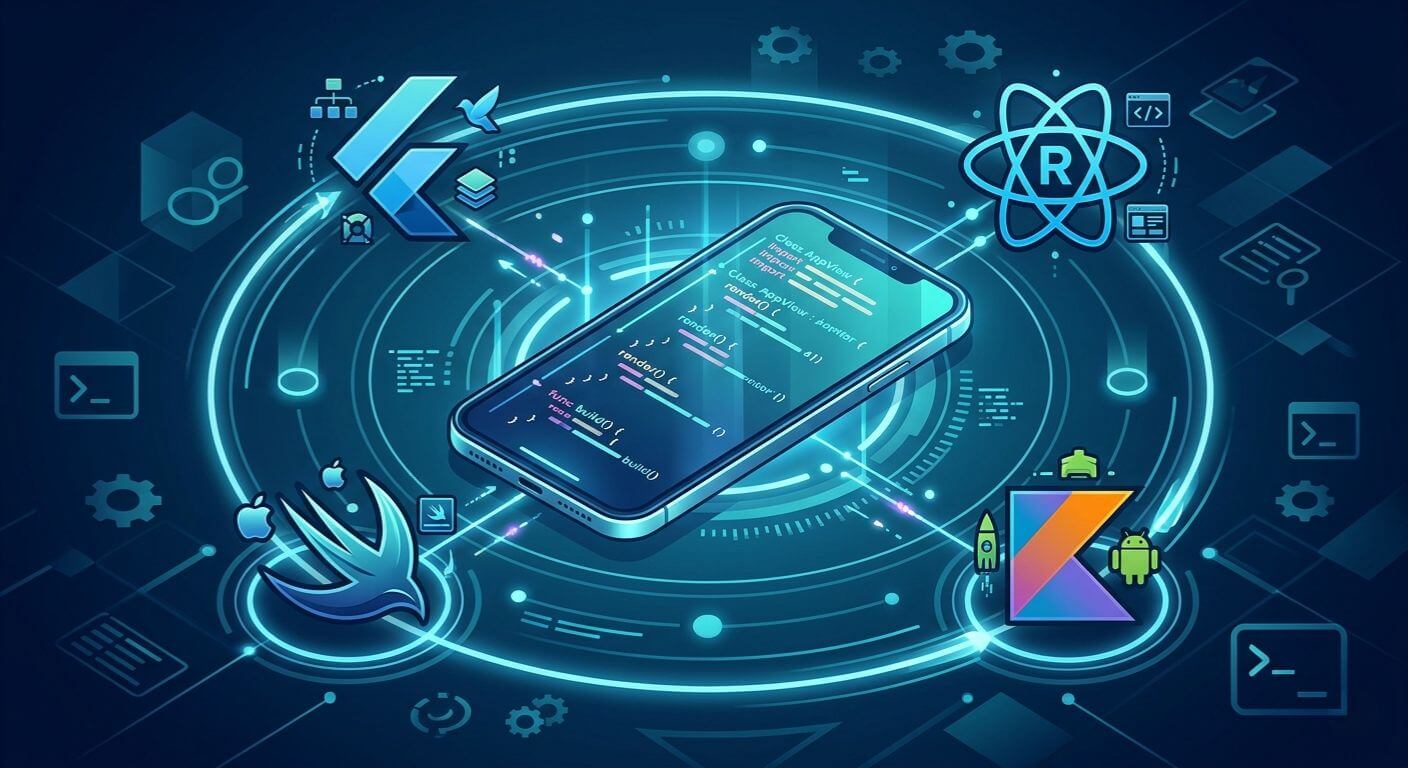
      Mobile app development frameworks including Flutter, React Native, Swift, and Kotlin illustrated around a central smartphone
      Development frameworks can help to simplify coding processes and therefore allow developers to work productively when writing code.

      Popular Development Frameworks Include: 

      • Flutter (Google): excellent for cross-platform development with near-native performance
      • React Native (Meta): widely used, large community, strong for cross-platform projects
      • Swift (Apple): the preferred language for native iOS development
      • Kotlin (Google): the standard for native Android development
      Framework selection should be driven by your performance requirements, target platforms, team expertise, and time-to-market constraints. Read more in our guide comparing native vs cross-platform apps to make an informed choice.

      Cloud and Integration Considerations

      Cloud services are commonly used by most current mobile applications to improve their level of scalability and reliability.

      Cloud platforms can provide: 

      • Data storage  
      • Real-time data syncing  
      • API integrations  
      • Analytics/monitoring 
      Having a cloud-based architecture means these applications can be scaled easily.

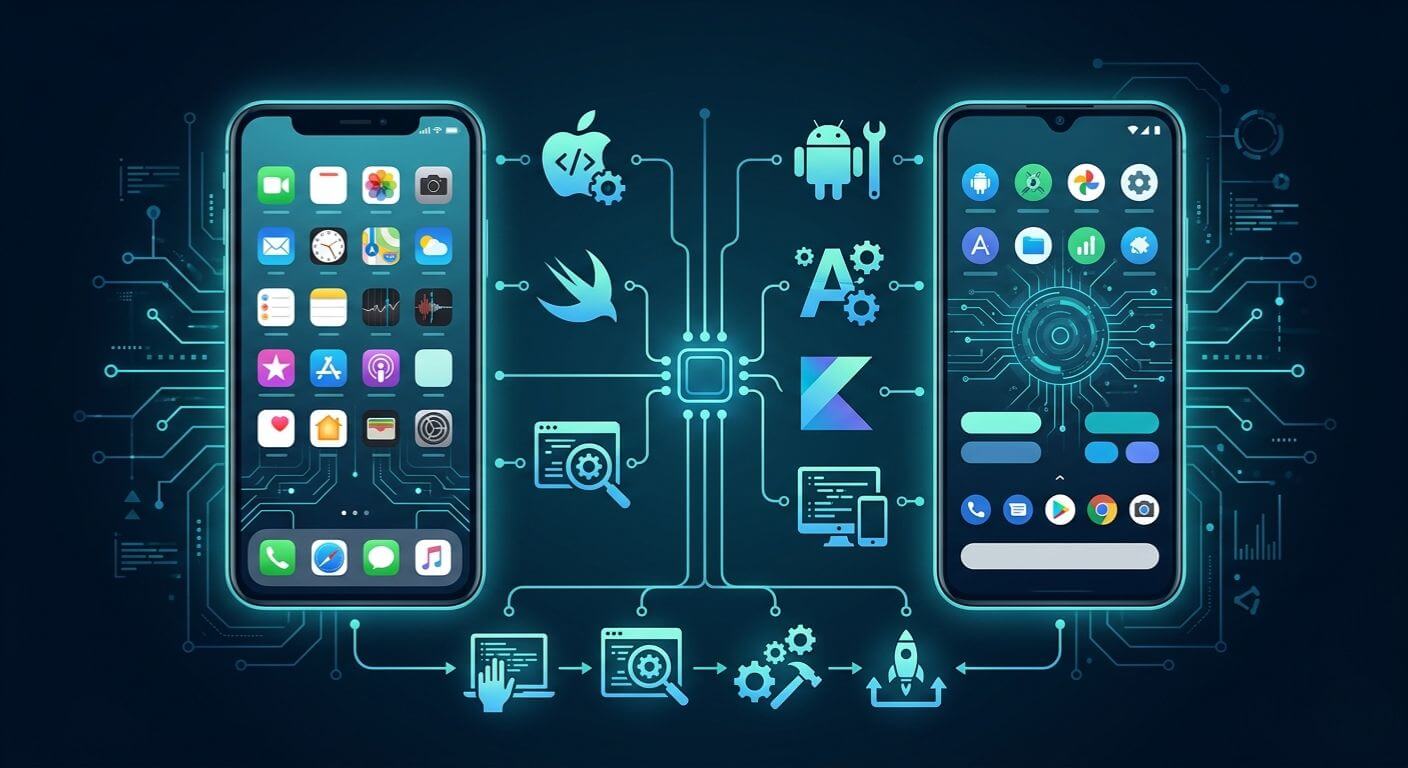
      iOS vs Android App Development: Which Platform Should You Choose?
      Market Reach and User Demographics

      While the Android OS has the largest global market share, the average iPhone user has much more purchasing power than an average Android user.
      When deciding which platform to develop for, businesses need to consider their target demographic.

      Development Cost and Maintenance

      As a result, developing an application for both platforms will result in higher costs due to the need to develop and test two separate applications.
      On the flip side, targeting multiple platforms will likely help increase market size.

      Performance and Ecosystem Differences

      The iOS platform has a more regulated ecosystem, which leads to better performance consistency than that of Android.
      The Android platform allows for more variety and flexibility in terms of devices, however, it often requires more testing.

      Native vs Hybrid Mobile Apps: Which Approach Works Best?
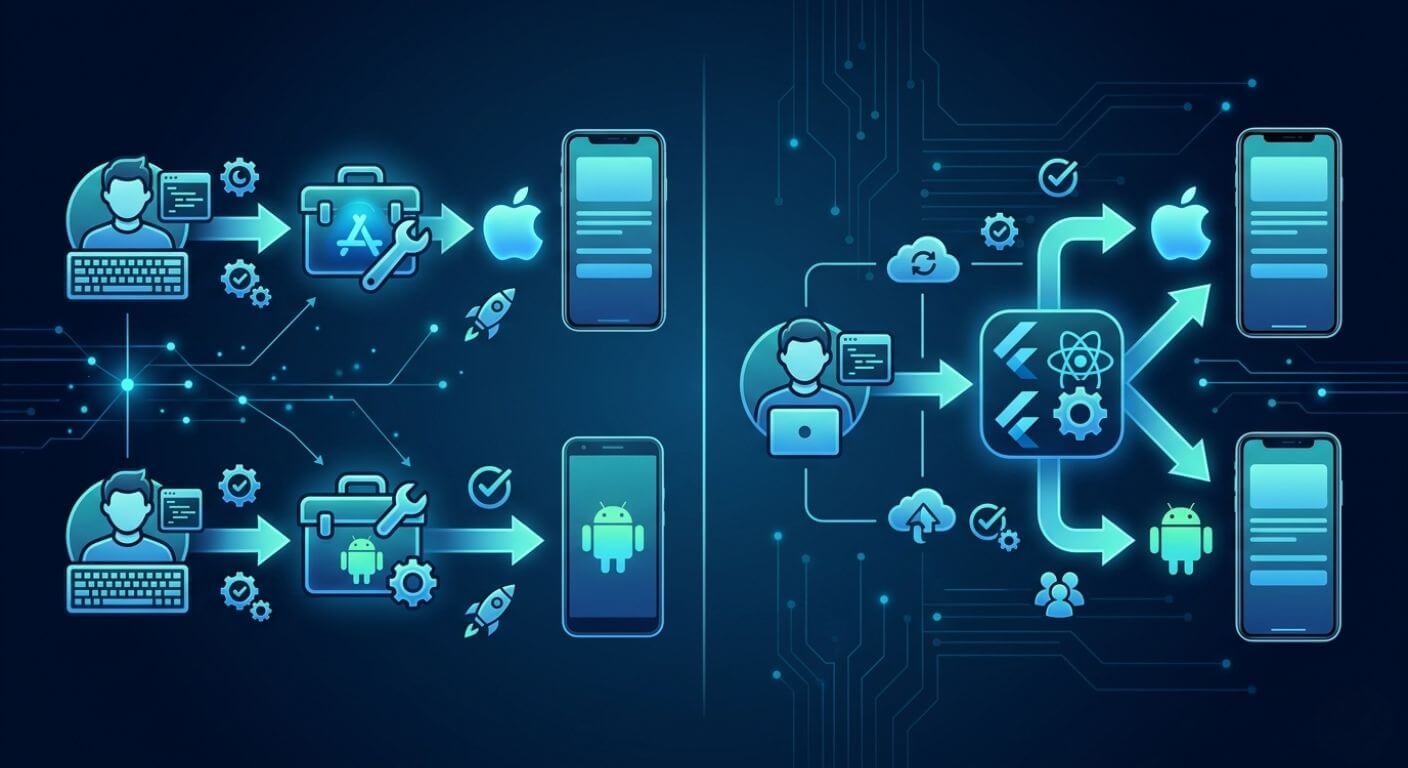
      Native vs hybrid mobile app development comparison showing a single codebase branching to both iOS and Android platforms

      Native App Development Benefits

      Native applications are developed for a specific platform, such as iOS or Android.

      Benefits of developing native apps include the following: 

      • High performance 
      • More user-friendly 
      • Full feature access 
      Native development is often a better choice for performance-sensitive and / or complex applications than using cross-platform development tools.

      Cross-Platform App Development Advantages

      Cross-platform development platforms enable you to create applications for all your various platforms using one codebase.

      Some of the benefits are as follows: 

      • Quicker development cycles 
      • Lower development costs 
      • Less complexity in maintaining the application. 
      • When Hybrid Apps Make Sense

      Hybrid Apps can be especially advantageous for: 

      • Creating Minimum Viable Products (MVPs) 
      • Creating cost-effective apps 
      • Creating simple function-based apps 
      Cross-platform development provides businesses with an opportunity to rapidly validate their application idea(s) before they invest in developing natively.

      Estimating Mobile App Development Cost
      The cost of building a mobile app varies considerably depending on a range of factors. Understanding these variables before you start allows you to set a realistic budget and avoid unpleasant surprises mid-project.

      Primary cost drivers include:

      • App complexity: A simple informational app requires far less development time than a marketplace, social platform, or fintech solution
      • Number of features: Each feature adds development, testing, and maintenance overhead
      • Platform choice: Single-platform (iOS or Android) versus dual-platform development
      • Development approach: Native development typically costs more than cross-platform development
      • Third-party integrations: Payment gateways, mapping services, analytics platforms, and CRM systems all add integration work
      • Location of the development team: Offshore development in India, for example, offers high-quality output at significantly lower rates than equivalent teams in Western markets
      Even though simple apps can be created for significantly less than an enterprise-grade app with advanced capabilities, companies need to think about the upfront cost of app development as well as the cost of maintaining the app in the long term.

      Building a Scalable Mobile Application Development Roadmap

      Using a structured roadmap, a mobile application will be strategically improved over time.

      Several key elements are included in a development roadmap like:  

      • A timeline for MVP release 
      • Feature phase-in plan 
      • Performance enhancement opportunities 
      • Customer feedback integration 
      • Security refresh cycles  
      By using this phased approach to implementation, companies can deliver updates to their products without losing stability.

      Common Mistakes in Mobile App Development Projects

      Too many mobile app projects are negatively affected by preventable errors.

      The most popular preventable errors are:  

      • App development initiated prior to documenting requirements.  
      • Neglecting to include user experience design.  
      • Overloading the application with superfluous features.  
      • Using unsuitable technology for developing applications.  
      • No app testing prior to going into production.  
      • No consideration given to the app’s scalability.  
      Correcting avoidable mistakes will dramatically improve the probability of successful projects.

      Best Practices for Starting a Mobile App Development Project

      It is essential for organizations to follow proven best practices to successfully develop an application.

      Some key recommendations for developing a successful application include:  

      • Create a clear product vision  
      • Complete thorough market research  
      • Provide a focus on user experience and usability through the application  
      • Complete the MVP launch process prior to entering full-scale development  
      • Choose the appropriate vendor partner for development  
      • Prepare for the scalability and for any future updates  
      Working with a reputable software development company in India that follows a structured development methodology gives your project the best possible foundation.

      Conclusion

      Building a successful mobile app requires far more than a good idea. Structured planning, the right technology choices, and a clear understanding of your users are what separate products that thrive from those that fall short.
      At Shaligram Infotech, we help businesses navigate every stage of this process, from initial strategy and platform selection through to development, testing, and launch. Partnering with a trusted app development company in India means your app is built on solid foundations, ready to scale, and designed to deliver real value from day one.

      Ready to build? Contact Our Global Teams

      🇺🇸 USA: +1 (919) 629-9671

      🇬🇧 UK: +44 20 3581 6366

      🇮🇳 India: +91 99099 84567

      🇦🇺 AUS: +61 07 3121 3147

      💬 Interested in Regular Insights on Mobile App Development? 󠀢󠀢󠀢󠀢

      📲 Follow Shaligram Infotech on LinkedIn
      Let’s build the future of applications together.

      FAQs

      What factors should be considered before developing a mobile app?

      When businesses want to make an app, they need to think about a few things. They must consider who their target audience is, what they want to achieve with the app, and what their competitors are doing. They also need to think about what features the app will have, what technology to use, if it can grow with their business, etc.

      First, businesses need to gather all the requirements for the app. Then, they need to design the user interface and user experience. After that they make a prototype, develop the app, test it, deploy it, and finally maintain it after it is launched.
      The cost of making an app is different for each business. It depends on how complicated the app is, what features it has, what platforms it will be on and how it is developed. Simple apps do not cost much but big complex apps for companies can cost a lot of money.
      Businesses should make sure their app fits with their business goals. They need to do some research to see what people want, make sure the app is easy to use, have a plan, what features to add, and choose the right technology to build the app.
      Yes, businesses can keep costs down and still make a good app. They can do this by starting with a version of the app, choosing technology that works well, and focusing on the most important features. This way businesses can control money they spend on the app and still have a good quality app.
      Some errors may include lack of detailed requirements; poor design of the end-user experience; lack of scalability; insufficient testing of the application before it is released into production; and/or using inadequate technologies to develop the application.