Categories
Blog Mobile App Development
Top Backend Technologies for Scalable Web Apps
Mobile App Development

Top Backend Technologies for Scalable Web Apps
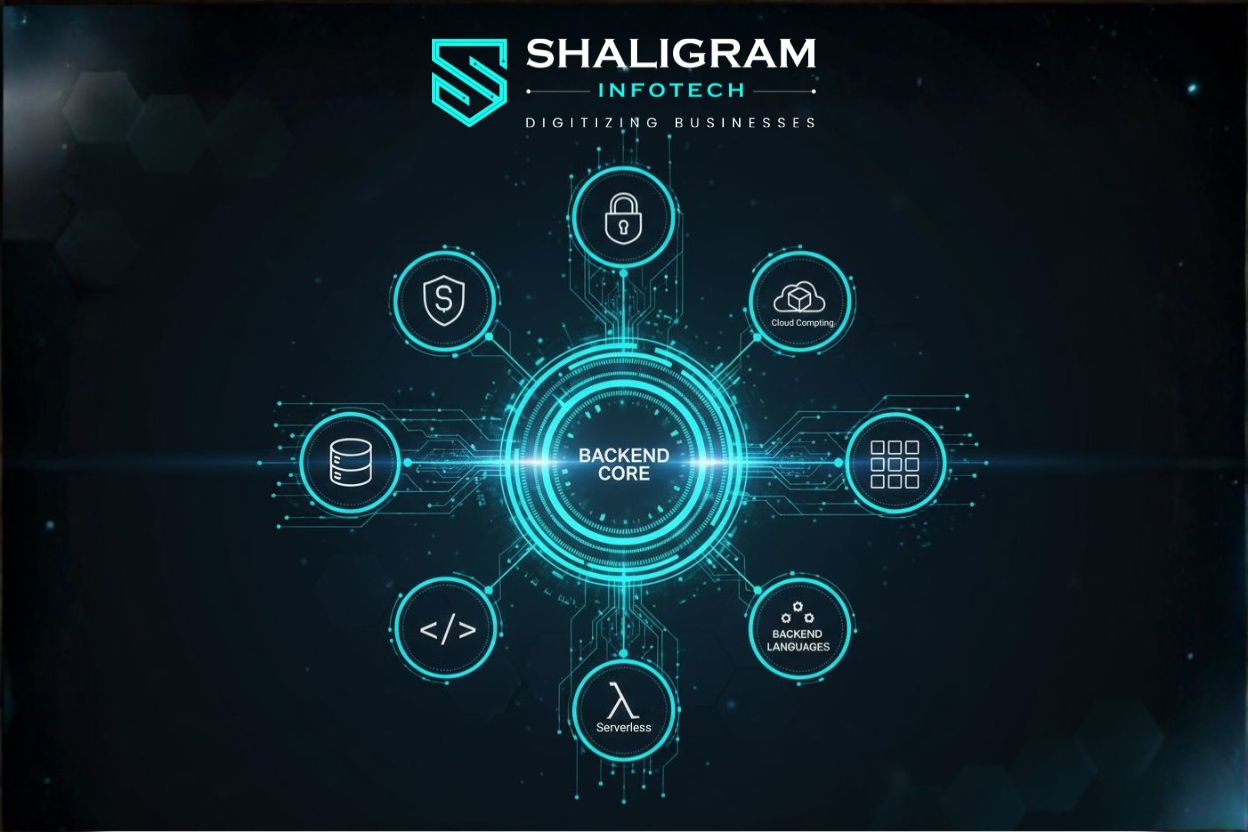
Scalable backend system connected to databases, APIs, cloud, and security

GEt in Touch


    Why Backend Technologies Matter for Scalable Web Apps

    Backend technologies form the foundation of any scalable application. They power business logic, databases, APIs, authentication systems, and third-party integrations. When applications grow from hundreds to millions of users, backend decisions determine whether scaling remains smooth or becomes costly and unstable.
    A well-designed, scalable backend enables:
    • Efficient handling of concurrent user requests
    • Horizontal and vertical scaling without major rewrites
    • Faster feature releases and easier maintenance
    • Secure data processing and compliance readiness
    • Cost-efficient infrastructure usage
    Poor backend choices often result in degraded performance, frequent downtime, rising infrastructure costs, and long-term technical debt. Selecting the right server-side technologies is essential for sustainable growth.

    Backend Development: What It Includes

    Backend development covers all server-side operations required to keep a web application functional, secure, and scalable. For a deeper technical understanding of server-side development fundamentals, MDN Web Docs provides detailed explanations of backend logic, APIs, and data handling.
    Key components of backend development include:

    Server-side logic

    Business rules, workflows, validations, and processing logic that control application behavior.

    Database management

    Schema design, data storage, query optimization, and maintaining data integrity.

    APIs and integrations

    Development of REST or GraphQL APIs and integration with payment gateways, CRMs, analytics platforms, and messaging services.

    Authentication and authorization

    Secure user identity management, role-based access control, and permissions.

    Performance optimization and scalability

    Caching, load balancing, asynchronous processing, and efficient resource utilization.

    Security and compliance

    Data protection, vulnerability mitigation, and compliance with standards such as GDPR, HIPAA, or SOC 2.

    A strong backend is not just about writing code but about building a system that adapts and scales under real-world conditions.

    Backend Languages for Web Development
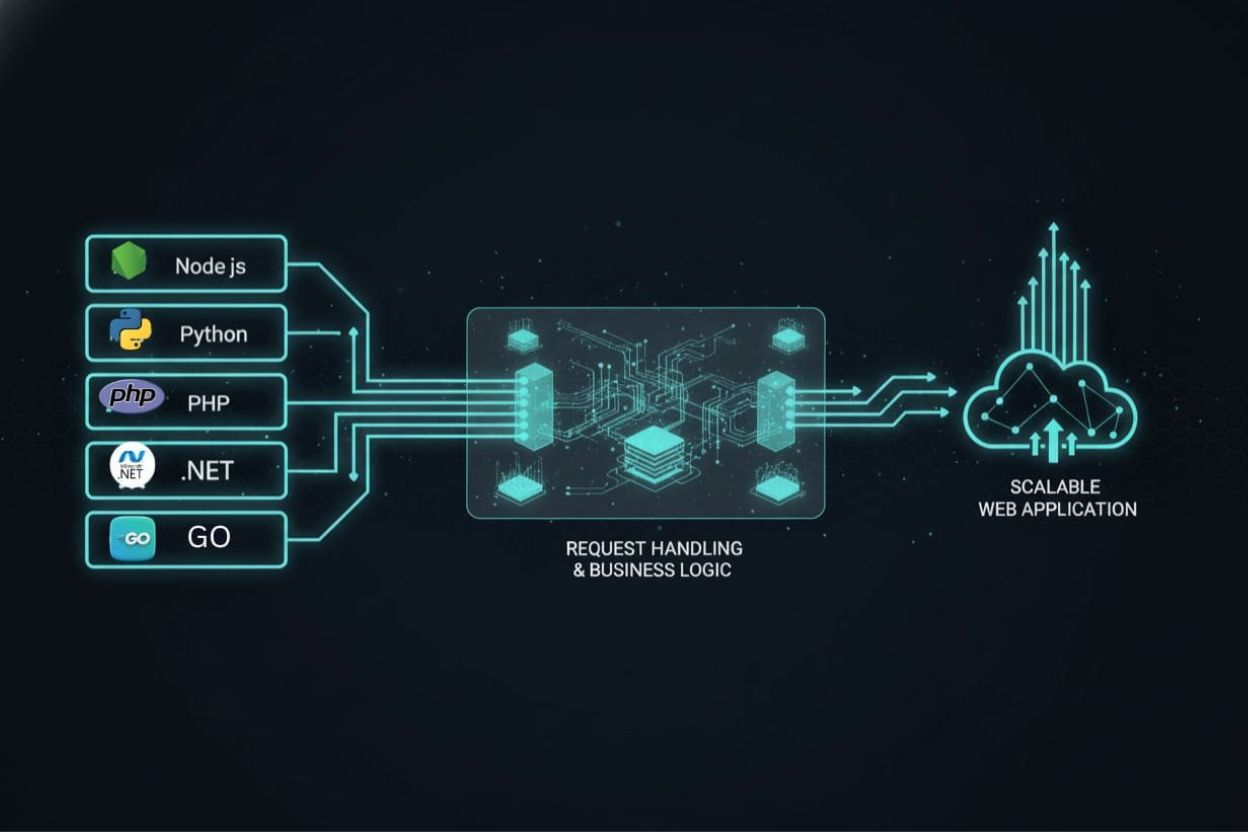
    Popular backend programming languages used in web development

    Choosing the correct backend language for web development affects scalability, ecosystem support, and long-term maintenance. The backend developer roadmap by roadmap.sh outlines how backend languages, frameworks, and system design skills evolve as applications scale.

    JavaScript (Node.js)

    Node.js uses a non-blocking, event-driven architecture that handles concurrent requests efficiently. It is widely used for APIs, microservices, and real-time applications.
    Using JavaScript across both frontend and backend reduces context switching for teams, while the large NPM ecosystem supports rapid and scalable development, making it a strong choice for businesses looking to hire Node.js developers in India for building high-performance web applications.

    Python

    Python is valued for its simplicity and fast development cycle. It is widely used in data-driven applications, AI systems, and SaaS platforms.
    Although Python is not the fastest at runtime, modern frameworks, async support, and horizontal scaling make it a strong choice for scalable web apps.

    Java

    Java remains a leading backend language for enterprise systems. Its performance, strong typing, and mature ecosystem make it ideal for high-traffic and mission-critical applications.
    Java is commonly used in industries such as finance, telecom, and large SaaS platforms where reliability and long-term support are required.

    PHP

    Modern PHP, combined with frameworks like Laravel, delivers improved performance and security. PHP remains relevant for content-driven platforms, SaaS applications, and projects requiring fast development.

    Go

    Go (Golang) is designed for high performance and concurrency. Its lightweight nature and built-in support for parallel execution make it ideal for cloud-native and microservices architectures.
    Go is often used for high-speed APIs and backend systems with strict latency requirements.

    Ruby

    Ruby emphasizes developer productivity and clean syntax. With proper architecture and scaling practices, Ruby remains a viable backend option for startups and SaaS applications.

    C# (.NET)

    C# with .NET and ASP.NET Core provides excellent performance, cross-platform support, and strong scalability. It is widely used in enterprise systems and cloud-native applications, particularly within the Microsoft ecosystem.

    Top Backend Frameworks for Scalable Web Apps
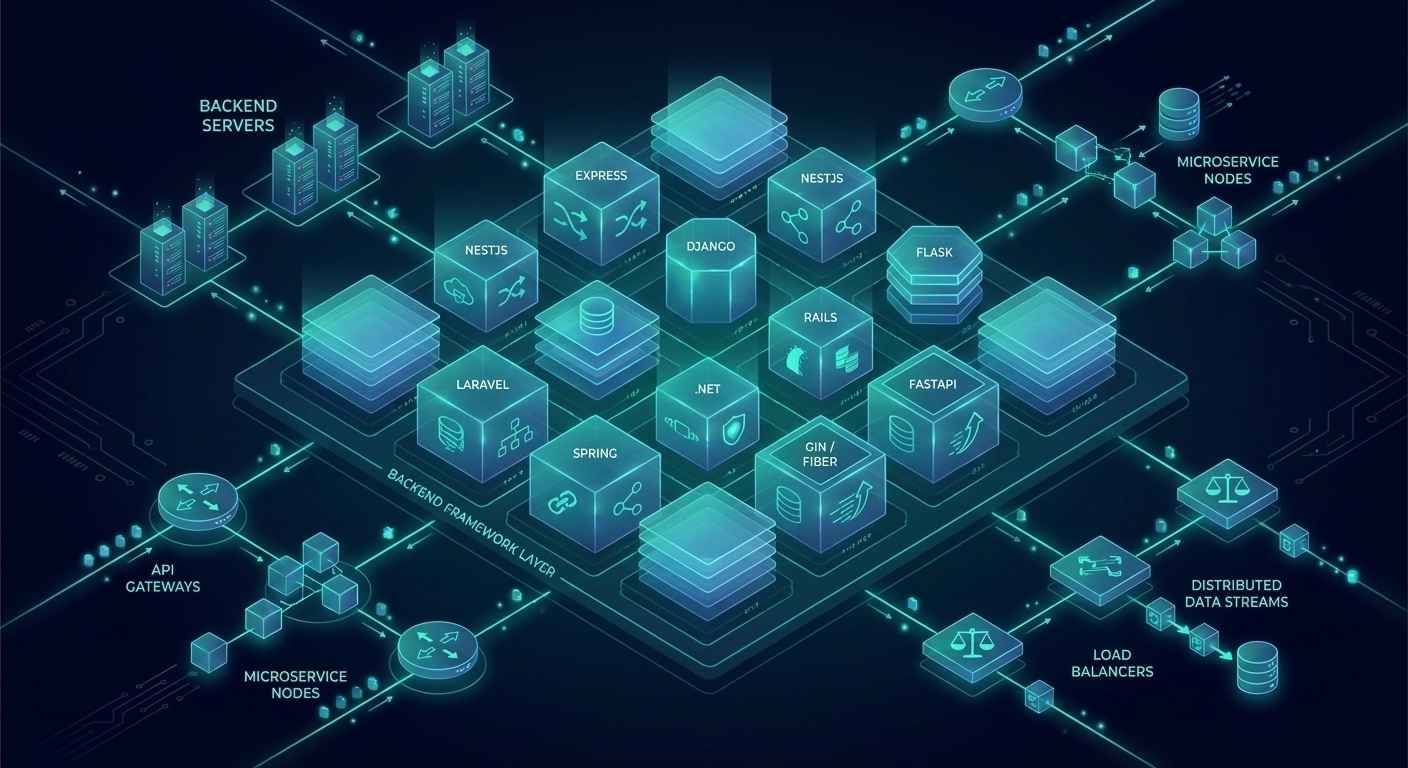
    Popular backend frameworks used in web development

    Frameworks provide structure and best practices that simplify building scalable backends. These backend solutions are a critical subset of modern web app development frameworks, helping teams accelerate development while maintaining performance, security, and scalability.

    Node.js + Express.js

    Express.js is a minimalist framework that provides developers with great flexibility and control. It is a preferred choice for the creation of REST APIs and microservices, especially for teams looking to hire dedicated Express JS developers for custom backend solutions.
    Its lightness implies that when properly architected and layered with middleware, it can handle a large number of users or transactions.

    NestJS

    Built with Node.js and TypeScript, NestJS employs a modular structure inspired by Angular. Unlike unopinionated frameworks, NestJS enforces an architectural pattern, making it ideal for maintaining consistency in large enterprise teams. It is perfect for large-scale projects where maintainability and scalability are of utmost importance.

    Django (Python)

    Django is a framework that comes with everything needed to build the most secure, scalable, and quickest applications possible. It automatically provides you with an ORM, authentication, and administration tools as part of the package.
    Django is a powerhouse solution designed to handle complex applications requiring a stable, secure, and highly organized development environment.

    Flask (Python)

    Flask is a very small microframework, which, although it uncouples its features, still maintains its simplicity. It can be beneficial for applications requiring different scaling, like microservices and web APIs.

    Laravel (PHP)

    Laravel gives developers a modern PHP experience along with ORM, queues, caching, and authentication as its significant features.
    The combination of cloud infrastructure and load balancing still makes it a good choice for scalable architecture.

    Ruby on Rails

    Rails is all about convention over configuration, and the result is a fast development cycle. Still, with the right caching, background jobs, and scaling strategies, Rails can take on large audiences.

    Spring Boot (Java)

    Spring Boot is a crucial technology that makes the Java backend development process smooth, and at the same time, it supports the scalability of enterprise-grade applications. Its implementation is predominant in microservices and large distributed systems.

    ASP.NET Core (C#)

    ASP.NET Core presents remarkable performance, along with its built-in dependency injection, and is able to work with cloud applications. It is an excellent choice for large, safe backend systems.

    Go (Golang) Frameworks (Fiber / Gin)

    Gin and Fiber are well-known Go frameworks that prioritize quickness and ease of use. These frameworks are the top choice for creating high-performance APIs and lightweight microservices.

    FastAPI (Python)

    FastAPI is becoming increasingly popular for its high speed, automatic generation of API documentation, and asynchronous support. It is the right choice for scalable APIs and modern backend architectures.
    Framework Language Scalability Best For
    Express.js
    JavaScript
    High
    APIs, microservices
    NestJS
    JavaScript
    Very High
    Enterprise Node apps
    Django
    Python
    High
    Complex web apps
    Flask
    Python
    Medium–High
    Lightweight APIs
    Laravel
    PHP
    High
    SaaS platforms
    Ruby on Rails
    Ruby
    High
    Rapid SaaS development
    Spring Boot
    Java
    Very High
    Enterprise systems
    ASP.NET Core
    C#
    Very High
    Cloud-native apps
    Gin / Fiber
    Go
    Very High
    High-performance APIs
    FastAPI
    Python
    High
    Async APIs

    Common Mistakes When Selecting Backend Technologies
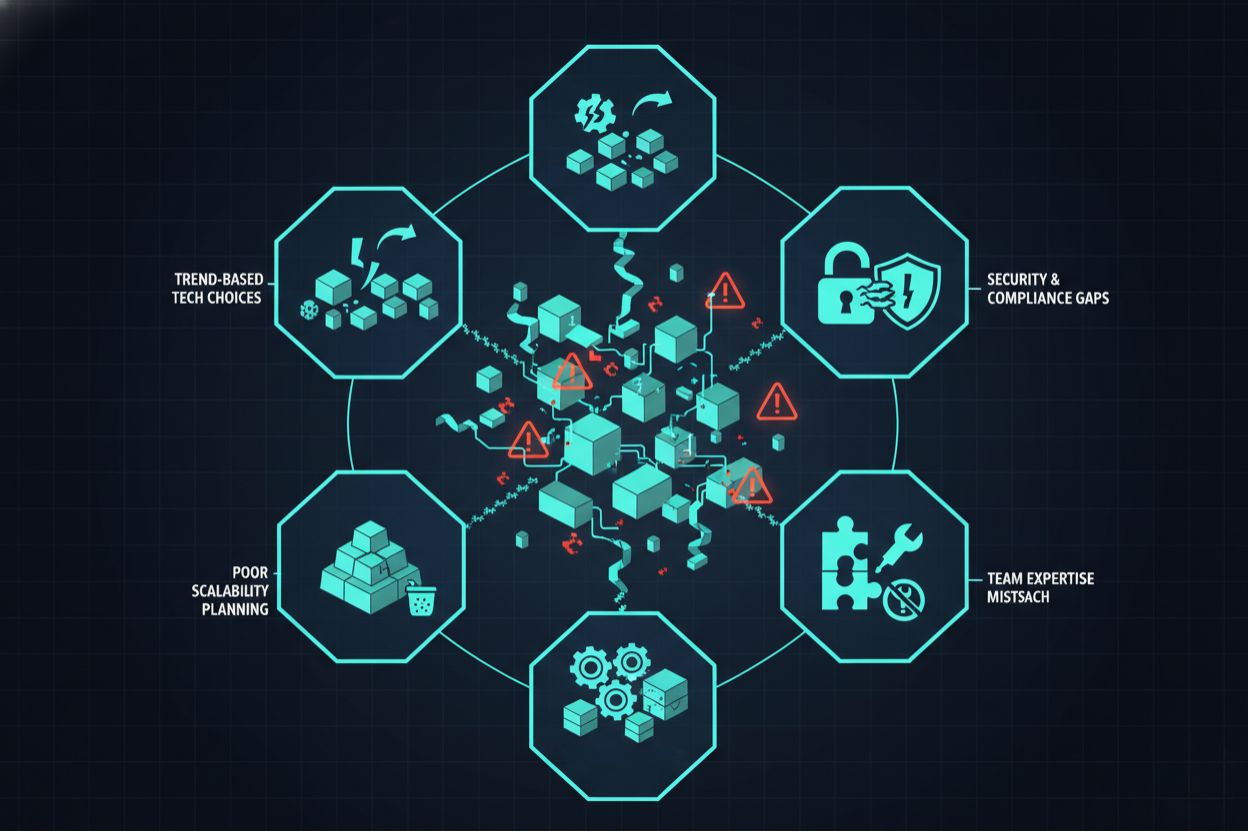
    Common mistakes made when choosing backend technologies
    • Choosing technologies based on trends rather than requirements
    • Ignoring long-term scalability and maintenance
    • Overengineering early-stage applications
    • Underestimating team expertise
    • Overlooking security and compliance needs

    Future of Backend Development: Trends to Watch

    • Increased adoption of serverless and edge computing
    • Growth of API-first and event-driven systems
    • AI-assisted backend development
    • Security-first architecture design
    • Expansion of microservices and platform engineering

    Conclusion

    Selecting the right backend stack is a strategic decision that directly affects scalability, performance, and long-term growth for any software development company in India building modern, scalable web applications. There is no single best backend for every project. Success depends on aligning backend technologies, frameworks, and architectures with application requirements, team expertise, and future goals.
    By understanding backend frameworks, backend languages, and modern backend technologies, businesses can build scalable and resilient web applications that evolve smoothly over time with the support of experienced partners like Shaligram Infotech.

    Ready to build? Contact our global teams:

    🇺🇸 USA: +1 (919) 629-9671
    🇬🇧 UK: +44 20 3581 6366
    🇮🇳 India: +91 99099 84567
    🇦🇺 AUS: +61 07 3121 3147

    💬 Interested in Regular Insights on Web App Development?

    📲 Follow Shaligram Infotech on LinkedIn
    Let’s build the future of applications together.

    FAQs

    What is the best backend technology for scalable web apps?

    There is no universal best option. Node.js, Java, Python, Go, and .NET are all widely used depending on scalability requirements. Need help choosing the right backend for your project? Contact our experts for a tailored recommendation.
    Spring Boot, NestJS, Django, ASP.NET Core, and Laravel remain among the most popular backend frameworks.
    JavaScript, Python, Java, Go, and C# are the most commonly used backend languages.
    Node.js, Java, Python, and .NET, combined with cloud-native or microservices architectures, work well for SaaS platforms.
    Evaluate scalability needs, traffic patterns, team expertise, ecosystem maturity, security requirements, and long-term maintenance.