
Categories
Blog Software Development
Modern Web App Architecture: Types, Patterns, Layers & Best Practices
Software Development

Modern Web App Architecture: Types, Patterns, Layers & Best Practices

Modern web application architecture and scalable cloud backend

GEt in Touch


    What Defines a Modern Web Application Architecture?

    Modern web application architecture is a structural approach that prioritizes modularity, cloud-native scalability, and component isolation. Unlike legacy systems, it utilizes microservices, serverless functions, and containerization to ensure that frontend, backend, and data layers can evolve and scale independently. Thus, the independent evolution of these areas is allowed. APIs serve as the primary mode of communication, enabling loose coupling of components and making integration with external services easier.
    Being cloud-native is a key feature of the new architecture. Presently, technologies leverage virtualization, third-party services, automated deployment, and monitoring tools to support rapid change and continuous operation. The elements of stateless services, non-blocking communication, and fault tolerance have become the system’s fundamental concerns rather than secondary aspects. Google Cloud’s architecture patterns explain cloud-native practices that support modern, scalable systems.

    However, the most significant thing then is the adaptability of modern architecture. It is intended to adapt to changes in business needs, traffic loads, and technology, ensuring the system will not become obsolete in the long run.

    Types of Web Application Architecture
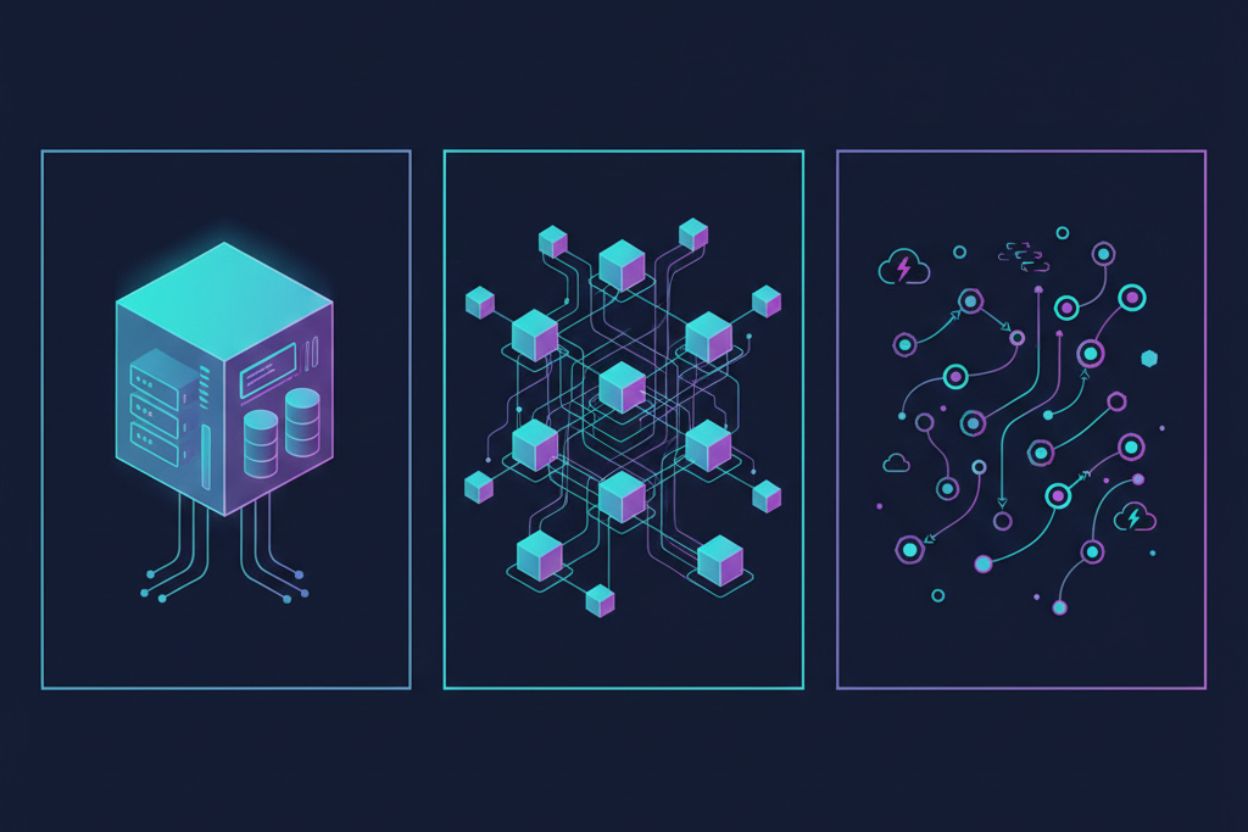
    Monolithic, microservices, and serverless architecture comparison
    Selecting the right architectural approach is a critical part of custom software development services, as it directly impacts scalability, performance, security, and long-term maintainability of web applications.

    Monolithic Architecture

    Monolithic architecture consolidates the whole web application, UI, business logic, and data access into one single unit that can be deployed. All the parts use the same code and runtime environment, which makes development and deployment easy at the beginning.
    This straightforwardness elevates monoliths’ attractiveness to small teams, MVPs, and apps with small-scale usage. Nevertheless, as the application expands, close interdependence among parts can slow development, increase risks during releases, and make scaling inefficient, since the entire system must scale at once.

    Microservices Architecture for Web Applications

    Microservices architecture breaks an application into independent services, each responsible for a specific business function. APIs or messaging systems are the means through which these services communicate, and they can be developed, deployed, and scaled independently.
    The parallel development and fault isolation made possible by this method allow large teams and intricate systems to work smoothly together. Nevertheless, it still raises difficulties for a distributed system, particularly in service coordination, data consistency, and operational complexity. Microservices practice is most productive when coupled with proper DevOps and strong engineering processes.

    Serverless Architecture

    Serverless architecture eliminates the need for infrastructure management, allowing developers to run scripts in response to events without managing servers. Backend processing is handled by serverless cloud functions that automatically scale up or down based on load.
    This approach, in addition to reducing operational costs, is ideal for event-driven workloads, APIs, and fluctuating traffic patterns. Nevertheless, serverless solutions can be subject to cold-start delays and increased reliance on cloud vendors, making them inappropriate for some scenarios. AWS Lambda documentation provides practical guidance on building event-driven, serverless backends.

    Hybrid Architecture Models

    Hybrid architectures combine various architectural styles into a single system. For instance, microservices can be used alongside a core monolithic application or serverless components for background processing.
    This method allows firms to gradually modernize, thereby maintaining a balance between stability and innovation. Hybrid models are prevalent in corporate settings, where integrating modern platforms with legacy systems is a necessity.

    Monolithic Architecture vs Microservices: A Practical Comparison

    Aspect Monolithic Architecture Microservices Architecture
    Scalability
    Scales as a single unit
    Scales individual services
    Deployment
    Simple but risky at scale
    Frequent, isolated deployments
    Operational Complexity
    Low
    High
    Performance & Latency
    Low internal latency
    Network latency between services
    Best Fit
    Small or early-stage applications
    Large, complex platforms

    Scalability & Deployment Trade-Offs

    Monolithic applications primarily scale via vertical scaling (adding CPU/RAM) or horizontal scaling (replicating the entire application behind a load balancer). While effective, this is often resource-inefficient because you must scale the entire application even if only one specific function (e.g., image processing) is experiencing high load. On the contrary, microservices offer fine-grained scaling, enabling high-demand services to scale independently. Deployment of monolith-based applications becomes riskier as applications grow, whereas, conversely, microservices’ use of continuous delivery is less impactful.

    Operational Complexity

    Microservices require more infrastructure, monitoring, logging, and orchestration, making them more complex than monoliths, which are simpler to operate but, over time, become riskier for safe application modification.

    Performance & Latency Impacts

    As a result, monolithic architectures take full advantage of in-process communication and exhibit lower latency. Microservices, on the other hand, need to make network calls that naturally introduce latency, but this can be partly offset by caching, optimized APIs, and asynchronous communication.

    When Monoliths Still Make Sense

    The monolithic approach is still applicable to areas of the product lifecycle where small teams work on it, or when the application is simple, and the scaling requirements are either limited or highly predictable.

    Web Application Architecture Layers Explained

    To build a scalable and user-centric presentation layer, many businesses choose to hire dedicated frontend developers who specialize in modern frameworks, performance optimization, and seamless user experiences.

    Presentation Layer

    The presentation layer is responsible for the interaction between the user and the system and for visual rendering, meaning the user will see and interact with the data via a browser, frontend frameworks, or UI components that display the data and collect user input.

    Business Logic Layer

    The business logic layer includes application rules, workflows, and validations. It is the one that manages operations, establishes policies, and ensures the system behaves uniformly.

    Data Layer

    The data layer oversees the persistence, retrieval, and integrity of application data. It consists of databases, caching systems, and data access mechanisms that are optimized for different workloads.

    Presentation Layer, Business Layer, and Data Layer in Practice

    In practical applications, these layers communicate via well-defined interfaces. Proper separation enhances maintainability, testability, and scalability even as the system expands.

    Frontend-Backend Architecture in Modern Web Apps

    Today’s web applications are, to a large extent, divided into frontend and backend systems. The frontends focus on user experience and rendering; the backends handle business logic, authentication, and data processing.
    Such a separation enables teams to work autonomously, use heterogeneous technologies, and adjust component scale based on usage trends. To ensure robust APIs, secure data handling, and scalable business logic, many organizations choose to hire dedicated backend developer talent to strengthen and future-proof their application architecture.

    Frontend Backend Architecture Patterns

    Standard models cover client-server architecture, backend-for-frontend architectures, and micro-frontend techniques. Every model accommodates unique team organization and scalability needs.

    Frontend Rendering Strategies

    The rendering strategies determine where content is created. Client-side rendering is more interactive, server-side rendering improves SEO and initial load performance, and hybrid approaches combine the two for the best outcome.

    API Layer Architecture & API Gateway Design
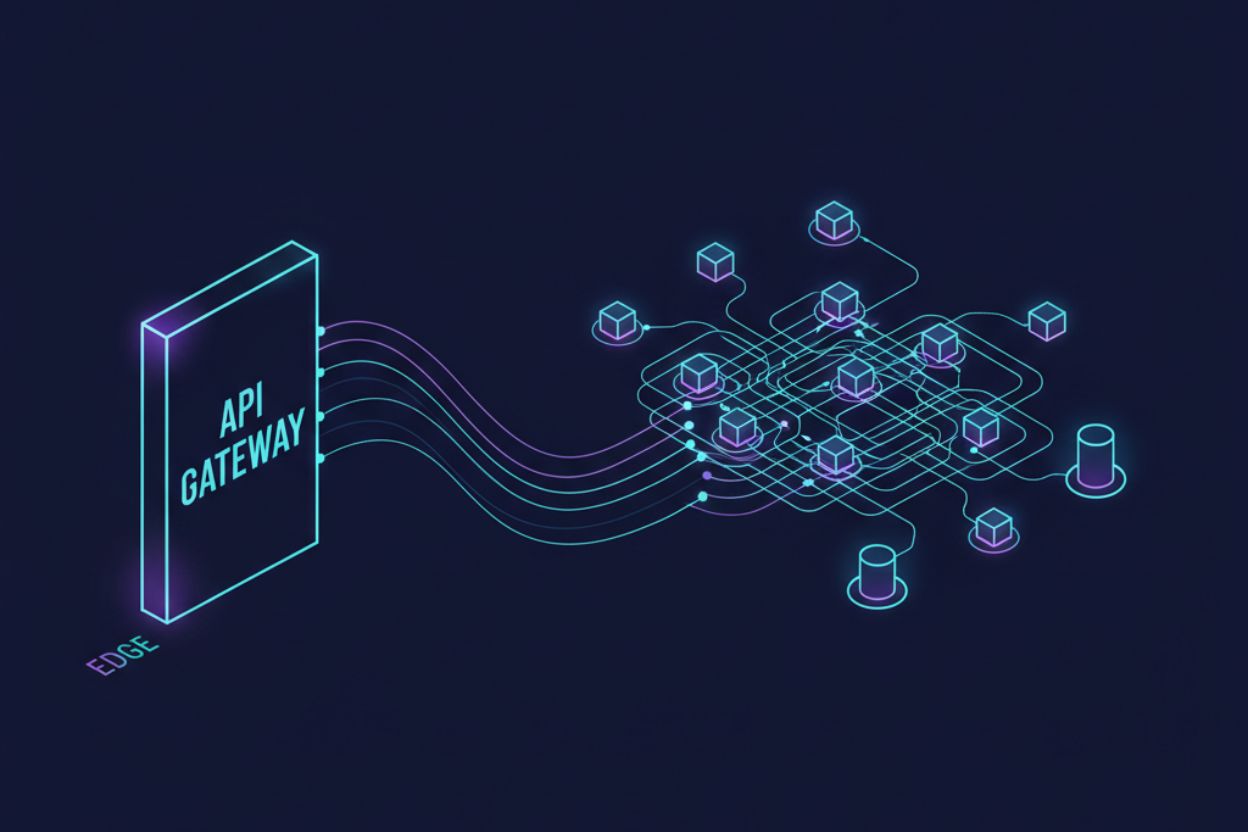
    API gateway routing and service mesh for microservices

    API Layer Architecture in Scalable Systems

    The API layer guarantees a uniform point of access for all clients and backend services. It hides the complexity of the internal systems and allows the backend to change without affecting the users.

    API Gateway Architecture

    An API Gateway acts as the single entry point for all client requests, handling routing, authentication, and rate limiting. In modern API layer architecture, this is often augmented by Edge Computing, where caching and request processing happen closer to the user to minimize latency before hitting the main backend services.

    Why API Gateways Matter for Large Web Platforms

    API gateways make it easier for clients to interact with the system, provide greater security, and enable better monitoring; thus, they become indispensable for large-scale, distributed applications.

    Database Layer Architecture & Scaling Strategies
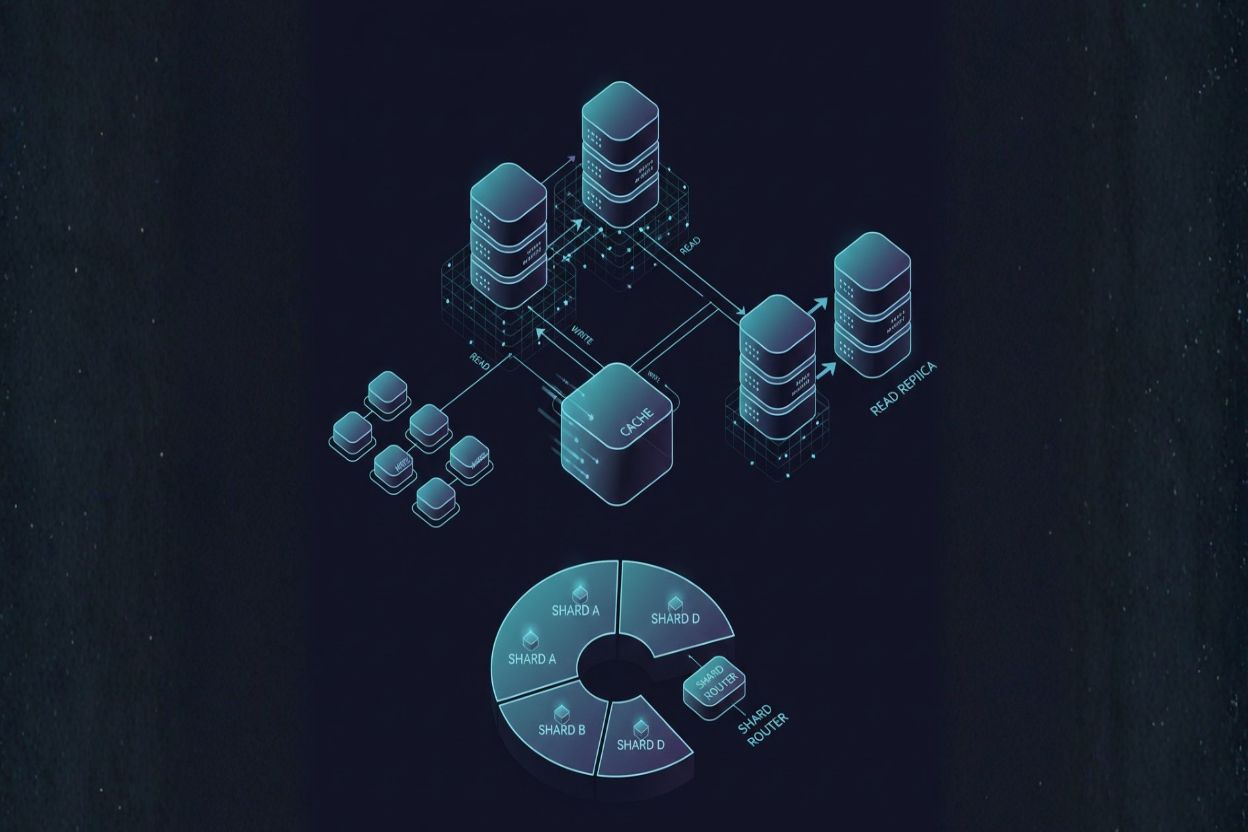
    Database Layer Architecture Models

    A blend of relational databases, NoSQL stores, and in-memory caches is common practice in modern applications. The performance of different data access patterns is guaranteed by this polyglot persistence method.

    Database Scaling Strategies

    Vertical scaling, read replicas, sharding, and distributed databases are among the scaling strategies. The most suitable method is determined by the needs for consistency and the nature of the workload.

    Event-Driven Architecture for Web Applications
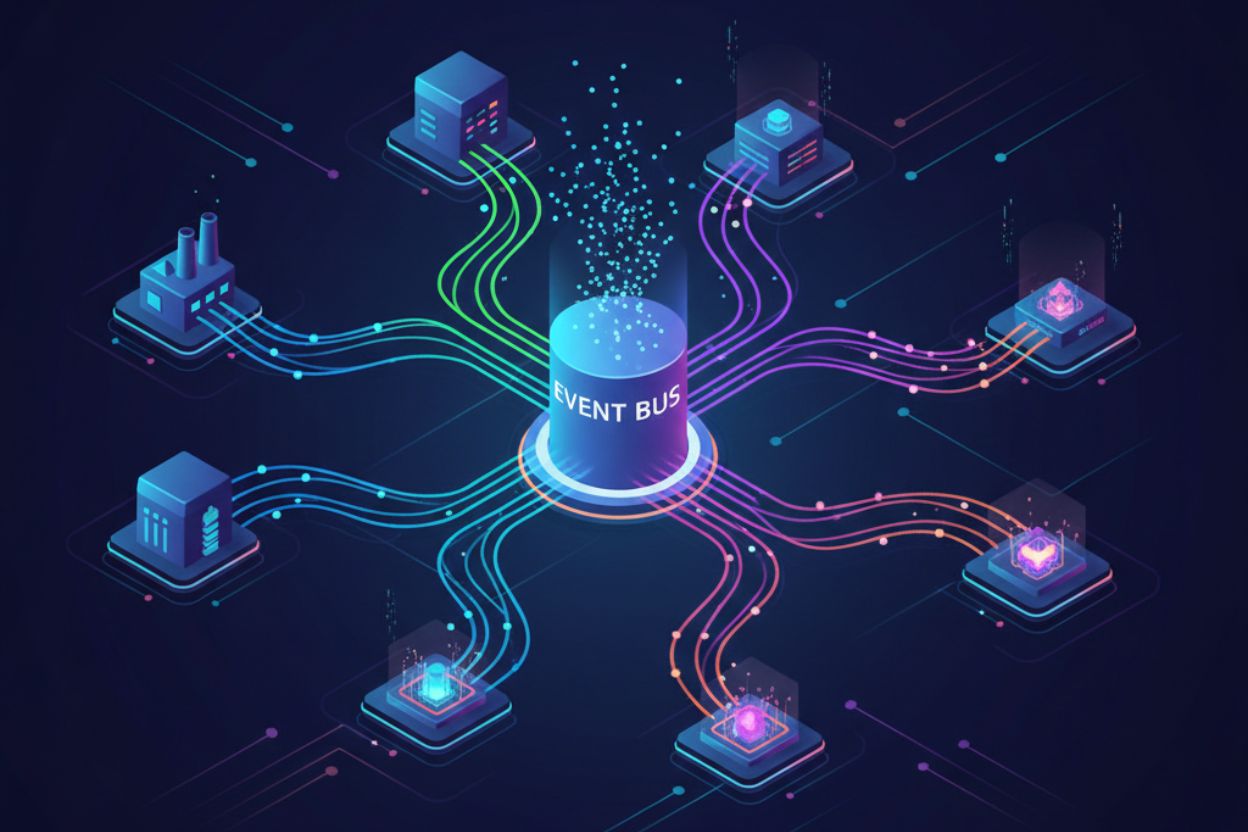
    Event-driven architecture with producers, event bus, and consumers

    How Event-Driven Architecture Web Apps Work

    Event-driven architecture allows services to interact via events instead of direct method invocations. Event producers send events while event consumers process them asynchronously, reducing coupling and improving scalability.

    Use Cases for Event-Driven Systems

    Event-driven architectures are perfect for instant notifications, off-main processing, data analysis pipelines, and connecting different services.

    Web Application Architecture Patterns

    Architectural patterns are solutions that have been tested and found to be faithful to the design issues encountered repeatedly. Patterns like MVC, CQRS, and event sourcing help organize applications based on their size and complexity.
    Many of these patterns are implemented and standardized through modern Web App Development Frameworks, which provide structured conventions to translate architectural principles into scalable, maintainable codebases.
    Domain-driven design for web applications benefits from a clear separation of business domains and technical responsibilities. By aligning architectural boundaries with fundamental business concepts, teams can reduce complexity, improve communication, and build systems that scale more predictably as requirements evolve.

    Web Architecture Patterns Comparison

    Pattern Scalability Performance Development
    Complexity
    Operational
    Overhead
    Best Use Cases
    MVC
    Moderate
    High
    Low
    Low
    Simple web apps
    Microservice
    Very High
    Moderate
    High
    High
    Large platforms
    Event-Driven
    High
    High
    High
    Moderate
    Real-time systems
    CQRS
    High
    High
    High
    High
    Complex domains

    Load Balancing & Performance Optimization in Web Applications
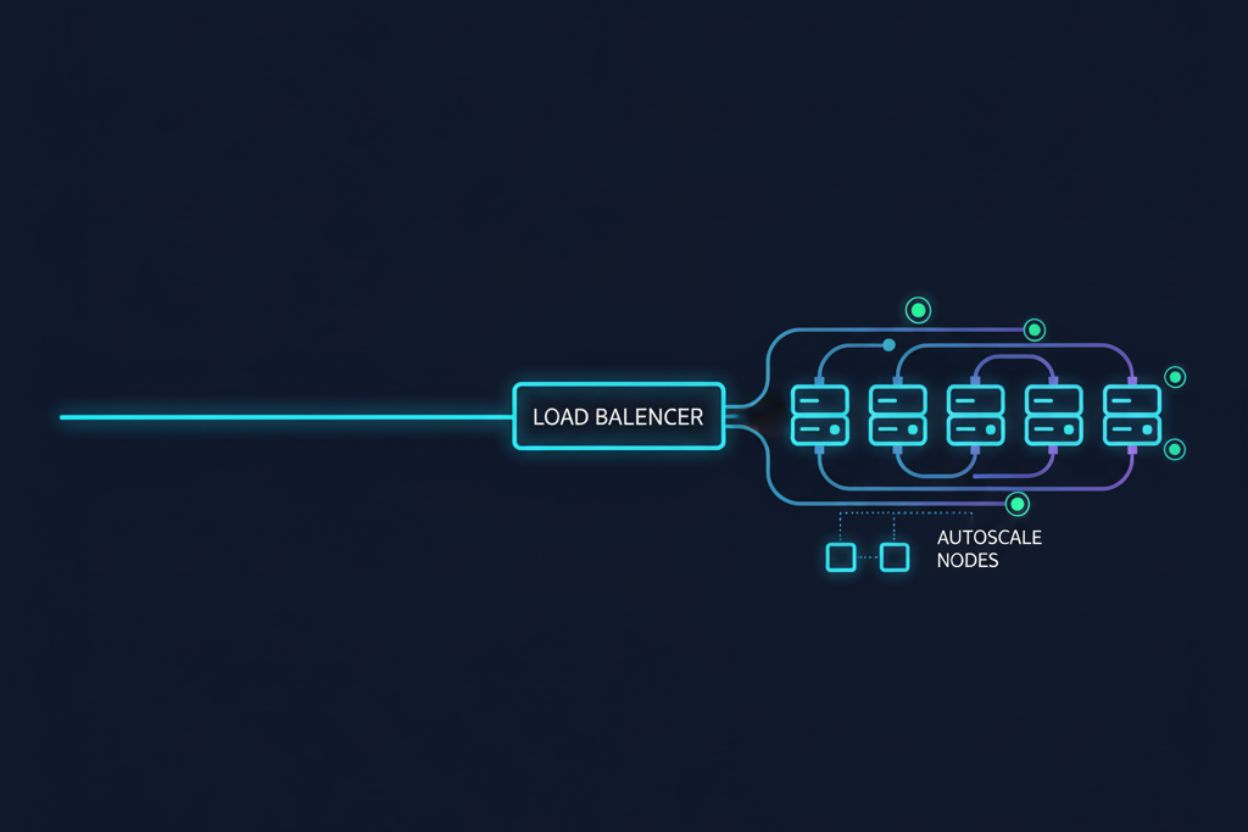
    Load balancing and autoscaling in scalable web applications

    Load Balancing in Web Applications

    Load balancing is a technique that ensures the high availability and fault tolerance of modern web applications by distributing incoming traffic across multiple backend instances. It also allows the application to scale horizontally, enabling it to add or remove servers as demand changes dynamically. While load balancers do not eliminate latency, they manage it by directing requests to healthy, less-loaded instances. They also introduce complexity into the development process, since applications must be designed to be stateless or to manage shared state externally. There are still some overheads related to configuration and monitoring on the operational side, but the managed cloud services have greatly reduced this effort. The most suitable scenarios are for high-traffic platforms, SaaS products, and microservices-based systems where uptime and elastic scaling are crucial.

    Web Application Performance Optimization Techniques

    Performance optimization includes caching strategies, database indexing, asynchronous processing, efficient frontend rendering, and continuous monitoring. Applications can grow traffic and stay responsive thanks to these methods working together.
    These techniques, together, form the foundation of effective web application performance optimization in high-traffic environments.

    Scalable Web Application Architecture Best Practices

    Scalable architectures focus on modularity, stateless services, automated deployments, monitoring, and security-first practices. Planning for scalability from the start avoids costly architectural rework later. When evaluating Progressive Web Apps vs Native Apps, scalability considerations such as performance, offline support, update cycles, and cross-platform reach play a key role in selecting the right architectural approach.

    Framework Choices & Architecture Alignment

    The choice of framework should align with architectural objectives. Microservices and APIs benefit from lightweight frameworks, whereas full-stack frameworks adequately serve monolithic applications. The proper selection strengthens maintainability and scalability for the future.

    Common Architecture Mistakes That Limit Scalability

    The most prevalent errors are interdependence among components, optimization too early, ignoring visibility, and the complexity of operations not fully appreciated. Preventing such problems requires deliberate architectural planning.

    Conclusion

    Shaligram Infotech helps businesses architect and build modern web applications that support millions of users, provide real-time interaction, and enable rapid feature changes. Modern web application architecture is no longer about picking a single “best” model, but about combining the right patterns, layers, and practices to meet business needs. By working with the best software development company in India, companies can create web platforms that scale reliably and evolve with confidence over time.

    Ready to build? Contact our global teams:

    🇺🇸 USA: +1 (919) 629-9671
    🇬🇧 UK: +44 20 3581 6366
    🇮🇳 India: +91 99099 84567
    🇦🇺 AUS: +61 07 3121 3147

    💬 Interested in Regular Insights on Web Application Development?

    📲 Follow Shaligram Infotech on LinkedIn
    Let’s build the future of applications together.

    FAQs

    What are the main types of web application architecture?

    Monolithic, microservice, serverless, and hybrid architectures are the most recognized architectural styles. Looking to implement the right architecture for your project? Contact our experts today to design a scalable, high-performance web application tailored to your business needs.
    No option is universally the best; the decision is made based on factors such as team size, application complexity, and scalability requirements.
    The presentation, business logic, and data layers form the core of a web application architecture.
    API gateways are suited for cases where a single entry point is needed for multiple backend services and various client types.
    Domain-driven design helps build technical architecture aligned with business domains, improving understanding and scalability.