
AI in Mobile App Development: Use Cases, Trends, and Benefits for Modern Apps
GEt in Touch
Quick Summary :
Artificial Intelligence (AI) is transforming mobile app development by enabling smarter, faster, and more personalized user experiences. From AI chatbots and voice assistants to fraud detection, predictive analytics, and automation, businesses are using AI-powered mobile apps to improve customer engagement, streamline operations, and strengthen security. As technologies like generative AI, edge AI, and hyper-personalization continue to evolve, AI-driven mobile applications are becoming essential for businesses looking to stay competitive and deliver innovative digital experiences.
AI is transforming the way that modern apps are created, used, and experienced on the mobile platform. Advances in personalized recommendations, voice-activated assistants, fraud detection systems, and other forms of automation have made AI a core feature in creating more intelligent and responsive mobile applications.
Many businesses are leveraging these capabilities to improve their users’ interactions with their mobile apps and to automate or streamline their operations while capturing valuable insights through data analytics. As a leading custom mobile app development company in USA, many organizations are also investing in AI-driven mobile solutions to deliver innovative digital experiences and stay competitive in the evolving market. In this blog, we’ll explore the key use cases, benefits, trends, and future of AI in mobile app development.
What Is AI in Mobile App Development?
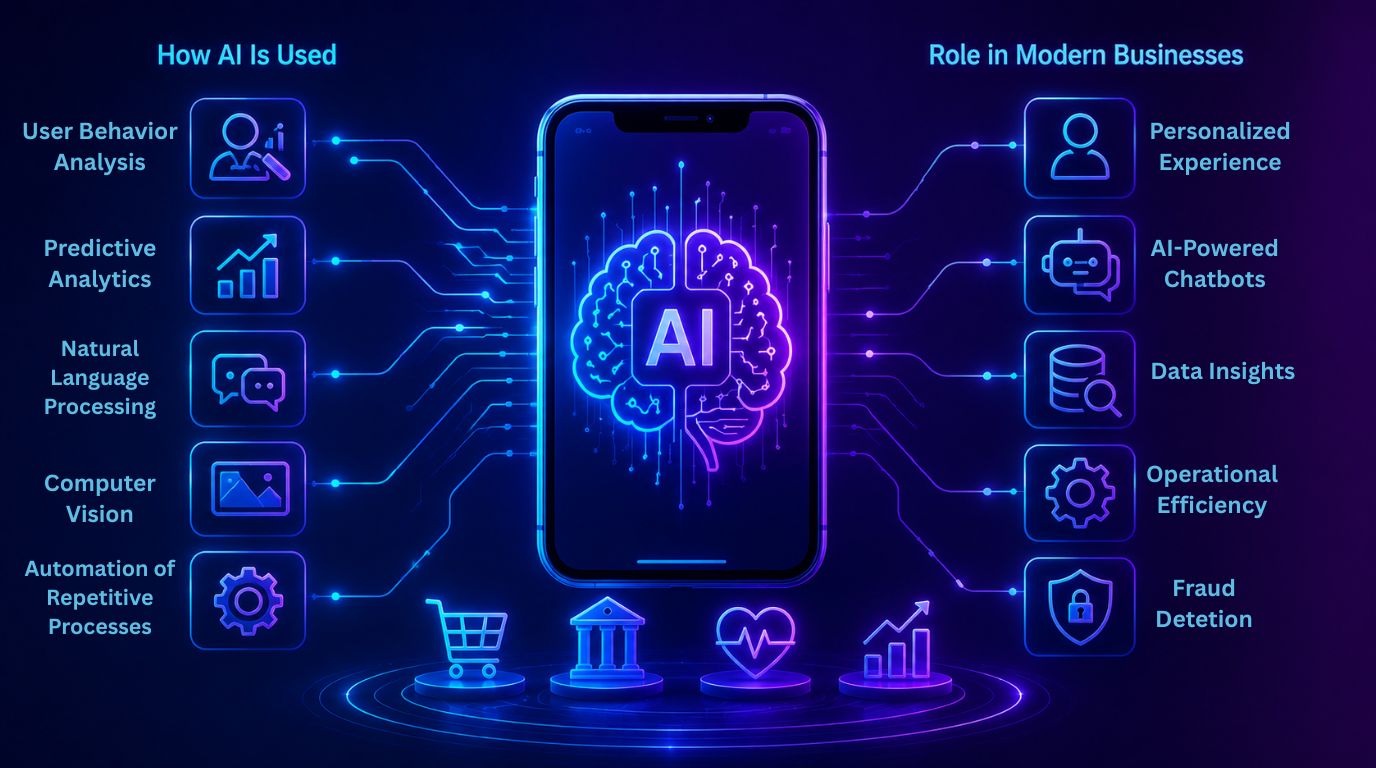
How AI Is Used in Mobile App Development
AI is used in mobile application development and functionality throughout the entire cycle of mobile application development.
Some examples are:
- User Behavior Analysis: AI algorithms assist in analyzing the patterns of user behavior, so an application can provide better content for each user.
- Predictive Analytics AI: AI models assist in forecasting future user interactions and business outcomes based on historical data.
- Natural Language Processing: Natural Language Processing allows an application to understand and engage with its users through voice command systems, chatbots, and intelligent search.
- Computer Vision: AI is utilized in mobile apps to allow the application to read data from images via image input from the user’s mobile device.
- Automation of Repetitive Processes: AI assists in automating repetitive processes like customer service responses, workflow management, data processing, and more.
With these capabilities, AI will enable developers to create more intelligent, adaptive, and responsive mobile applications for users.
Role of Artificial Intelligence Apps in Modern Businesses
Mobile applications using AI are critical tools for business today as they allow businesses to meet customer needs, streamline operations, and provide competitive advantages.
AI-based mobile applications help businesses to:
- Provide hyper-personalized customer experiences
- Automate customer service via AI chatbots
- Analyze large volumes of user data to discover unique business opportunities
- Increase operational efficiency through intelligent automation
- Detect security threats and fraudulent activity in real time
For instance, eCommerce applications use AI to deliver personalized product recommendations based on user browsing history, while banking applications use AI to identify and explain suspicious transactions in real time. Healthcare applications also leverage AI for symptom analysis, remote patient monitoring, and predictive healthcare insights.
Businesses investing in AI and machine learning development services are increasingly using these technologies to build smarter mobile applications that enhance customer engagement, improve user satisfaction, and support data-driven decision-making.
Key Benefits of AI in Mobile App Development
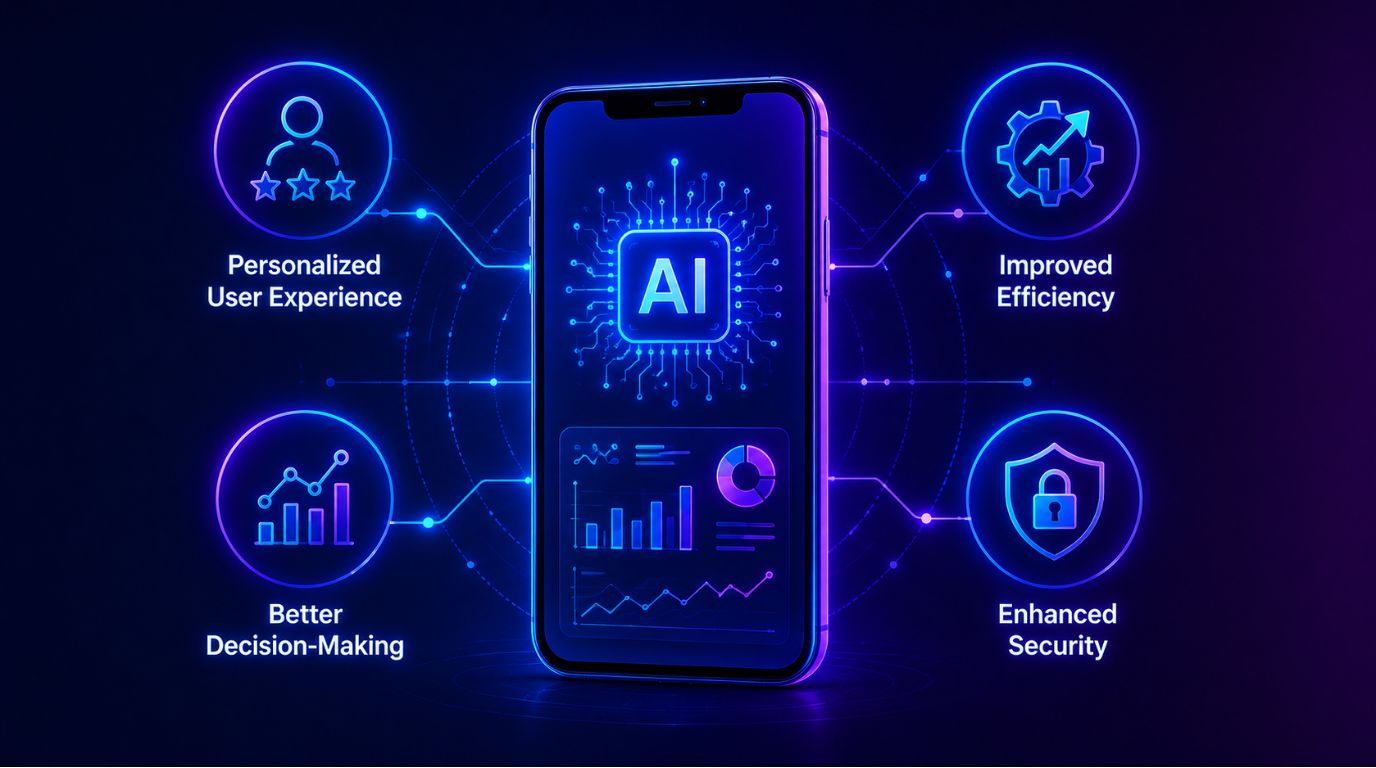
Personalized User Experience
AI analyzes user habits and preferences to create tailored content, suggestions, and interactions, which leads to a better user experience.
Improved Efficiency
Better Decision-Making
Enhanced Security
Top AI Use Cases in Mobile Apps
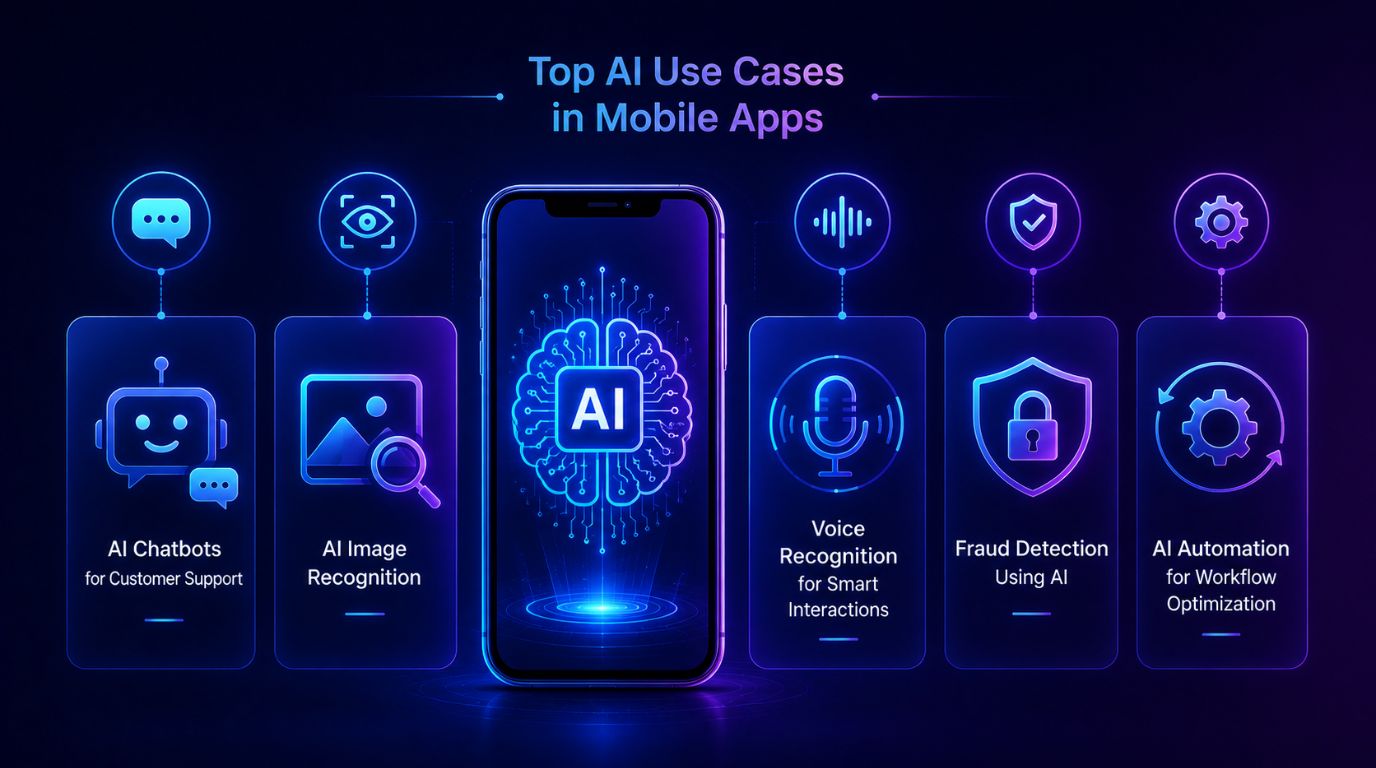
AI Chatbots in Mobile Apps for Customer Support
Mobile apps that have AI features commonly use chatbots that utilize AI technology – such as natural language processing – to handle user requests and give an immediate response.
Some advantages of these chatbots include:
- 24-hour customer service support
- Decreased workload for human customer support teams
- Quicker replies to customers
- More consistent interaction with customers
Many companies across various sectors rely on these mobile app-enabled chatbots to answer common questions, assist customers in completing tasks, and so on.
AI Image Recognition Apps for Visual Intelligence
Mobile applications use image recognition technology to analyze visual material and understand its meaning.
Common applications include:
- Facial recognition for authentication
- Visual product search in eCommerce apps
- Medical image analysis in healthcare apps
- Augmented reality features
Retail applications permit customers to upload product photos, which generate similar item recommendations.
Voice Recognition Mobile Apps for Smart Interactions
Mobile applications use voice recognition technology to process and execute spoken commands received from users.
There are three voice-based technologies, which include:
- Voice assistants
- Voice search functionality
- Smart home control apps
- Accessibility features for users with disabilities
Mobile applications become easier to use because users can interact with them through voice commands.
Fraud Detection in Mobile Apps Using AI
Security is a worry for mobile apps, especially when it comes to money matters and digital payments.
AI-powered systems for fraud detection in mobile apps analyze user behavior and transaction data to identify suspicious activities and anomalies in real time.
Some key things these systems can do include:
- Real-time monitoring of transactions
- Analyzing data from behavior
- Scoring risks
- Sending automated alerts about fraud
These technologies help keep users and businesses safe from scams.
AI Automation in Mobile Apps for Workflow Optimization
Implementing AI automation in mobile apps significantly improves application performance and accelerates task completion.
Examples include:
- Automated calendar scheduling
- Intelligent push notifications and reminders
- Advanced data interpretation and analytics
- Automated document organization and processing
By leveraging AI automation in mobile apps, businesses can focus on big-picture strategies rather than repetitive manual tasks. AI-driven automation significantly improves operational efficiency, allowing human teams to focus on high-value activities that drive growth.
At the same time, businesses often face several hurdles while building smart applications. Common Challenges Businesses Face During Mobile App Development include integrating AI features, managing app security, maintaining performance, handling large amounts of data, and ensuring a seamless user experience across devices. Overcoming these challenges with the right development strategy helps businesses create scalable and future-ready mobile applications.
Generative AI in Mobile Apps: The Next Big Shift
Content Generation and Recommendations
Through generative artificial intelligence (AI), text, image, video, and personalized recommendations can be generated for use within mobile applications.
Some examples of this are:
- AI-generated marketing materials
- Personalized news feed content
- Smart product descriptions
- Automated Summary of Information
Businesses are increasingly adopting Generative AI Development Services in USA to build intelligent mobile applications that improve customer engagement and streamline content creation. The growing impact of generative AI provides organizations with advanced tools to create innovative, scalable, and highly interactive digital experiences for their users.
AI-Powered Personalization
Generative AI improves personalization by analyzing a user’s activities to create tailored experiences. Examples of applications include:
- Personalized shopping experiences
- Customized learning routes provided by educational applications
- Dynamic user interfaces built according to user preferences
The overall effect of these features is to significantly enhance users’ engagement level and likelihood of continued use of an app or website.
Intelligent User Assistance
Users of AI-enabled assistants support finding resources, completing tasks, answering questions, or providing useful or relevant solutions based on the current context.
Here are some examples:
- Writing Assistant
- Virtual Shopping Assistant
- Travel Planner
- Smart Productivity Assistant
These functions make mobile apps more interactive and assistive to their users.
AI Mobile App Development Trends to Watch
A few different trends are changing how we are viewing mobile applications that utilize the power of AI.
Trends such as:
Edge AI and Processing on Devices
Voice-Enabled AI Access
More apps are using voice to interact with their users, allowing more people to have access to technology.
Hyper Personalization Through AI Models
AI Cybersecurity
As more users rely on mobile applications to do their daily tasks, it will be essential for AI to help detect threats and protect sensitive information.
IoT and AI Application Integration
AI applications can be developed to control and monitor many connected devices, both in the home and in businesses.
These trends show us the growing role AI will play in creating new user experiences on mobile devices.
How to Build AI-Powered Mobile Applications
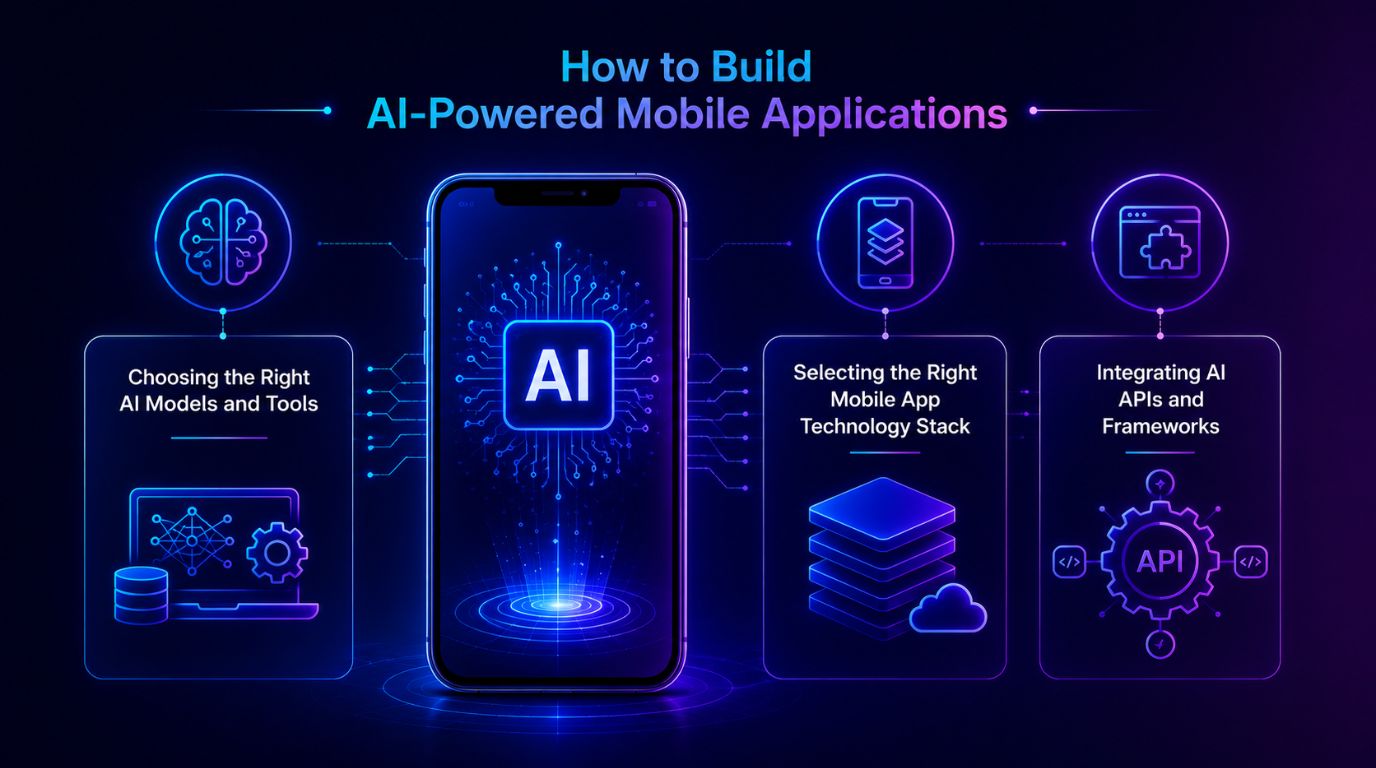
Choosing the Right AI Models and Tools
Choose AI technology wisely – the key to intelligent application development.
AI tech generally includes:
- Machine Learning algorithms.
- Natural Language processing models.
- Computer Vision Systems.
- Predictive analytic tools.
When selecting models, developers will need to consider the use of their application, performance requirements, and the amount/type of data that is available.
Selecting the Right Mobile App Technology Stack
The technology stack significantly impacts how well and how much a mobile application with Artificial Intelligence works.
Some of the common technologies are:
- Mobile Frameworks – e.g. Flutter, React Native
- Cloud Computing Platforms – e.g. Azure, AWS
- Artificial Intelligence Development Tools – e.g. TensorFlow, PyTorch
- Backend Data Processing and Analytics Frameworks
The end result of a well-designed technology stack is a user-friendly integration of AI functionality.
Integrating AI APIs and Frameworks
Technology stacks play a major role in determining how effective and efficient an AI-based mobile application will run.
Some examples of technology stacks include:
- Mobile Frameworks: Flutter or React Native
- Cloud Computing: Azure or AWS
- AI Development: TensorFlow or Pytorch
- Data Processing / Analytics Frameworks
A well-designed technology stack will provide users with a seamless experience integrating AI capabilities.
Challenges in AI Mobile App Development
Implementing Artificial intelligence (AI) into mobile apps brings many benefits, but it also presents challenges.
Some of the main challenges are:
- Data Quality and Availability: AI needs to use a lot of high-quality data to make accurate predictions.
- Computational Needs: The computational power required to process AI may slow down the mobile app.
- Privacy and Security Issues: Using user data must meet the privacy compliance guidelines for data collection and processing.
- Complexity of Integration: Bringing together AI technologies with mobile architecture can be very technically complex.
- Maintenance and Upgrades of Models: AI Models will need to be updated and monitored over time to be effective.
These challenges must be addressed through sound planning and the use of developers with appropriate experience.
Best Practices for AI in Mobile App Development
To get the best out of AI within mobile applications, there are some key steps businesses must follow:
- Defining clear use cases
- Collecting clean and organized data
- Ensuring privacy concerns and compliance with regulations
- Utilizing scalable cloud infrastructure
- Monitoring and enhancing your model(s)
- Putting your end-users first to create and maintain both user experience and transparency.
By working through the above, businesses can develop dependable and successful mobile applications built on AI.
Future of Artificial Intelligence in Mobile Apps
Mobile app development is going to have a very productive future with artificial intelligence. This means mobile apps will be more intelligent, responsive, and unique due to artificial intelligence technologies that continue evolving.
Some examples of how this may occur:
- Sophisticated Artificial Intelligence personal assistants that can accomplish difficult workloads
- Embedded real-time predictive analytics into routine applications
- More powerful on-device artificial intelligence processing
- Seamless integration with smart devices and mobile applications
- Fully autonomous digital personal assistants
These new technologies change the way consumers and companies use mobile technology and provide digital services.
Conclusion
Mobile application development has changed for good with the advent of artificial intelligence (AI). Application creation will become more intelligent and more tailored to individual users now that we have application interfaces such as chatbots, voice assistants, and fraud detection. Generative AI in mobile apps will continue to provide advanced functionality and highly personalized digital experiences.
Companies that integrate AI into their mobile applications can significantly improve user experience, automate complex workflows, and gain valuable insights through data analysis. Partnering with a leading software development company in USA like Shaligram Infotech can help businesses successfully implement AI-powered mobile solutions that are scalable, secure, and future-ready. As AI technology continues to evolve, businesses using AI-driven mobile applications will stay ahead in digital innovation, competition, and long-term growth.
Ready to build? Contact Our Global Teams
🇺🇸 USA: +1 (919) 629-9671
🇬🇧 UK: +44 20 3581 6366
🇮🇳 India: +91 99099 84567
🇦🇺 AUS: +61 07 3121 3147

💬 Interested in Regular Insights on Software and App Development?
📲 Follow Shaligram Infotech on LinkedIn
Let’s build the future of applications together.
FAQs
What are the benefits of AI in mobile app development?
What are the benefits of AI in mobile app development?
Artificial intelligence helps improve mobile apps by delivering personalized user experiences, automating repetitive tasks, enabling predictive analytics, and enhancing security features. AI-powered mobile applications help businesses increase user engagement, streamline operations, and make smarter decisions based on real-time data insights. Contact our experts to build intelligent, scalable mobile app solutions for your business needs.
What are the most common AI use cases in mobile apps?
What are the most common AI use cases in mobile apps?
The top AI use cases in mobile apps include AI chatbots in mobile apps for customer support, voice recognition mobile apps, and AI image recognition apps. Additionally, artificial intelligence apps are widely used to analyze transactions, recommend personalized content, and drive AI automation in mobile apps.
What is generative AI in mobile apps?
What is generative AI in mobile apps?
Artificial intelligence looks at how people use things, what they buy, and what they have done before to find things that do not seem right. It can find these things happening. Send out warnings or stop fake transactions all by itself.
How does AI help with fraud detection in mobile apps?
How does AI help with fraud detection in mobile apps?
Artificial intelligence looks at how people use things, what they buy, and what they have done before to find things that do not seem right. It can find these things happening. Send out warnings or stop fake transactions all by itself.
What are the latest AI mobile app development trends?
What are the latest AI mobile app development trends?
Some new things that people are doing with intelligence include using it on the device itself, using it to make voice assistants, adding it to apps, making things that are just for the person using them, and using it to keep apps safe from harm. Artificial intelligence is used in all these ways to make mobile apps better and to help businesses. Artificial intelligence is good at helping people and making things easier for them. Many businesses now prefer to hire mobile app developers in USA to create smarter, faster, and more user-friendly mobile applications.


 Get In Touch