
Software Development
Hotel CRM Development: Features, Benefits, And Implementation
GEt in Touch
| Table |
|---|
Experiences drive the hospitality sector. For hotels, providing a unique, hassle-free, and unforgettable stay is as essential as comfortable rooms and luxury facilities. In today’s digitally led world, guests expect a lot more than a friendly smile – they want personalized offers, simple booking processes, and fast communication at every stage of their journey. This is where Hotel CRM, or Customer Relationship Management, in the hospitality industry comes in.
Investment in hotel CRM systems, such as Microsoft Dynamics 365 services, has become a strategic necessity for hotels that are looking to establish a stronger relationship with their guests and reduce reliance on OTAs (Online Travel Agencies) while maximizing their revenue.
In this blog, we’ll explore everything you need to know about hotel CRM development, its important features, benefits, implementation, and key considerations for success.
What is a Hotel CRM?
A hotel CRM is a type of software designed to help manage relationships with guests, optimize hotel operations, and create new revenue opportunities. Unlike more generic CRM systems, hotel CRMs are designed specifically to meet the needs of the hospitality sector. As highlighted by Harvard Business Review, hospitality-focused CRM tools enable personalized guest experiences by centralizing critical data.
Hotel CRMs aggregate guest data, guest reservation history, guest communication preferences, and guest feedback into a central location so hotels can personalize the guest experience and cultivate guest loyalty.
You can think of the hotel CRM system like a digital gatekeeper. It tracks each interaction you have with the guest, from the first inquiry through a post-stay follow-up, making it easy for you to maintain a consistent and personalized experience. With the support of custom software development services, these CRM systems can be tailored to meet the unique operational needs of your hotel, ensuring maximum efficiency and guest satisfaction.
Why Hotels Need CRM Software
The hotel sector is one of the most competitive markets, and the expectations of guests are changing fast. Hotels using a robust CRM system are less likely to over-depend on OTAs, to miss upselling, and will develop long-term guest loyalty.
The key reasons hotels need hospitality CRM automation can be summarized as follows, and working with a trusted CRM development company helps implement these strategies effectively:
- To consolidate guest profile information that is fragmented across booking engines, marketing tools, and the front desk system.
- To deliver personalized offers and messaging that are relevant to the modern traveler.
- To generate more direct bookings from tailored promotions, which will reduce the reliance on OTAs.
- To make staff more efficient and to automate repetitive tasks.
- To access guest data, which will help hoteliers make decisions for the business moving forward.
In summary, CRM software for the hospitality industry is not merely an investment in technology, but rather a systematic way to remain competitive and guest-focused.
Must-Have Features of a Hotel CRM System
Centralized Guest Database
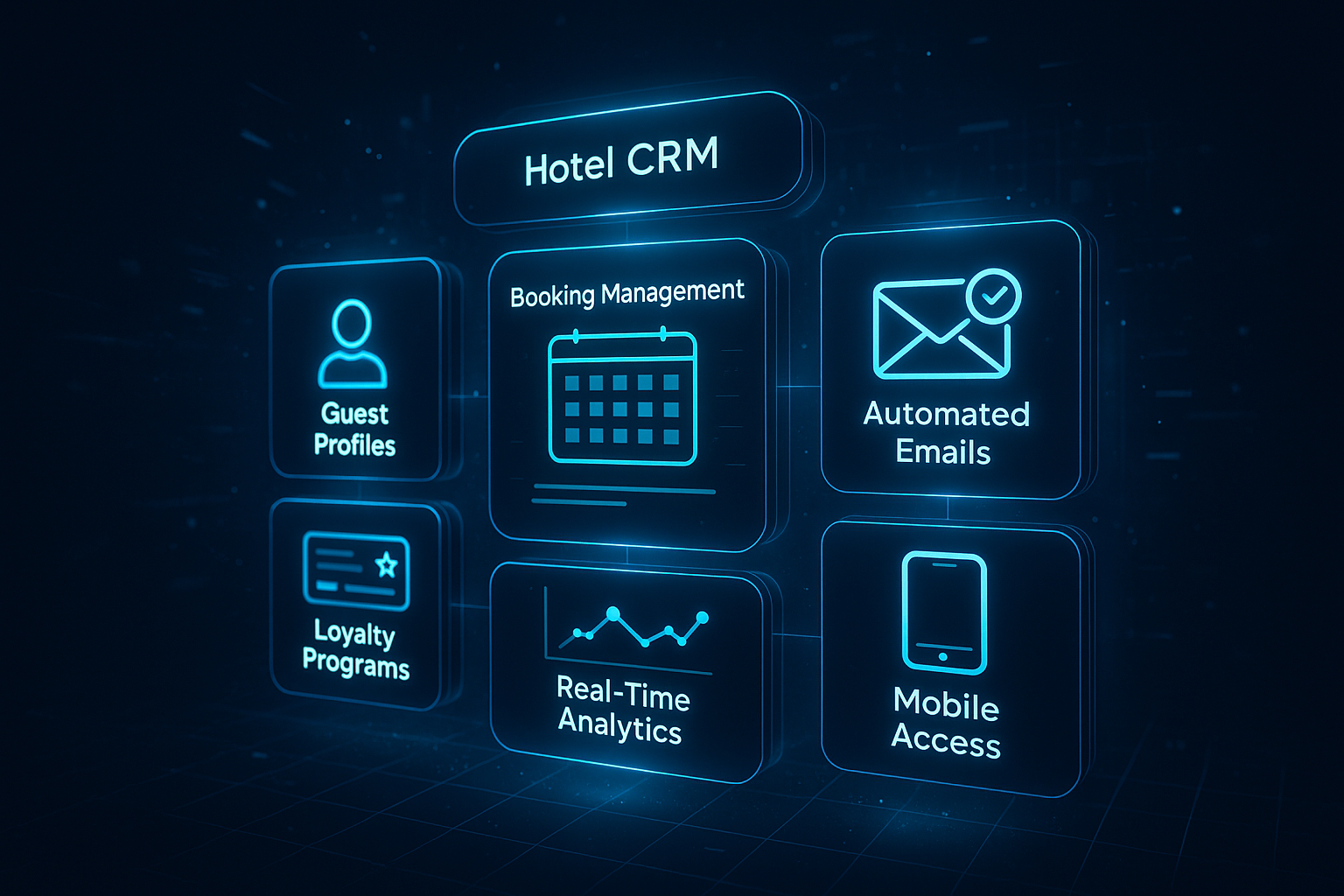
A guest database includes the history of guests’ stay, their preferences and demographics, and their feedback. This type of information allows a hotel to communicate more effectively with guests, drive repeat bookings, and create a unique guest experience.
Integration with Hotel Booking Software & Reservation
Management Systems
Easy integration with PMS (Property Management Systems), booking engine, and reservation services allows for real-time information flow into the hotel operation. This means that it helps avoid overbooking, minimizes administrative errors, and provides useful data on occupancy trends
Automated Guest Communication & Personalization
Automation enables timely communication (booking confirmations, pre-arrival reminders, post-stay survey). Personalization engines allow hotels to send special offers, discounts for birthdays, or room upgrade offers to guests, making them feel appreciated.
Loyalty Program Management
Hotel booking management system lets you design and manage loyalty programs right from tracking points, as well as providing incentives for frequent travelers. A well-executed loyalty program boosts repeat bookings and allows for a hotel’s dependency on OTAs to decrease.
Revenue Management & Upselling Tools
CRMs that have revenue optimization technology enable revenue managers to develop opportunities for upselling guests on amenities, such as spa specials, dining options, or late checkout requests. This type of capability supports the core hotel industry principle of growing secondary revenue at the same time as enhancing guest satisfaction.
Mobile Access for Staff
Modern hotel CRM systems offer mobile apps to staff to let them access guest profiles and booking information, leading to industry mobility that allows front desk associates to share reservations with housekeeping in real time. Mobile CRMs enable a hotel to quickly and easily communicate booking changes across departments while also keeping the guest engaged, whether it be the front desk or housekeeping. Dynamics 365 further supports this by enabling efficient remote and mobile workforce operations.
Advanced Analytics & Reporting
Analytics dashboards give insight and visual representations of guest behaviors, booking trends, and campaign effectiveness. This helps managers make informed data-driven decisions in terms of marketing investments, pricing strategies, and guest services to offer the best customer experience possible.
Benefits of Hotel CRM for the Hospitality Industry

Improved Guest Satisfaction and Retention
A hotel can generate repeat customers who not only appreciate their stay but also will tell others how great it was by investing in good hotel reservation software. A great hotel CRM will allow staff to understand guest preferences before a stay begins, creating experiences that feel personalized.
Increased Direct Bookings vs. OTA Dependency
Attracting repeat guests with offers and loyalty programs will drive direct bookings to the hotel, which will lower costly OTA commissions from bookings. According to McKinsey’s analysis of hospitality trends, direct booking strategies are essential for improving margins and guest loyalty.
Streamlined Operations with Hospitality CRM Systems
A centralized CRM will allow for efficiency in staffing, more coordination between departments, and an easier workflow throughout the property. Solutions like Dynamics 365 play a key role in streamlining operations and improving overall property management.
Data-driven Decision-Making for Managers
With a reliable hotel reservation management system, managers get access to deep insights on what to do with pricing, staffing, and marketing, which will lead to more profits. Dynamics 365 supports these data-driven decisions by providing real-time analytics and actionable insights.
Improved Sales Pipeline with Hotel Sales CRM
Sales CRM functions will help attract corporate clients, book events, and build B2B relationships with travel agencies and groups.
Custom vs. Ready-Made Hotel CRM Solutions
When hotels start thinking about rolling out a CRM, one of the first points of consideration is whether to engage in a custom-built solution or a pre-built CRM solution. Both have pros and cons, and the right choice for the hotel will depend on size, budget, long-term strategy, and technical requirements.
Pre-Built Hotel CRM Solutions
Pre-built CRM solutions are off-the-shelf platforms that hotels can quickly buy, configure, and deploy. Many popular SaaS CRMs targeted to hospitality come with integration for booking engines, property management systems (PMS), and marketing tools.
Custom Hotel CRM Solutions
Custom hotel CRMs are custom-built systems developed for a hotel or a chain of hotels. They are built from the ground up to meet specific business processes, brand standards, and guest engagement strategies.
Hotel CRM for Different Types of Hospitality Businesses
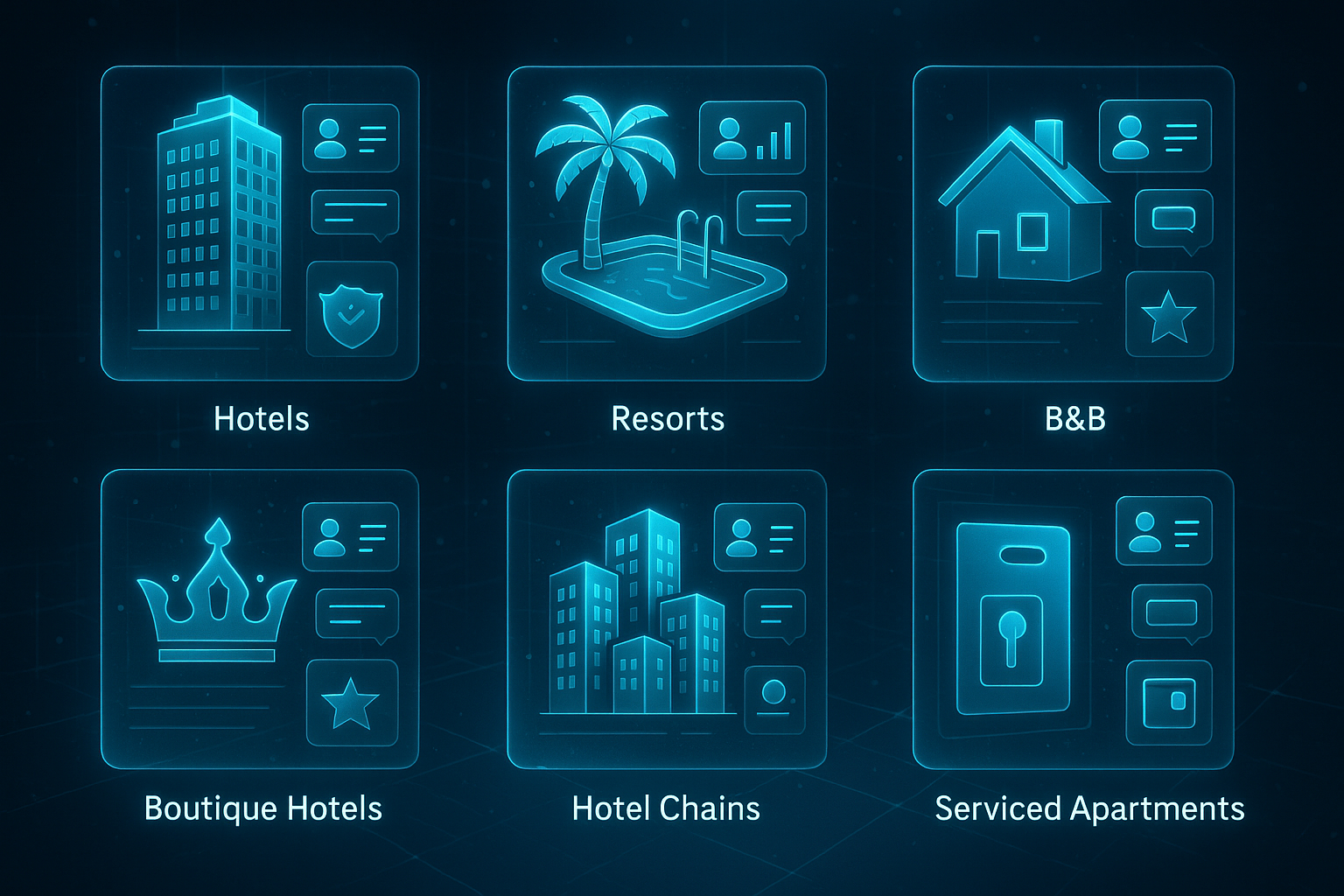
The versatility of CRM systems represents their primary strengths. Not every hotel operates under the same conditions, nor do they accommodate the same types of guests. Below are illustrations of how each hotel sector can provide different levels of unique value with CRMs
Luxury Hotels & Resorts
Luxury travelers expect flawless personalization. A CRM allows the hotel staff to anticipate guest needs – whether they prefer champagne or sparkling water in their room after check-in, the type of pillow used, or if the spa needs to be arranged ahead of time. Integration with the hotel’s loyalty program ensures returning VIPs leave with a feeling of recognition while confirming that they are being offered unique value.
Boutique Hotels
Boutique hotels rely on storytelling and unique guest experiences. A CRM allows them to maintain personal relationships with their guests while storing guest feedback, reasons for their trip (i.e., honeymoon, anniversary, business trip), and their stated preferences. CRMs also provide the boutique hotel with options to conduct targeted marketing campaigns consistent with their hotel’s brand.
Business Hotels
For business travelers, time and efficiency are what matter the most. A CRM for business hotel guests is centered around managing corporate accounts, group bookings, event management, and fast check-in times. A CRM may also allow the user to handle invoicing automatically, as well as manage the meeting-room schedules at the hotel property.
Resorts & Spas
Guests of resorts and spas are often looking to package everything together, from wellness programs to adventure programs. A CRM allows the hotel to assess the guest’s interests to recommend/to upsell another service, together with a spa appointment or golf outings, or a negotiable water adventure.
Small & Budget Hotels
Budget hotels often operate on narrow margins and are highly dependent on OTAs. With a small hotel booking software, they can reduce labor costs by automating many communications (check-in letters, post-stay surveys, etc.) and can stimulate loyalty among budget-conscious travelers.
Chains & Multi-Property Groups
Hotel chains need a CRM that can scale globally at each property, while allowing centralized guest records from anywhere in the world. This enables guests to experience seamless service, whether they are staying in New York or Singapore, and enables the tracking of loyalty points earned anywhere in the world.
Hotel CRM Development & Implementation Process
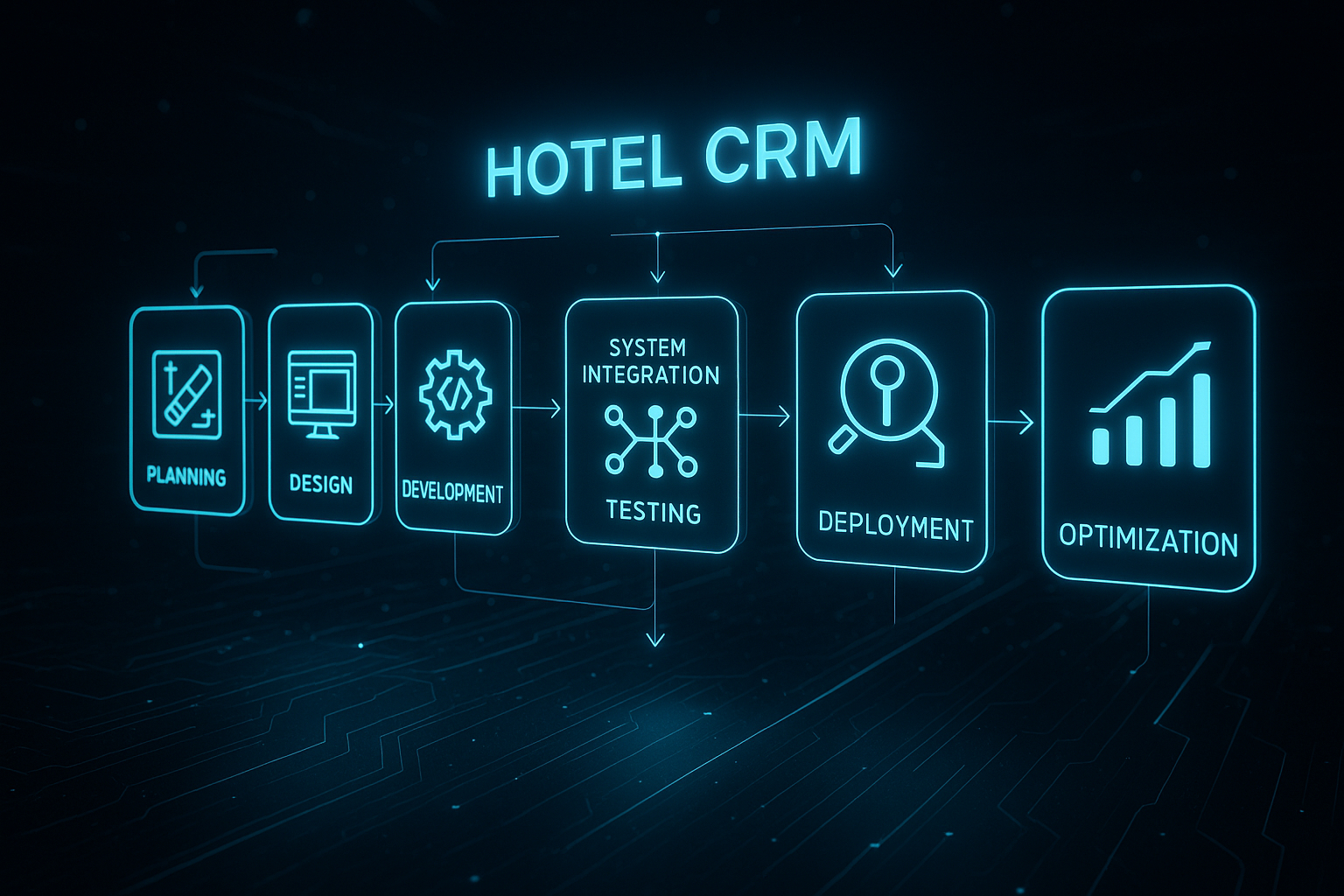
Establishing and launching a CRM for hotels is a multi-step process. If deployments are rushed without deliberate thought, a hotel may find its new CRM is not being fully utilized, or worse, employees may simply be resistant. Using a step-by-step or structured approach will pay back in the end:
Identify Requirements
The first step is to determine what is required by the hotel. Does it need stronger communication between hotel guests and staff, enhanced reporting, and integration with OTAs in a streamlined way? Hotels should be sure to involve all stakeholders from the front desk, sales, marketing, housekeeping, and management, to ensure the CRM will meet requirements for all relevant touchpoints.
Vendor/Development Partner Selection
Determining if a hotel should opt for off-the-shelf CRM products or partner with a development company for a custom piece of software is required early. Some key selection criteria for a hotel CRM should include cost, future scalability, integrations, ease of use, and primary software support by the vendor.
System Design & Developmen
In the case of developing your own CRM, the design process will require determining what modules will be included (such as a guest database, loyalty databases, analytics), what workflows will be needed, and integration flows to make your new CRM work rock-solidly with your hotel. If a CRM is off-the-shelf, this phase is likely simply customizing settings to fit the uniqueness of the existing hotel operations.
Integration with Existing Systems
No CRM stands alone as a system. A hotel’s new CRM must integrate with the PMS, POS, booking engines, and channel manager to stay accurate with good data and to eliminate manual duplication. For a stronger hospitality operation, including larger hotels, this integration process will rely on APIs working seamlessly together and in real-time.
Testing & Pilot Implementation
Before full-scale deployment, hotels should conduct tests on a pilot basis in one property or department. This allows hotels to identify gaps, usability issues, and training requirements. Feedback obtained through tests helps further tweak the system.
Training & Change Management Staff
Technology implementation is considered only successful when employees feel comfortable using it. Training sessions at all levels, along with user guides that are easily digestible and have ongoing support, ultimately convince employees to adopt the CRM rather than resist using it.
Implementation & Ongoing Monitoring
After successful pilots, hotels can go for full deployment at all properties. Monitoring will occur on a regular basis and throughout guest feedback and employee performance reviews to measure ROI. This ongoing data analysis presents the opportunity for continuous improvements, such as AI updates and feature enhancements.
Trends & Future of Hotel CRM Systems
The hospitality CRM landscape is proceeding to evolve rapidly, strongly driven by technology, guest expectations, and competition in the market. Below are the major announcements that are shaping the future:
Artificial Intelligence & Machine Learning
AI-enabled CRMs are moving beyond basic automation. The future of CRMs lies in their ability to forecast guest behavior, recommend servicing opportunities, and enable dynamic pricing. With machine learning, hotels recognize patterns within CRMs (i.e., the guest who always avails themselves of spa services during winter stays) and serve bespoke offers automatically.
Conversational AI & Chatbots
The smiling face of the front desk staff is no longer the only expectation guests adopt with hospitality – the expectation is now 24/7 availability. Whether integrated into a hotel’s website, WhatsApp, or mobile CRM, chatbots should provide instant responses to guests, manage their bookings, and handle complaints. This will improve guest satisfaction and also lessen the workload of hospitality staff.
IoT Integration for Personalized Stays
Internet of Things (IoT) devices, or smart devices, such as smart thermostats, smart lighting, or smart in-room entertainment systems, are the new attractions in inviting guests to have tailored in-room experiences. A returning guest could walk into their assigned room to find their preferred room temperature, and their Netflix account already logged in.
Omnichannel Engagement
In the future, CRMs will expand their use of communication beyond most likely email and SMS messaging. In addition, they will incorporate social media direct messages, messaging apps, and possibly even voice assistants, so hotels can engage with future guests on channels that they likely already use every day.
Cloud-Based & Mobile-First Solutions
Cloud-based CRM is quickly becoming the norm, given its scalability and cost-effectiveness, and ease of implementation. Mobile-first CRMs for the hospitality industry allow guest data access in real-time, and anytime, anywhere, service on the go across the property.
Hyper-Personalization with Big Data
Guests also expect more than just “Dear Mr. X” in an email. The ability to harness Big Data within CRMs will provide a significant opportunity for hyper-personalization, like spa discount offers presented to health-conscious travelers, or promote repeat family guests by promoting family packages.
Data Privacy & Compliance
As regulations develop, such as GDPR and CCPA, CRM systems will prioritize guest data security and transparency in the future. Hotels need to choose and provide checkpoints for guests to easily opt-in/opt-out of sharing data, as well as ensure effective encryption protocols to uphold trust through simplicity.
Sustainability-Driven CRM Features
Eco-conscious travel is on the rise. We will soon see CRMs capturing and advocating green initiatives, paperless check-ins, carbon neutrality stays, and eco-friendly packages as hotels seek to appeal to guests who are interested in sustainability.
Conclusion
A hotel CRM system is not a luxury anymore; it is a competitive advantage. From generating guest loyalty to maximizing revenue, hotel CRM systems allow hotels to create unforgettable experiences for each guest while streamlining operations; whether it’s small boutique properties or a global chain, incorporating hotel CRM development is a step towards improved guest relationships and future success.
💬 Want regular insights on CRM in hospitality?
Follow Shaligram Infotech on LinkedIn
Let’s redefine guest experiences with smart technology.
Let’s redefine guest experiences with smart technology.
FAQs
How does hotel CRM software improve guest experience?
How does hotel CRM software improve guest experience?
Hotel CRM works on delivering personalized interactions to guests and making them feel valued throughout their stay, as well as improving the before and after experiences by automating communication and centralizing guest data.
What features should I look for in an ideal hotel CRM?
What features should I look for in an ideal hotel CRM?
The best hotel CRM should include key features like centralized data with guest information, loyalty program management, booking integration, advanced analytics, mobile access, and automated communication.
Explain how hotel CRM and hotel booking software are different from each other?
Explain how hotel CRM and hotel booking software are different from each other?
Hotel booking software can manage reservations, while hotel CRM software can help with guest relationships and personalization, and encourage guest loyalty. They should be used together if you integrate the two systems.
Can small hotels benefit from CRM systems?
Can small hotels benefit from CRM systems?
Yes, even small hotels can use a hotel CRM system to engage repeat guests, develop less dependence on OTAs, and operate more efficiently. This is possible today because some hotel CRMs exist in the cloud.
How much does custom hotel CRM development cost?
How much does custom hotel CRM development cost?
Many different factors can contribute to the cost of HRM software development, such as complexity, how many integrations, and any unique customizations. A smaller CRM project may start out as an affordable SaaS option. A custom-built enterprise-level hotel CRM option could be close to 100k or higher. Ready to find the right CRM solution for your hotel? Contact us today to get started!
How do I implement CRM in the hospitality industry?
How do I implement CRM in the hospitality industry?
You could start evaluating your goals, then choose a hotel CRM that is custom-built or ready-made, integrate your CRM with your existing hotel software system, train your staff, monitor how your CRM system is performing throughout, and continue implementing changes.
 Get In Touch