Categories
Blog Software Development

Hotel CRM Development: Features, Benefits, And Implementation

Software Development

Hotel CRM Development: Features, Benefits, And Implementation

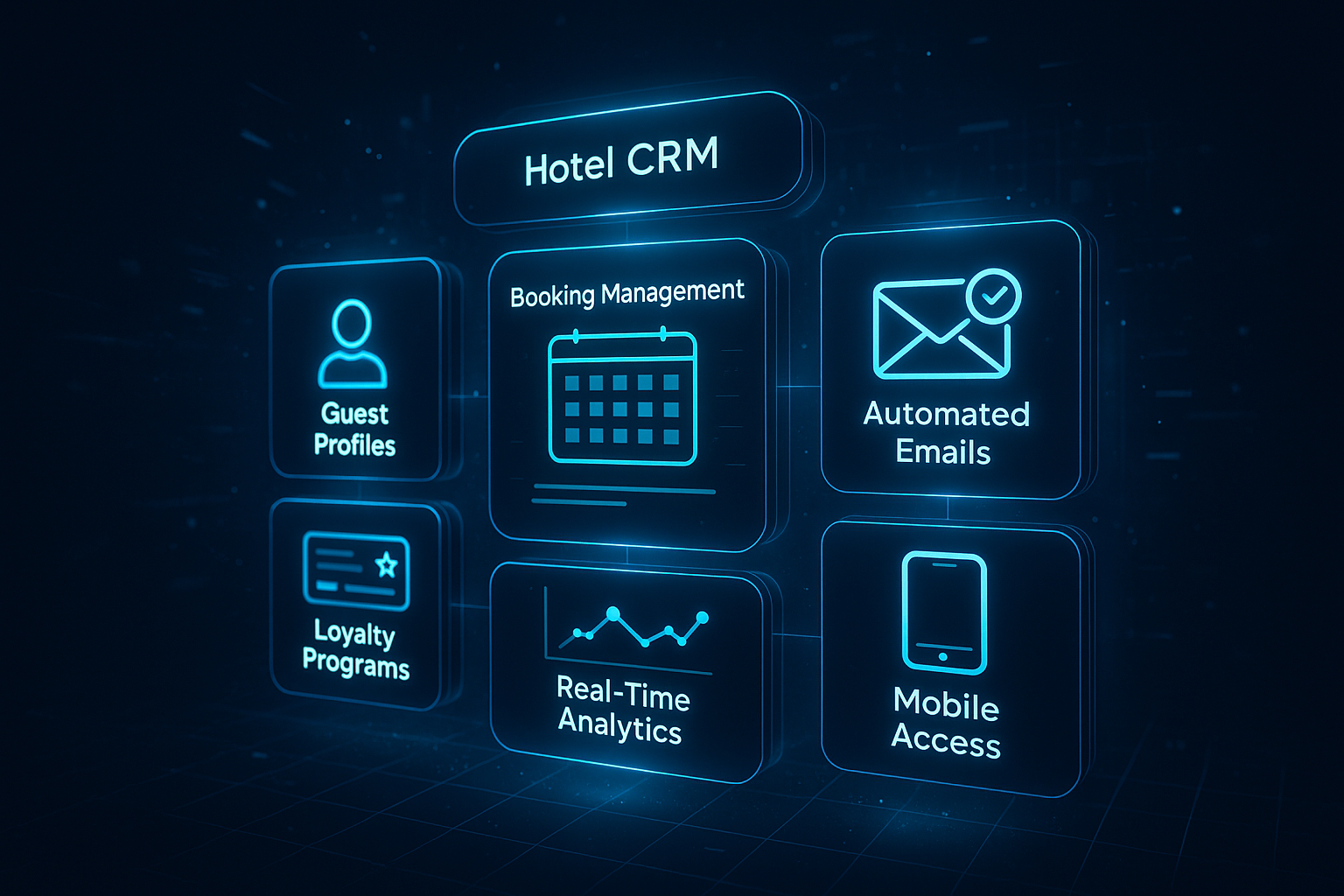
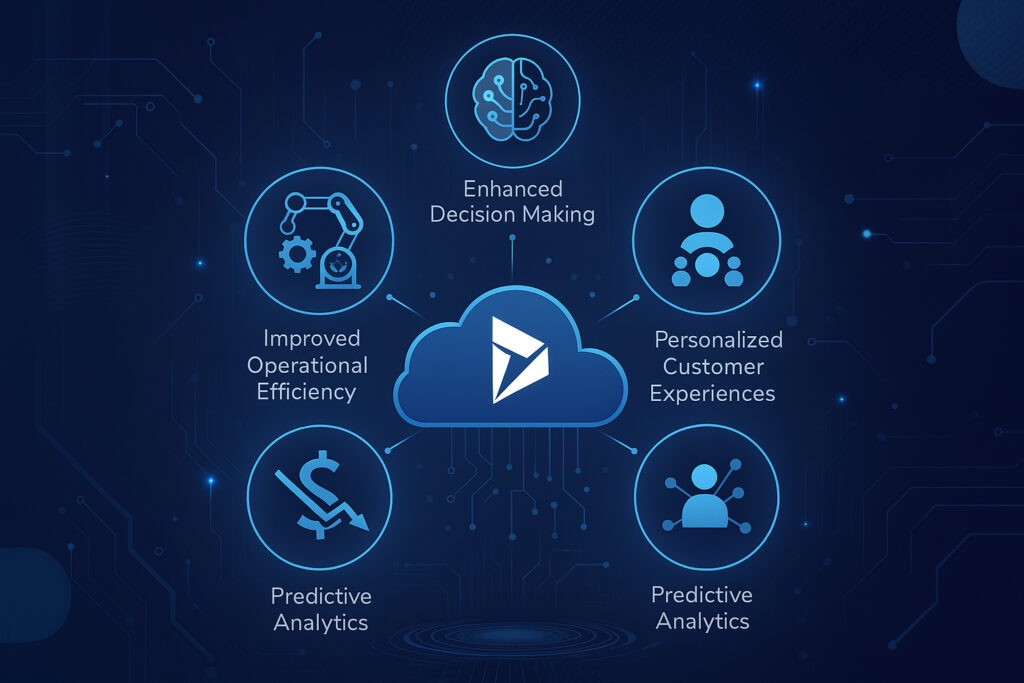
Abstract digital interface showing hotel CRM technology features and benefits

GEt in Touch


    Experiences drive the hospitality sector. For hotels, providing a unique, hassle-free, and unforgettable stay is as essential as comfortable rooms and luxury facilities. In today’s digitally led world, guests expect a lot more than a friendly smile – they want personalized offers, simple booking processes, and fast communication at every stage of their journey. This is where Hotel CRM, or Customer Relationship Management, in the hospitality industry comes in.
    Investment in hotel CRM systems, such as Microsoft Dynamics 365 services, has become a strategic necessity for hotels that are looking to establish a stronger relationship with their guests and reduce reliance on OTAs (Online Travel Agencies) while maximizing their revenue.
    In this blog, we’ll explore everything you need to know about hotel CRM development, its important features, benefits, implementation, and key considerations for success.

    What is a Hotel CRM?

    A hotel CRM is a type of software designed to help manage relationships with guests, optimize hotel operations, and create new revenue opportunities. Unlike more generic CRM systems, hotel CRMs are designed specifically to meet the needs of the hospitality sector. As highlighted by Harvard Business Review, hospitality-focused CRM tools enable personalized guest experiences by centralizing critical data.
    Hotel CRMs aggregate guest data, guest reservation history, guest communication preferences, and guest feedback into a central location so hotels can personalize the guest experience and cultivate guest loyalty.
    You can think of the hotel CRM system like a digital gatekeeper. It tracks each interaction you have with the guest, from the first inquiry through a post-stay follow-up, making it easy for you to maintain a consistent and personalized experience. With the support of custom software development services, these CRM systems can be tailored to meet the unique operational needs of your hotel, ensuring maximum efficiency and guest satisfaction.

    Why Hotels Need CRM Software

    The hotel sector is one of the most competitive markets, and the expectations of guests are changing fast. Hotels using a robust CRM system are less likely to over-depend on OTAs, to miss upselling, and will develop long-term guest loyalty.
    The key reasons hotels need hospitality CRM automation can be summarized as follows, and working with a trusted CRM development company helps implement these strategies effectively:
    • To consolidate guest profile information that is fragmented across booking engines, marketing tools, and the front desk system.
    • To deliver personalized offers and messaging that are relevant to the modern traveler.
    • To generate more direct bookings from tailored promotions, which will reduce the reliance on OTAs.
    • To make staff more efficient and to automate repetitive tasks.
    • To access guest data, which will help hoteliers make decisions for the business moving forward.
    In summary, CRM software for the hospitality industry is not merely an investment in technology, but rather a systematic way to remain competitive and guest-focused.

    Must-Have Features of a Hotel CRM System

    Tech-focused dashboard visualizing key CRM features for hotels

    Centralized Guest Database

    A guest database includes the history of guests’ stay, their preferences and demographics, and their feedback. This type of information allows a hotel to communicate more effectively with guests, drive repeat bookings, and create a unique guest experience.

    Integration with Hotel Booking Software & Reservation
    Management Systems

    Easy integration with PMS (Property Management Systems), booking engine, and reservation services allows for real-time information flow into the hotel operation. This means that it helps avoid overbooking, minimizes administrative errors, and provides useful data on occupancy trends

    Automated Guest Communication & Personalization

    Automation enables timely communication (booking confirmations, pre-arrival reminders, post-stay survey). Personalization engines allow hotels to send special offers, discounts for birthdays, or room upgrade offers to guests, making them feel appreciated.

    Loyalty Program Management

    Hotel booking management system lets you design and manage loyalty programs right from tracking points, as well as providing incentives for frequent travelers. A well-executed loyalty program boosts repeat bookings and allows for a hotel’s dependency on OTAs to decrease.

    Revenue Management & Upselling Tools

    CRMs that have revenue optimization technology enable revenue managers to develop opportunities for upselling guests on amenities, such as spa specials, dining options, or late checkout requests. This type of capability supports the core hotel industry principle of growing secondary revenue at the same time as enhancing guest satisfaction.

    Mobile Access for Staff

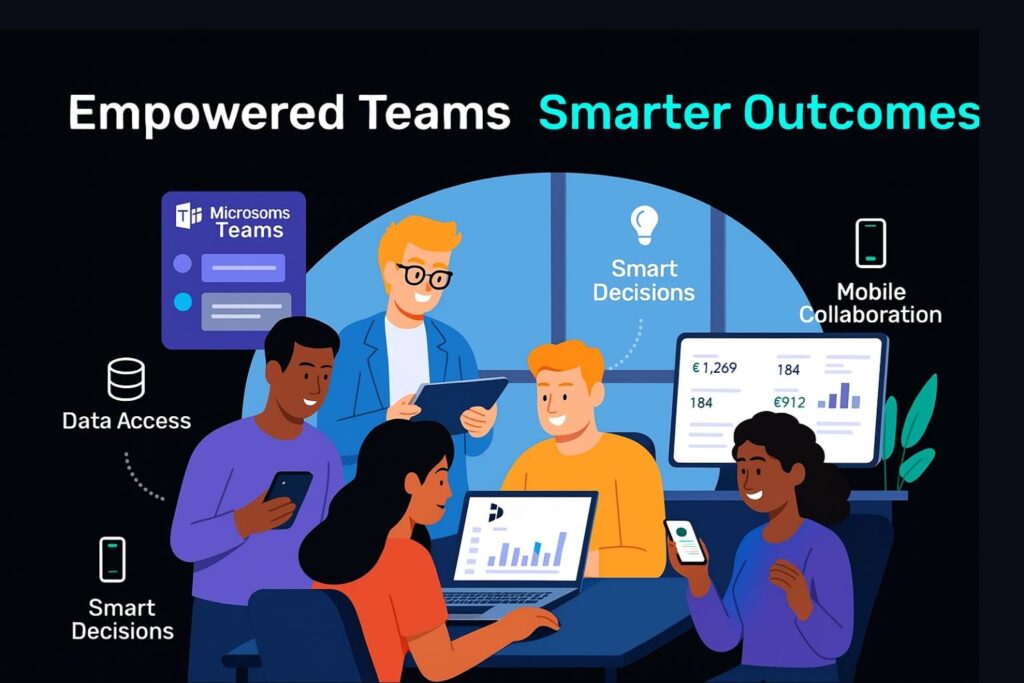
    Modern hotel CRM systems offer mobile apps to staff to let them access guest profiles and booking information, leading to industry mobility that allows front desk associates to share reservations with housekeeping in real time. Mobile CRMs enable a hotel to quickly and easily communicate booking changes across departments while also keeping the guest engaged, whether it be the front desk or housekeeping. Dynamics 365 further supports this by enabling efficient remote and mobile workforce operations.

    Advanced Analytics & Reporting

    Analytics dashboards give insight and visual representations of guest behaviors, booking trends, and campaign effectiveness. This helps managers make informed data-driven decisions in terms of marketing investments, pricing strategies, and guest services to offer the best customer experience possible.

    Benefits of Hotel CRM for the Hospitality Industry

    Enterprise software project execution image

    Improved Guest Satisfaction and Retention

    A hotel can generate repeat customers who not only appreciate their stay but also will tell others how great it was by investing in good hotel reservation software. A great hotel CRM will allow staff to understand guest preferences before a stay begins, creating experiences that feel personalized.

    Increased Direct Bookings vs. OTA Dependency

    Attracting repeat guests with offers and loyalty programs will drive direct bookings to the hotel, which will lower costly OTA commissions from bookings. According to McKinsey’s analysis of hospitality trends, direct booking strategies are essential for improving margins and guest loyalty.

    Streamlined Operations with Hospitality CRM Systems

    A centralized CRM will allow for efficiency in staffing, more coordination between departments, and an easier workflow throughout the property. Solutions like Dynamics 365 play a key role in streamlining operations and improving overall property management.

    Data-driven Decision-Making for Managers

    With a reliable hotel reservation management system, managers get access to deep insights on what to do with pricing, staffing, and marketing, which will lead to more profits. Dynamics 365 supports these data-driven decisions by providing real-time analytics and actionable insights.

    Improved Sales Pipeline with Hotel Sales CRM

    Sales CRM functions will help attract corporate clients, book events, and build B2B relationships with travel agencies and groups.

    Custom vs. Ready-Made Hotel CRM Solutions

    When hotels start thinking about rolling out a CRM, one of the first points of consideration is whether to engage in a custom-built solution or a pre-built CRM solution. Both have pros and cons, and the right choice for the hotel will depend on size, budget, long-term strategy, and technical requirements.

    Pre-Built Hotel CRM Solutions

    Pre-built CRM solutions are off-the-shelf platforms that hotels can quickly buy, configure, and deploy. Many popular SaaS CRMs targeted to hospitality come with integration for booking engines, property management systems (PMS), and marketing tools.

    Custom Hotel CRM Solutions

    Custom hotel CRMs are custom-built systems developed for a hotel or a chain of hotels. They are built from the ground up to meet specific business processes, brand standards, and guest engagement strategies.

    Hotel CRM for Different Types of Hospitality Businesses

    Enterprise software project delivery snapshot
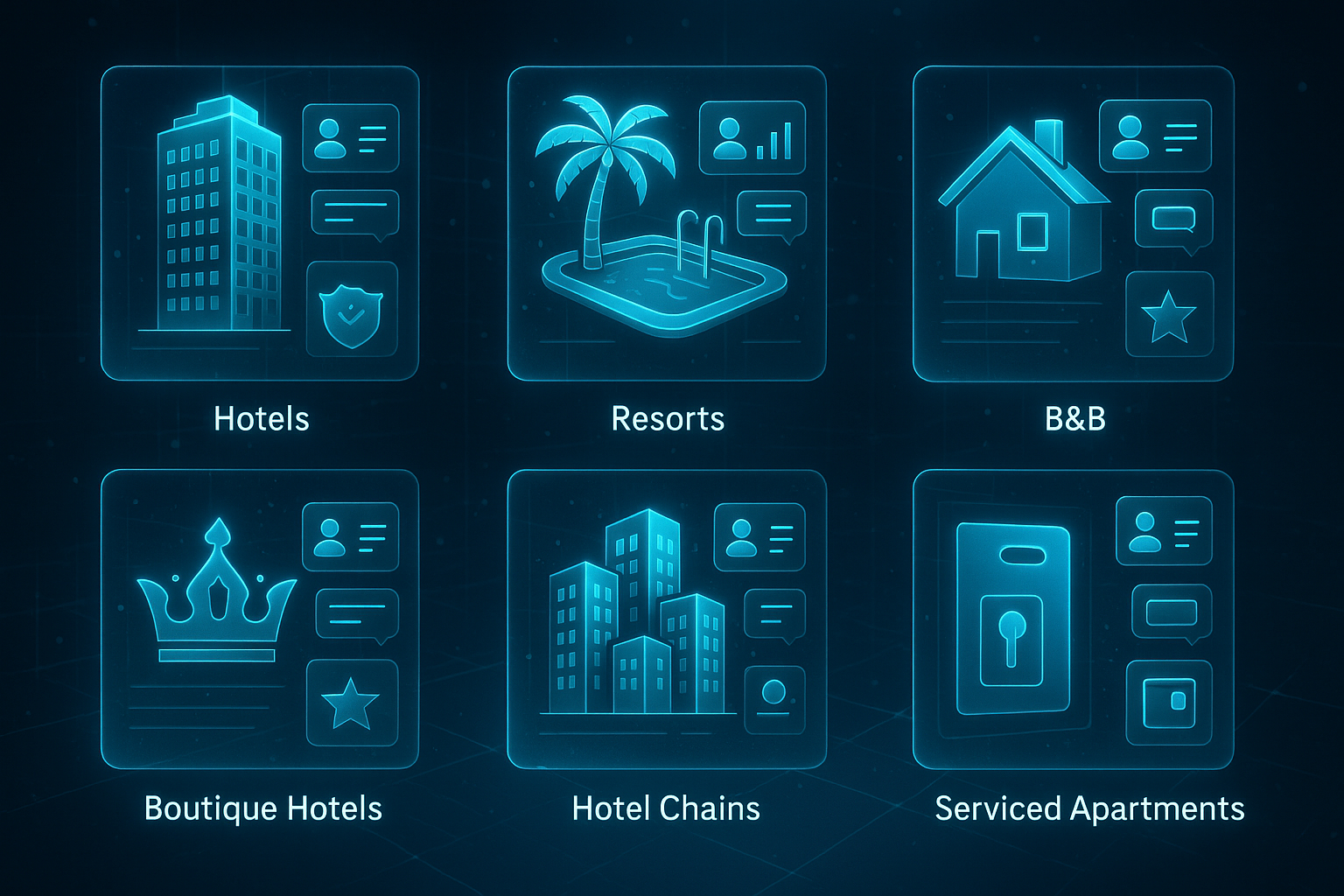
    The versatility of CRM systems represents their primary strengths. Not every hotel operates under the same conditions, nor do they accommodate the same types of guests. Below are illustrations of how each hotel sector can provide different levels of unique value with CRMs

    Luxury Hotels & Resorts

    Luxury travelers expect flawless personalization. A CRM allows the hotel staff to anticipate guest needs – whether they prefer champagne or sparkling water in their room after check-in, the type of pillow used, or if the spa needs to be arranged ahead of time. Integration with the hotel’s loyalty program ensures returning VIPs leave with a feeling of recognition while confirming that they are being offered unique value.

    Boutique Hotels

    Boutique hotels rely on storytelling and unique guest experiences. A CRM allows them to maintain personal relationships with their guests while storing guest feedback, reasons for their trip (i.e., honeymoon, anniversary, business trip), and their stated preferences. CRMs also provide the boutique hotel with options to conduct targeted marketing campaigns consistent with their hotel’s brand.

    Business Hotels

    For business travelers, time and efficiency are what matter the most. A CRM for business hotel guests is centered around managing corporate accounts, group bookings, event management, and fast check-in times. A CRM may also allow the user to handle invoicing automatically, as well as manage the meeting-room schedules at the hotel property.

    Resorts & Spas

    Guests of resorts and spas are often looking to package everything together, from wellness programs to adventure programs. A CRM allows the hotel to assess the guest’s interests to recommend/to upsell another service, together with a spa appointment or golf outings, or a negotiable water adventure.

    Small & Budget Hotels

    Budget hotels often operate on narrow margins and are highly dependent on OTAs. With a small hotel booking software, they can reduce labor costs by automating many communications (check-in letters, post-stay surveys, etc.) and can stimulate loyalty among budget-conscious travelers.

    Chains & Multi-Property Groups

    Hotel chains need a CRM that can scale globally at each property, while allowing centralized guest records from anywhere in the world. This enables guests to experience seamless service, whether they are staying in New York or Singapore, and enables the tracking of loyalty points earned anywhere in the world.

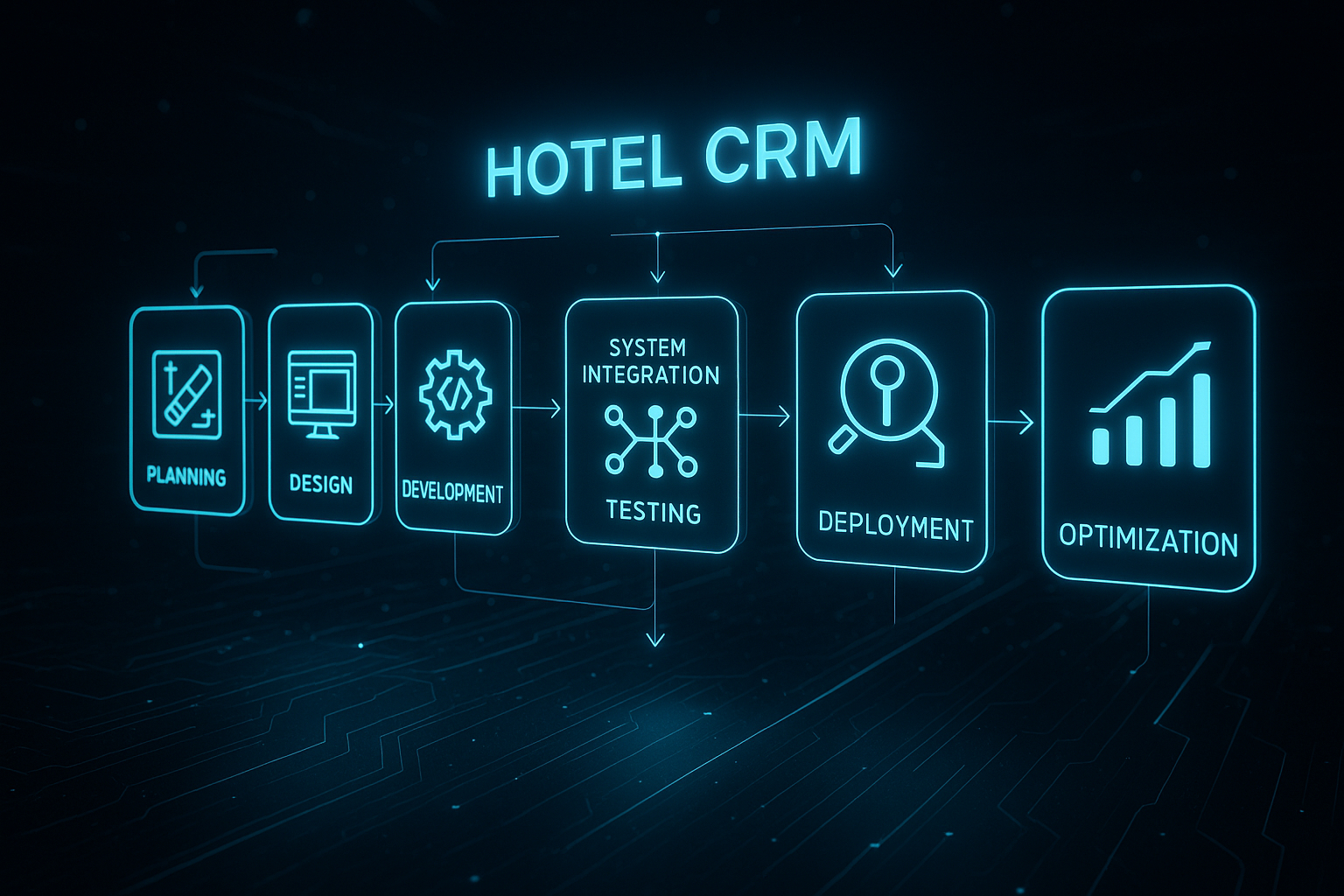
    Hotel CRM Development & Implementation Process

    Enterprise software project delivery overview
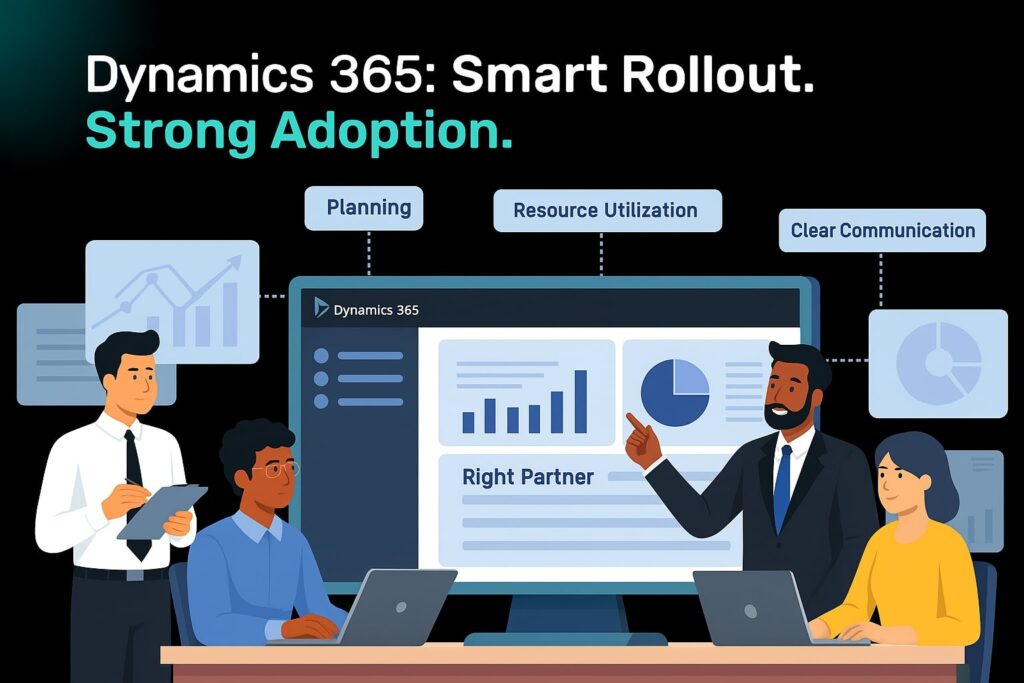
    Establishing and launching a CRM for hotels is a multi-step process. If deployments are rushed without deliberate thought, a hotel may find its new CRM is not being fully utilized, or worse, employees may simply be resistant. Using a step-by-step or structured approach will pay back in the end:

    Identify Requirements

    The first step is to determine what is required by the hotel. Does it need stronger communication between hotel guests and staff, enhanced reporting, and integration with OTAs in a streamlined way? Hotels should be sure to involve all stakeholders from the front desk, sales, marketing, housekeeping, and management, to ensure the CRM will meet requirements for all relevant touchpoints.

    Vendor/Development Partner Selection

    Determining if a hotel should opt for off-the-shelf CRM products or partner with a development company for a custom piece of software is required early. Some key selection criteria for a hotel CRM should include cost, future scalability, integrations, ease of use, and primary software support by the vendor.

    System Design & Developmen

    In the case of developing your own CRM, the design process will require determining what modules will be included (such as a guest database, loyalty databases, analytics), what workflows will be needed, and integration flows to make your new CRM work rock-solidly with your hotel. If a CRM is off-the-shelf, this phase is likely simply customizing settings to fit the uniqueness of the existing hotel operations.

    Integration with Existing Systems

    No CRM stands alone as a system. A hotel’s new CRM must integrate with the PMS, POS, booking engines, and channel manager to stay accurate with good data and to eliminate manual duplication. For a stronger hospitality operation, including larger hotels, this integration process will rely on APIs working seamlessly together and in real-time.

    Testing & Pilot Implementation

    Before full-scale deployment, hotels should conduct tests on a pilot basis in one property or department. This allows hotels to identify gaps, usability issues, and training requirements. Feedback obtained through tests helps further tweak the system.

    Training & Change Management Staff

    Technology implementation is considered only successful when employees feel comfortable using it. Training sessions at all levels, along with user guides that are easily digestible and have ongoing support, ultimately convince employees to adopt the CRM rather than resist using it.

    Implementation & Ongoing Monitoring

    After successful pilots, hotels can go for full deployment at all properties. Monitoring will occur on a regular basis and throughout guest feedback and employee performance reviews to measure ROI. This ongoing data analysis presents the opportunity for continuous improvements, such as AI updates and feature enhancements.
    The hospitality CRM landscape is proceeding to evolve rapidly, strongly driven by technology, guest expectations, and competition in the market. Below are the major announcements that are shaping the future:

    Artificial Intelligence & Machine Learning

    AI-enabled CRMs are moving beyond basic automation. The future of CRMs lies in their ability to forecast guest behavior, recommend servicing opportunities, and enable dynamic pricing. With machine learning, hotels recognize patterns within CRMs (i.e., the guest who always avails themselves of spa services during winter stays) and serve bespoke offers automatically.

    Conversational AI & Chatbots

    The smiling face of the front desk staff is no longer the only expectation guests adopt with hospitality – the expectation is now 24/7 availability. Whether integrated into a hotel’s website, WhatsApp, or mobile CRM, chatbots should provide instant responses to guests, manage their bookings, and handle complaints. This will improve guest satisfaction and also lessen the workload of hospitality staff.

    IoT Integration for Personalized Stays

    Internet of Things (IoT) devices, or smart devices, such as smart thermostats, smart lighting, or smart in-room entertainment systems, are the new attractions in inviting guests to have tailored in-room experiences. A returning guest could walk into their assigned room to find their preferred room temperature, and their Netflix account already logged in.

    Omnichannel Engagement

    In the future, CRMs will expand their use of communication beyond most likely email and SMS messaging. In addition, they will incorporate social media direct messages, messaging apps, and possibly even voice assistants, so hotels can engage with future guests on channels that they likely already use every day.

    Cloud-Based & Mobile-First Solutions

    Cloud-based CRM is quickly becoming the norm, given its scalability and cost-effectiveness, and ease of implementation. Mobile-first CRMs for the hospitality industry allow guest data access in real-time, and anytime, anywhere, service on the go across the property. Hyper-Personalization with Big Data Guests also expect more than just “Dear Mr. X” in an email. The ability to harness Big Data within CRMs will provide a significant opportunity for hyper-personalization, like spa discount offers presented to health-conscious travelers, or promote repeat family guests by promoting family packages.

    Data Privacy & Compliance

    As regulations develop, such as GDPR and CCPA, CRM systems will prioritize guest data security and transparency in the future. Hotels need to choose and provide checkpoints for guests to easily opt-in/opt-out of sharing data, as well as ensure effective encryption protocols to uphold trust through simplicity.

    Sustainability-Driven CRM Features

    Eco-conscious travel is on the rise. We will soon see CRMs capturing and advocating green initiatives, paperless check-ins, carbon neutrality stays, and eco-friendly packages as hotels seek to appeal to guests who are interested in sustainability.

    Conclusion

    A hotel CRM system is not a luxury anymore; it is a competitive advantage. From generating guest loyalty to maximizing revenue, hotel CRM systems allow hotels to create unforgettable experiences for each guest while streamlining operations; whether it’s small boutique properties or a global chain, incorporating hotel CRM development is a step towards improved guest relationships and future success.

    💬 Want regular insights on CRM in hospitality?

    Follow Shaligram Infotech on LinkedIn
    Let’s redefine guest experiences with smart technology.

    FAQs

    How does hotel CRM software improve guest experience?

    Hotel CRM works on delivering personalized interactions to guests and making them feel valued throughout their stay, as well as improving the before and after experiences by automating communication and centralizing guest data.
    The best hotel CRM should include key features like centralized data with guest information, loyalty program management, booking integration, advanced analytics, mobile access, and automated communication.
    Hotel booking software can manage reservations, while hotel CRM software can help with guest relationships and personalization, and encourage guest loyalty. They should be used together if you integrate the two systems.
    Yes, even small hotels can use a hotel CRM system to engage repeat guests, develop less dependence on OTAs, and operate more efficiently. This is possible today because some hotel CRMs exist in the cloud.
    Many different factors can contribute to the cost of HRM software development, such as complexity, how many integrations, and any unique customizations. A smaller CRM project may start out as an affordable SaaS option. A custom-built enterprise-level hotel CRM option could be close to 100k or higher. Ready to find the right CRM solution for your hotel? Contact us today to get started!
    You could start evaluating your goals, then choose a hotel CRM that is custom-built or ready-made, integrate your CRM with your existing hotel software system, train your staff, monitor how your CRM system is performing throughout, and continue implementing changes.
    Categories
    Blog finance & forex

    CRM Development for Financial Services & Banking: Features, Benefits, and Implementation

    Finance & Forex

    CRM Development for Financial Services & Banking: Features, Benefits, and Implementation

    CRM for financial Fintech industry

    GEt in Touch


      The financial services industry has always been based on relationships, trust, and personalized service. However, digital transformation and the expectations of digitally savvy customers have changed the way customers interact with their banks and financial institutions. Customers are no longer satisfied with traditional banking; they expect personalized advice, quick resolutions, and seamless experiences from their banks. To address these evolving needs, many institutions are now partnering with a financial software development company to deliver innovative and customer-centric solutions.
      This is where Customer Relationship Management (CRM) is said to play an innovative role in the financial services industry. Banks and financial service providers can use a cohesive CRM system to gather customer data at a single place, streamline banking operations, enhance service quality, and identify newer opportunities to do business. CRM is not just software, but a strategic enabler of customer-centric growth in financial services.

      What is CRM in Banking?

      CRM in banking refers to the software and strategies that monitor and analyze customer interactions and data throughout their lifecycle with a company. Banking CRM is different from general CRMs and is designed for the needs of financial institutions and includes customer data management, regulatory compliance, and delivery of personalized services.
      A banking Customer Relationship Management (CRM) system collects all customer data from different channels, such as branch visits, bank application, call center, and online banking platform, and integrates them into a single view. Such an approach gives the banks an idea about their customers’ behavior, foresee their needs, and offer services proactively. Understanding the key CRM development features and benefits helps banks make the most of such systems
      In short, customer relationship management in banking works as a bridge joining financial product services to customer needs and desires, ensuring the services are accessible and relevant.

      Why Do Banks & Financial Industries Need a CRM?

      The financial sector is based on one of the most regulated and competitive environments. Clients can switch providers by seeing a single negative customer experience. There are a few reasons why banks and financial institutions need a CRM, and they are:
      • Data-driven decision making – To get actionable insights from large volumes of transactional and customer data, institutions need tools.
      • Changing customer expectations – Customers of today expect personalized, faster, and 24*7 services.
      • Competitive differentiation – Create stronger relationships by offering personalized offers, enhanced services, and loyalty programs.
      • Regulatory compliance – While adhering to privacy regulations like GDPR, CRM systems offer secure ways to manage data.
      • Operational efficiency – Staff will be able to focus on high-value customer interactions by automating routine tasks.
      Banks and financial institutions will end up offering inconsistent, fragmented, and outdated customer experiences without having a proper CRM in place.

      Key Benefits of CRM in Banking

      Professionals using holographic CRM in a futuristic ban

      Personalized Customer Experience

      Through centralization of customer data, CRM software lets banks offer customized services while having a complete view of customer interactions. They will be able to connect with customers one-to-one, offer seamless experiences, and deliver their needs by getting a complete overview. Through customized solutions, banks will be able to offer enhanced experiences while ensuring customer satisfaction

      Enhanced Sales and Cross-Selling

      CRM software examines customer data to get insights on their likes and dislikes to identify upselling and cross-selling opportunities. Banks will be able to generate sales and revenue by offering the right products and services beforehand. The software will help them approach customers individually by identifying where any additional products or services would be of interest to a given customer. Banks can create more valuable customer relationships, expand wallet share, and drive revenue expansion by exploring the potential of cross-selling.

      Improved Customer Retention

      Banks are facing the issues of customer churn. By looking into past data and forecasting, banks get to reduce this through CRM tools. This lets them work on activities that can help retain customers. With CRM, personalized banking experiences can be delivered which will in turn help them build customer loyalty.

      Data-driven decision making

      With CRM software, banks can better understand their customers as it offers them advanced analytics. With it, they can tailor and personalize their campaigns and products. Moreover, they will be able to identify profitable channels for selling their services and products by using advanced information and forecasting functions. The software constantly analyses each transaction to look for patterns that can be harmful. This helps them build a secure banking system while preventing any risks. Data-driven decisions with Dynamics 365 services support these functions and help banks use analytics more effectively.

      Efficient customer service

      By bringing together customer data to let support groups respond more accurately and faster, CRM solutions automate customer service processes. Automated follow-up and communication procedures will help respond to the right customer at the right time with the right information. By analyzing customer behavior and needs, banks can forecast customer issues and address them by offering customized solutions, thereby leading to low churn and high loyalty. This will lead to a drastic decrease in query resolution times and a significant increase in customer satisfaction scores.

      Compliance and risk management

      When it comes to compliance management for banks and financial institutions, CRM software plays a key role as it offers a centralized, integrated platform for managing, tracking, and reporting information. It stores and processes customer data including transaction history, KYC data and risk data by following compliance rules.

      CRM solution offers advanced reporting functionality to track transactions and interactions with customers, generate paperwork regulatory auditing, and alert compliance related potential risks. CRM solution is supported by regulatory auditing which leaves fewer chances for error, saves time, and generates reports with desired data in requested format. CRM for financial services helps carry out customer due diligence by classifying customer data from various sources and analyzing them.

      Streamlined operations

      CRM systems can centralize customer data and automate routine tasks. This streamlines operations and lets the team deal with crucial customer problems. Apart from that follow-up processes and communication can also be automated with CRM systems. This ensures that the right information is made available to customers at the right time. Such a streamlined approach helps banks to improve customer retention while reducing the costs related to acquiring new customers.

      Customer acquisition

      By addressing customer issues proactively, delivering personalized customer experiences, and building trust through professional interactions and secure data handling, banks will be able to attract new customers. CRM will help financial institutions to plan and carry out targeted marketing strategies to attract potential customers.

      Improved employee productivity

      CRM systems enhance operational efficiency by letting employees focus more on customer needs by centralizing customer data, and by automating routine tasks. CRM systems will ensure the right information reaches the customers at the right time by automating follow-up processes and communications. CRM systems centralize customer information by streamlining customer service operations, thereby offering accurate and faster responses by empowering support teams.

      Must-Have Features of a Banking CRM System

      Ongoing enterprise software development project

      Enhanced Security Measures

      The banking sector cannot ignore the need for security, and advanced security features are offered by CRM systems to protect sensitive customer data. CRM software secures banking assets from cyber threats and ensures regulatory standards are met by including features like role-based access controls, encrypted transactions, and regular data backups.

      Advanced Dashboard and Reporting

      CRM software for banks and financial institutions comes with an easy-to-use dashboard, data analytics, and reporting capabilities that can help banking staff work efficiently. These dashboards assist banking staff in making informed decisions efficiently and quickly by offering actionable data and real-time insights.

      Easy Integration

      For ease of working, CRMs developed for banks can seamlessly integrate with third-party applications as well as other existing banking systems like reporting and loan management systems. This will help you maximize the value of your CRM investment while ensuring a smooth transition. From long-term strategic analysis to daily operations, such reports offer banks a clear picture of the areas for improvement and the areas where they are performing well.

      On-the-go Accessibility

      It is crucial to have an on-the-go CRM for the banking and financial sector to keep up with this mobile-first world. The feature of mobile CRM lets the team stay productive from anywhere, anytime by having direct access to customer data, responding quickly to inquiries, and taking care of key tasks on the go.

      Scalability

      Your CRM solution must scale to meet your growing needs as your banking operations expand. Scalability will ensure that CRM solutions can seamlessly handle all your business customer data and additional functionalities without affecting performance in any way. This flexibility will ensure long-term success while supporting the growth strategies of financial institutions.

      Predictive Analytics

      Predictive analytics help banks get clear and crisp information about customer behavior and transaction patterns. This will help them offer personalized products and services by anticipating the needs of customers even before they ask for them.

      Automated Workflows

      One of the key features of banking CRM solutions is workflow automation. It minimizes risks of errors while reducing manual intervention. By automating routine tasks like loan approvals or simple data entry, it will help your team to focus on activities that matter most to them.

      User-friendly Interface

      CRM software for banks needs to be easy to use and can seamlessly meet the needs of all types of users. For the same, it needs to come with an intuitive and visually appealing interface. People belonging to different age groups access banking services and so it is important to invest in seamless UI/UX design that everyone can use.

      360-degree Customer View

      For any CRM platform, having complete customer information is key, and things are not different for banking and financial services. Your CRM for banking should bring together all information on customers including their financial history, interactions, credit scores, and much more. Your staff will be able to get all the required information and offer proper services to customers by having centralized access to everything.

      AI & Analytics in Banking CRM

      The field of Artificial Intelligence (AI) and advanced analytics has revolutionized customer relationship management (CRM) systems in the financial services sector. Banks previously used data scientists to sift through data, but now they can leverage AI to help them to:
      • Predict customer behavior: Identify who is likely to apply for loans, switch accounts, or cancel bank accounts
      • Personalize recommendations: Recommend a client a more appropriate investment plan or a more suitable loan
      • Automate customer service: AI chatbots provide answers to clients’ questions immediately, reducing the dependency on a human agent
      • Fraud detection: Detect suspicious activity in real-time by monitoring suspicious transactions, while also providing an immediate response to possible fraud.
      • Sentiment analysis: Document customer sentiment derived from social media and emails for service improvement.
      Combining AI and CRM allows banks to move from a reactive service model to an active and personalized interaction model.

      CRM Solutions for Different Financial Institutions

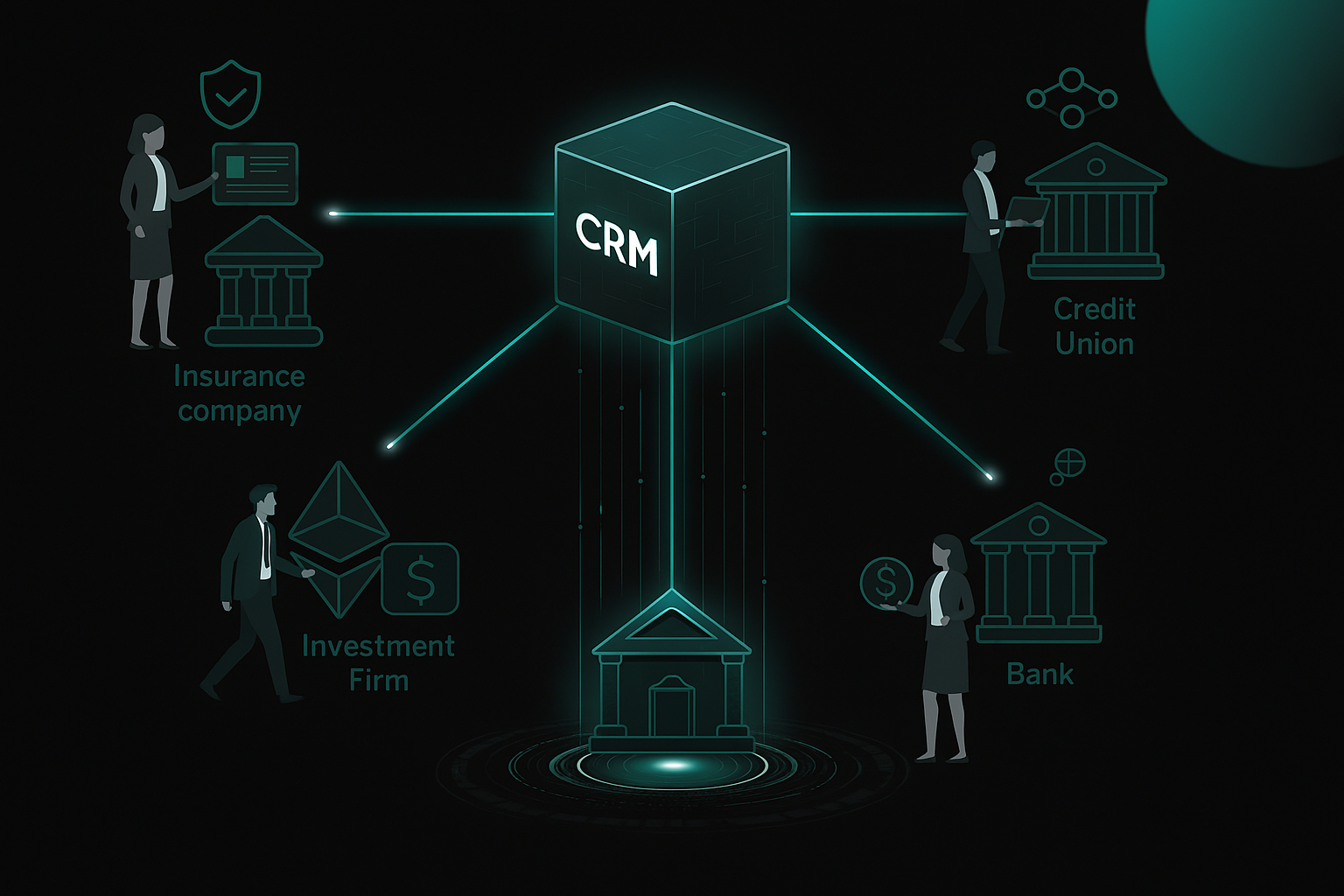
      Different financial institutions linked by central CRM hub

      Financial services vary widely. Retail banks and wealth management firms, for example, serve different client bases and operate in different ways. Each of these businesses may require a CRM system designed for their unique operations.

      CRM for Retail Banking

      Retail banks engage millions of customers on a daily basis. Their CRM requires the following functionality:

      • Simplicity when managing accounts.
      • Personalized financial advice and support.
      • Chatbots, mobile banking apps, and other customer service enhancements.
      • Cross-selling products such as mortgages, credit cards, and savings accounts.

      CRM for Investment Banking

      Investment banks engage with clients worth millions of dollars and manage complex transactions. The CRM used in Investment Banking needs functionality for:
      • Institutional and corporate relationships
      • Investment opportunities
      • Ability to collaborate in real-time across teams
      • Interact across global markets in a compliant manner
      • CRM for Insurance & Wealth Management
      • Manage client policies, renewals, and claims
      • Offer personalized portfolio management advice and communication
      • Use risk profiling and investment tracking tools
      • Provide transparency in reporting and build trust with clients

      CRM for Credit Unions & Regional Banks

      Smaller, regional financial services organizations have unique operations and build relationships with their clients because they are local within communities. These smaller organizations may use a CRM system to:
      • Build member engagement through personalized communication
      • Much simpler loan origination workflow for loans, etc.
      • Support local outreach efforts and manage community programs
      • Provide digital engagement tools in a cost-efficient manner while remaining compliant

      Custom vs Ready-Made Banking CRM

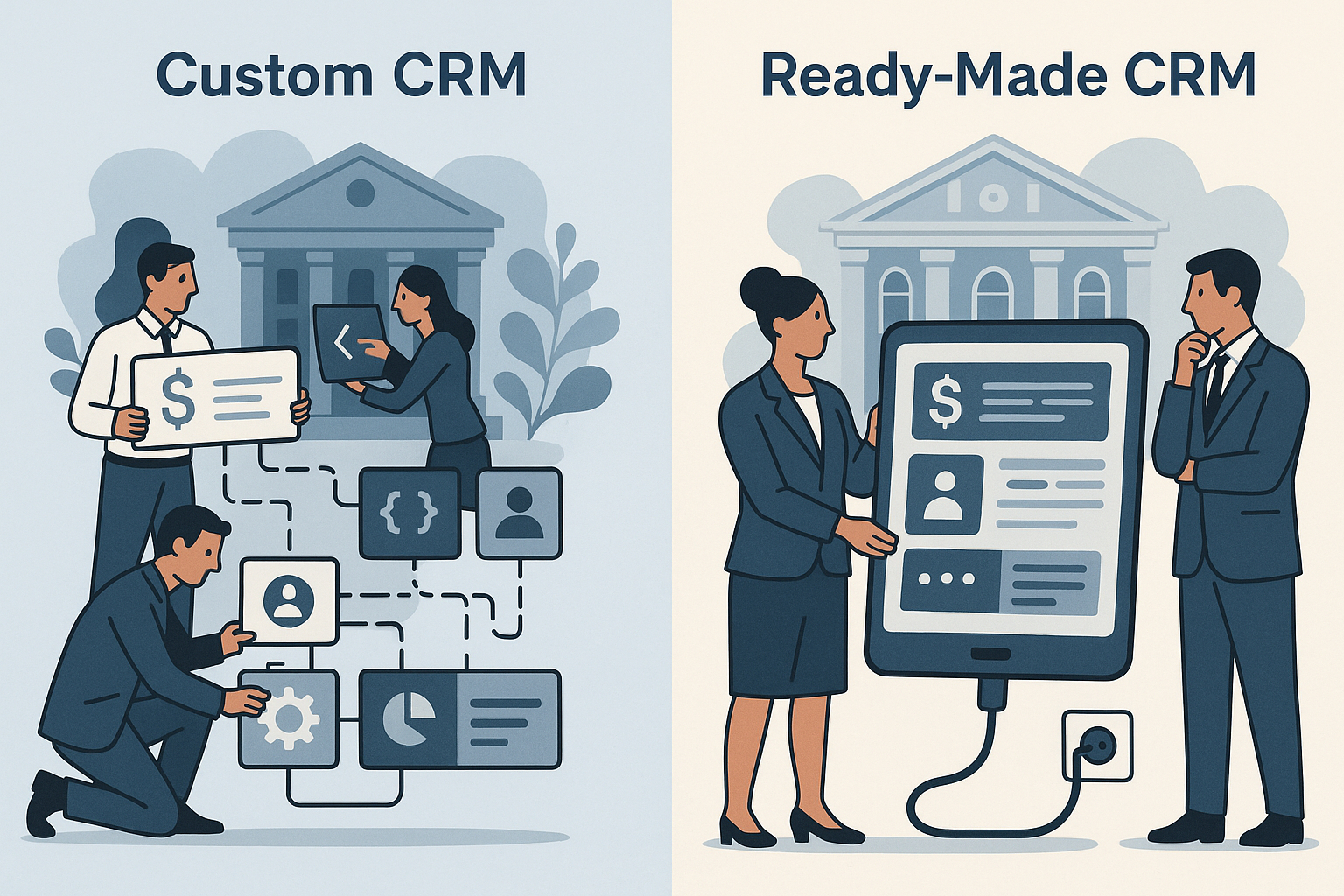
      Split scene showing custom CRM building vs ready-made CRM use
      In CRM implementation, financial institutions typically must decide between having a custom or ready-made solution. Both of these solutions have their own key features.

      Custom CRM:

      • Custom-built to fit the bank’s unique workflows.
      • Integrate flexibly with systems that exist.
      • Larger initial expenditure with long-term value.
      • Longer time for implementation.

      Ready-Made CRM:

      • Initial configuration requires minimal effort.
      • Low initial budget.
      • Minimal customization or scalability.
      • May require adjustment of business processes.
      Depending on the budget, capacity for scalable practices, and complexity of operations, the choice is often clear. The custom route is favored more by larger banks, whereas the ready-made approach fits smaller organizations better.

      Future of CRM in Banking & Financial Services

      In banking, CRM is evolving from simple customer management to become essential infrastructure for digital-first financial services. The future will be all about smarter, faster, and more personalized experiences
      One of the most significant transformations will be the move to hyper-personalization. Through AI and behavioral analytics, banks and FinTech’s will shift from offering generic products to designing personalized financial journeys. For example, they may offer home loans at the right moment as soon as customers start exploring real estate or offer retirement plans only to customers in the right life stage.
      As conversational and voice-enabled banking develops, customers will engage banks more frequently through chatbots and voice-enabled technologies. As this unfolds, the entire conversation can be documented in the CRM. When combined with predictive analytics, this will allow banks to anticipate customer needs before they are even expressed – and be proactive advisers instead of reactive product providers.
      Security and trust will remain at the center of the future of banking, and we may even see the first blockchain-enabled CRM platforms that securely store customer data and contracts, that are tamper-proof. Moreover, real-time data processing will make it possible to provide instantly approved loans or recommendation decisions, for fraud detection or even investment recommendations, all through real-time processing, which increases the potential to reduce inconvenience.
      Embedded finance will also impact the future evolution of CRM. Banking services will increasingly be offered within e-commerce, travel or lifestyle platforms. CRMs will need to continue innovating to provide solutions within those ecosystems where banks and customers keep connected, happy, and satisfied, irrespective of the experience the product may be contained in.
      In summary, CRM software for the financial services industry will deliver experiences that are secure, personalized, and effortless by combining human and machine intelligence. Banks that invest in next-gen systems will not only meet the expected outcomes of their customers but likely set new benchmarks of trust and innovation for both current and future clients.

      Conclusion

      CRM is no longer a ‘nice to have’ for banks or companies offering financial services, but imperative. Whether it’s improving customer experience, compliance, or simply driving revenue, CRM is crucial to building trust, revenue growth, and innovation. Shaligram Infotech, recognized as the best software developer company in India, helps financial service providers implement AI-powered CRM solutions tailored to their needs. Financial Services companies adopting such solutions will be very well placed to compete as customer-focused businesses in the future. The banks of tomorrow will be those that successfully blend technology with human relationships.

      💬 Want regular insights on CRM in fintech?

      Follow Shaligram Infotech on LinkedIn
      Let’s build the future of finance, together.

      FAQs

      Why is opting for CRM software in financial services beneficial?

      CRM helps financial institutions greatly improve their customer journey, lower barriers to assist with cross-sells, increase and simplify compliance, and improve operations with automated workflows and business intelligence
      AI allows CRM to be smarter and more proactive; it powers predictive analysis, fraud detection, omnichannel support, automates customer support with chatbots, and promotes personalized product recommendations.
      When searching for a banking CRM system, look for features such as a 360-degree customer view, omnichannel customer support, automated workflows, AI insights, compliance components, and strong integration functionality.
      Customer retention in banking can be improved through the use of CRM by providing personalized messages with automated reminders to clients, offering loyalty programs, and proactively offering innovative services. Contact us now to learn how our CRM solutions can help you increase customer loyalty and retention.
      The future of banking CRM will benefit banks with AI, Blockchain, or predictive analytics that can provide hyper-personalized, secure, and innovative service in the financial services industry.
      Categories
      Blog Real Estate

      CRM Development for Real Estate: Features, Benefits, and Implementation

      Real Estate

      CRM Development for Real Estate: Features, Benefits, and Implementation

      Enterprise project implementation overview

      GEt in Touch


        Stronger and lasting relationships built on trust have always been the essence of real estate. Buyers, sellers, investors, and tenants now demand personalized service, timely updates, and instant communication. As firms grow, managing these interactions with spreadsheets becomes unmanageable.

        That’s why CRM systems are vital in real estate. A well-designed CRM organizes sales pipelines, automates follow-ups, tracks property details, and enhances the customer experience. CRM usage can increase productivity by 29%, improve forecast accuracy by 40%, and raise revenue per salesperson by 41% (LLCBuddy).

        Whether you’re a broker, investor, or developer, the right CRM can transform how you operate. With support from a real estate app development company in India, implementation becomes seamless and practical.

        What is CRM in Real Estate?

        Customer Relationship Management (CRM) software for real estate is designed to help agents manage client interactions, track property details, and streamline the sales process. Unlike general CRMs, it is tailored to the unique processes of property transactions.

        Think of a real estate CRM as the central hub of your business. It allows you to:

        • Track inquiries and follow-ups
        • Manage property listings
        • Store and manage documents for signing
        • Replace multiple tools for communication, project management, and reporting

        All of this happens on one platform, eliminating the need to juggle between systems.

        A real estate CRM manages the entire client journey. For example:
        • A buyer submits information on a property → the CRM captures the lead
        • The lead is assigned to an agent → the system triggers an automated follow-up email
        • The buyer schedules a site visit → the CRM updates the pipeline with reminders and documents
        • During negotiation → the CRM tracks documents, payment terms, and client preferences
        From the first interaction to the final signature, the CRM keeps agents organized and ensures no steps are missed. With Dynamics CRM services, one can further enhance this with automation, advanced lead tracking, and seamless communication features.

        Real estate agents often receive hundreds of leads from websites, property portals, social media, referrals, and walk-ins. Without a CRM, these leads end up scattered across emails or spreadsheets, making it difficult to prioritize and follow up consistently. With a CRM, leads are:

        Must-Have Features of a Real Estate CRM

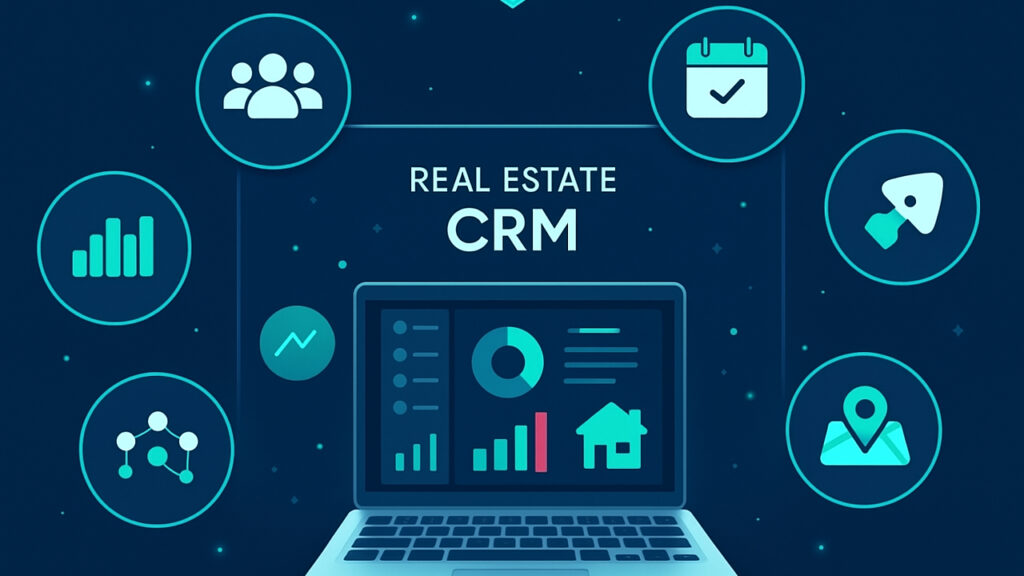
        Person in front of CRM interface showing charts and real estate icons

        Not all CRM systems are identical. CRM for real estate should include functionality specialized for the industry. Let’s examine the essential features more closely.

        The real estate industry is fast-paced and highly competitive, with long decision-making cycles and high-value transactions. These unique challenges require tools that go beyond spreadsheets and manual tracking. A customer relationship management (CRM) system offers solutions tailored to these pain points, helping professionals stay organized and efficient.

        Real estate agents often receive hundreds of leads from websites, property portals, social media, referrals, and walk-ins. Without a CRM, these leads end up scattered across emails or spreadsheets, making it difficult to prioritize and follow up consistently. With a CRM, leads are:

        • Centralized in one place
        • Categorized and scored based on readiness
        • Organized so agents can focus on the hottest leads first

        Every real estate transaction involves multiple documents such as contracts, agreements, NOCs, and receipts. Handling them manually is time-consuming and prone to error. A CRM solves this by digitizing, securely storing, and linking documents directly to client or property profiles, making them easy to access and manage

        In short, implementing CRM brings in some key positive changes for real estate businesses, and they are:

        • Handling complex processes
        • Respond quickly to inquiries
        • Convert more leads to deals
        • Build stronger client relationships

        Every real estate transaction involves multiple documents such as contracts, agreements, NOCs, and receipts. Handling them manually is time-consuming and prone to error. A CRM solves this by digitizing, securely storing, and linking documents directly to client or property profiles, making them easy to access and manage

        Feature Description
        Lead Management
        Real estate firms gather leads from listing sites, expos, partners, referrals, and ads. A CRM consolidates them, removes duplicates, and segments leads so agents can focus on high-value prospects.
        Property & Project Tracking
        CRMs store property details (location, price, amenities, legal info) and project units at various stages. Agents access accurate data quickly to build trust with clients.
        Automated Follow-Ups
        CRMs automate reminders and messages, ensuring no lead is neglected. They schedule follow-ups for undecided buyers, maintaining engagement throughout long sales cycles.
        Document Management
        Paperwork such as booking forms and legal agreements can be digitized and stored securely. Agents retrieve documents quickly, reducing delays and errors.
        Multi-Channel Communication
        CRMs centralize phone, email, SMS, and WhatsApp interactions in one system. This enables seamless client engagement without switching apps, while recording every exchange
        Customer History & Analytics
        CRMs log emails, calls, and visits, helping agents personalize communication. Dashboards provide insights on conversions, deal timelines, and revenue forecasts for data-driven decisions.
        Mobile Access
        Mobile CRM apps let agents in the field access property data, update leads, and respond instantly, boosting efficiency and responsiveness.
        Integration Capabilities
        Top CRMs connect with marketing, accounting, ERP, and property portals, creating an ecosystem that reduces duplication and increases efficiency.

        Advantages of Real Estate CRM Development

        Active enterprise software development project

        An effective CRM for real estate can foster change within firms. Keeping that in mind, let’s see the advantages of real estate CRM.

        Improved Customer Service

        When the CRM solutions document each client’s preferences and their specific history, agents can provide a more personalized experience. For example, knowing that a client prefers an apartment by the sea at a particular budget means that an agent can suggest more options that they will appreciate and become loyal clients.

        Higher Sales Efficiency

        Completing manual tasks like logging a call or sending reminder emails takes away valuable time that agents could be investing in negotiating, arranging, or closing a deal. By automating these processes, CRM Solutions frees agents up to conduct business, enabling much quicker conversions and sales with the same amount of agency resources.

        Better Team Collaboration

        When large firms have many agents and brokers, as well as back-office personnel, all working on one deal, CRM needs to allow everyone to access the same information. This would enable the teams to communicate effectively, leading to better teamwork.

        Data-Driven Decision-Making

        CRM dashboards provide firms with valuable insights into which advertising channels generate the most leads, which properties are in high demand, and which agents are performing consistently. Firms use this data to allocate their resources and to devise their growth strategies.

        Faster Deal Closures

        A CRM reduces the time of follow-ups, paperwork, and delays with approvals, thereby accelerating the overall transaction process. For example, a buyer who receives timely communication and all required documents is often quicker to close.

        Scalability

        As firms grow and begin to manage thousands of client and property files, it becomes tough to do everything manually. CRM for real estate helps businesses to handle large volumes of data while maintaining efficiency as the business scales.

        Why Choose Custom CRM Development for Real Estate?

        All real estate businesses are not the same. Brokerage firms do things differently from developers and property managers. While off-the-shelf CRMs may have general tools for a real estate business, they don’t accommodate workflows that are tailored to specific needs.

        With custom real estate CRM development, your software can be designed around your business model. For example:
        • Developers can add modules specific to projects.
        • Property managers can add rent collection and maintenance requests.
        • Brokers can track agent metrics and commissions, as well as team performance.
        A custom CRM will allow for integration with the exact 3rd party tools your business relies on, facilitating adoption. Although a custom-built CRM incurs higher upfront costs, its long-term efficiency and unlimited scalability make it worthwhile.

        Custom vs. Ready-Made Real Estate CRM

        Split-screen comparison of custom and ready-made CRM interfaces with real estate elements like property icons and dashboards
        Ready-made and custom CRMs have their own advantages and disadvantages.
        • Ready-made CRMs can be deployed quickly and are less expensive at the start. There is often a lack of industry-specific features on the platform, which may require businesses to adapt their workflows to accommodate the software’s functionality.
        • Custom CRMs often take longer to design and build, and cost more upfront, but they are built specifically for your processes. Custom CRMs can adapt better as your business grows.
        For smaller agencies with limited budgets, ready-made CRMs may be enough. However, larger firms or those that grow quickly may find that custom real estate CRM development offers a better ROI in the long run. To build a tailored solution that scales with your business, it’s a smart move to hire Microsoft CRM developers in India for expert custom development.

        CRM Solutions for Different Real Estate Professionals

        CRM Software For Real Estate Agents

        Agents depend on quick follow-ups and organized client information. CRM software for real estate agents helps agents manage leads and site visits, allowing them to follow up without forgetting. A CRM will also allow agents to change client status on the go.

        CRM Software For Real Estate Brokers

        Brokers supervise many agents and clients simultaneously. CRM software for real estate brokers is beneficial for reporting agent performance, managing leads, and tracking the sales pipeline to ensure leads are disbursed fairly and your overall sales pipeline can be monitored. It allows brokers to have visibility over the entire team, thereby coaching and guiding them effectively.

        CRM Software For Real Estate Investors

        Investors need more than just lead management from a CRM. They need to track portfolios, risk assessments, and ROI analysis. A CRM software for real estate investors has dashboards to show financial performance, rents, long-term growth potential, and other key metrics.

        CRM Software For Property Developers

        Developers manage large projects involving multiple units and numerous buyers. A CRM for property developers can track and export timelines and milestones, communicate information with hundreds of clients, store legal information, and perform other related tasks. A CRM for real estate property developers will increase credibility and transparency.

        CRM Software For Property Managers

        A property manager oversees rentals, tenants, and handles servicing & maintenance requests. A property management CRM can automate rent notifications, log tenant or property maintenance requests, and track work orders and lease renewal notifications. This would reduce administrative costs and improve client satisfaction.

        CRM Development Process for Real Estate

        Creating a CRM for real estate necessitates a systematic procedure:
        • Requirements Analysis: To ascertain workflows, weaknesses, and goals of the actual business.
        • Design & Planning: To design wireframes and design the user experience for the agents, brokers, and management.
        • Development: To develop all of your features, like property modules, lead management, and integrations.
        • Testing: Checking usability, security, and performance to confirm the system can run smoothly.
        • Deployment: Deploying the system across the business, running real-time data transfers.
        • Training & Adoption: Ensuring agents and staff members know how to use the system properly.
        • Maintenance & Enhancements: Continuously upgrading the system with new features and scaling with business growth.
        Each stage demonstrated in CRM development for real estate ensures that it is aligned with business needs and offers sustainable value.

        The future of real estate CRM platforms will continue to be dictated by advances in technology. 

        • Artificial intelligence (AI): Predictive lead scorers and various market forecasts allow businesses to stay proactive and focus on the best opportunities.
        • Automation: Activities such as drip campaigns and the ability to generate a contract instantly reduce human intervention through automation.
        • Voice-enabled CRM: Agents can now update their records or search for pertinent information hands-free, allowing them to move more quickly.
        • AR/VR Integration: Virtual tours embedded in the CRM profile allow the agent to see the clients’ interests based on the properties viewed.
        • Blockchain for Transactions: Ensures property deals are secure, transparent, and tamper-proof.
        • Mobile-first design: Agents are always on the go, meaning CRMs must be optimized for mobile.

        The enhanced capabilities afforded by these technologies will make CRMs smarter, faster, and more client-focused, maintaining an edge amongst competitors.

        Conclusion

        Real estate is changing, and so are client expectations. Firms still using spreadsheets and manual tracking risk falling behind. A CRM for real estate provides efficiency, transparency, and personalization three cornerstones of today’s economic environment. Partnering with the best software developer company in India, like Shaligram Infotech, can help you implement the right CRM solution tailored to your needs and keep you ahead of the curve.
        From lead management to paperwork processing, expediting communication, and enhancing the customer experience, CRM development for real estate has become the backbone of modern-day businesses in the industry.
        Whether you are an agent with many leads, a broker with many teams, or a developer with many different new builds, the right CRM for real estate allows you to focus on what matters the most: building relationships and closing deals.
        The future of real estate belongs to those who adapt to technology. CRM sits at the center of this transformation, forever changing the sales and customer experience, one customer relationship at a time.
        Categories
        Blog Microsoft

        Server-Side Rendering (SSR) v/s Client-Side Rendering (CSR)

        Cloud Computing

        Server-Side Rendering (SSR) v/s Client-Side Rendering (CSR)

        Server side rendering vs client side rendering comparison

        GEt in Touch


          How a page is rendered directly impacts perceived speed, SEO, and user experience, which are critical factors in web application development services in India.
          Client-Side Rendering (CSR): In CSR, the browser downloads a minimal HTML shell and runs JavaScript to build the user interface. This approach is excellent for interactive single-page applications (SPAs), but it requires additional work to optimize SEO and improve first-paint speed.
          Server-Side Rendering (SSR): SSR involves the server returning fully rendered HTML for the initial request. This significantly enhances time-to-first-paint and boosts SEO for content-heavy pages, making it ideal for improving overall page load performance.
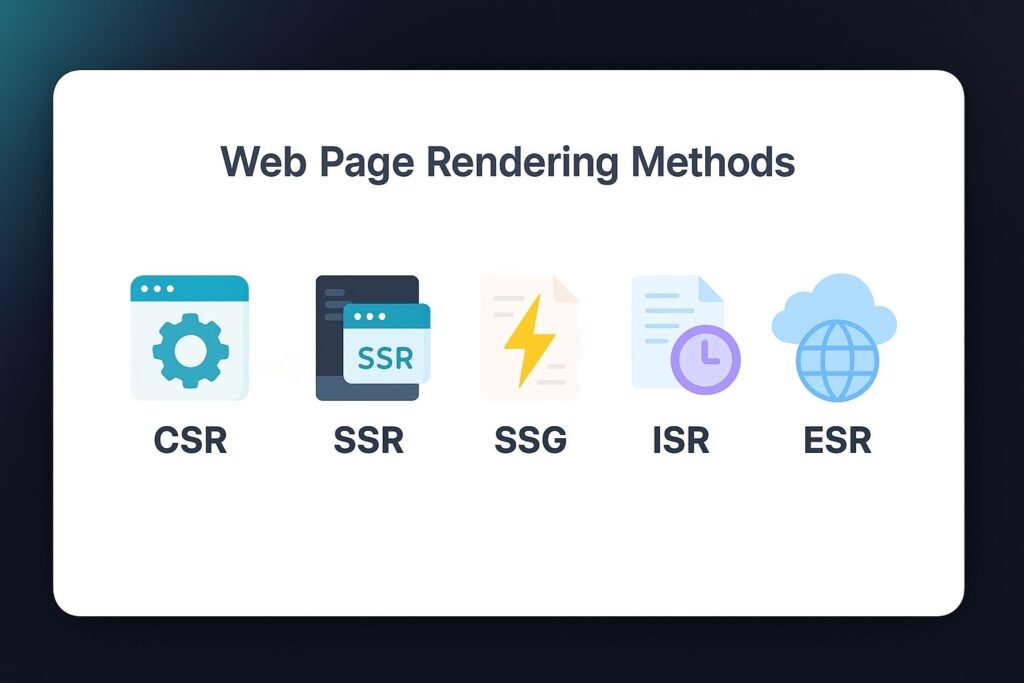
          This article covers CSR, SSR, SSG, ISR, and ESR, providing practical examples, runnable code snippets, performance checks, and a developer checklist to help you determine the best approach for your web application project.

          Web Page Rendering Methods

          Showcasing five web page rendering methods with icons: CSR, SSR, SSG, ISR, and ESR
          Rendering decides when and where HTML is produced. Short definitions:
          • CSR (Client-Side Rendering): The browser downloads a shell and JavaScript bundles, and renders the UI on the client.
          • SSR (Server-Side Rendering): The server returns fully formed HTML per request.
          • SSG (Static Site Generation): Pages are pre-built at build-time and served as static files.
          • ISR (Incremental Static Regeneration): SSG with on-demand/regenerated pages at runtime (e.g., Next.js revalidate).
          • ESR (Edge-Side Rendering): Render near the user on edge nodes for low-latency dynamic pages.
          Below, we dig into practical implications, code, and when to use each.

          What is Client-Side Rendering (CSR)?

          CSR ships an HTML shell and JavaScript bundles to the browser; the browser then fetches data and renders the UI. CSR is ideal when runtime interactivity is primary.

          Key Features

          • Fast interactions after initial load (UI handled on client).
          • Good for real-time updates, drag-and-drop, and complex stateful UIs.
          • Initial load can be slower (JS parsing/execution).
          • SEO requires pre-rendering, dynamic rendering, or server-side fallbacks.

          What is Server-Side Rendering (SSR)?

          SSR generates full HTML for each request on the server and sends it to the client. This improves first-paint and indexability.

          Key Features

          • Faster perceived initial load and better LCP for content pages.
          • Predictable SEO: crawlers receive full HTML.
          • Works better on low-end devices or slow networks (less client CPU).
          • Requires server resources and a caching strategy (s-maxage, stale-while-revalidate) to scale.

          What is Edge-Side Rendering (ESR)?

          ESR runs rendering logic on edge nodes (Cloudflare Workers, Vercel Edge) to deliver dynamic HTML closer to users, reducing network latency.

          Key Features

          • Very low TTFB for users geographically distributed.
          • Suitable for personalized pages that still need SEO-friendly HTML.
          • Requires edge-compatible code and often vendor-specific APIs.
          • Combine with CDN caching (s-maxage) and smart cache keys to scale.

          What is Incremental Static Regeneration (ISR)?

          ISR = SSG + on-demand regeneration. Pre-build pages and re-generate them at runtime using a `revalidate` window.

          Key Features

          • Fast, cached pages with near-real-time freshness.
          • Lower server costs vs. full SSR for extensive catalogs.
          • Ideal for blogs, product catalogs, and news feeds where instant real-time updates aren’t required.

          What is Static Site Generation (SSG)?

          During the build process, all HTML pages are prerendered by Static Site Generation. Pages are delivered as static assets, which, once built, result in lightning-fast performance.

          Key Features

          • High-speed (CDN-cached HTML).
          • Simple infra and excellent scaling for read-heavy sites.
          • Not ideal for highly personalized, real-time data without ISR or client-side fetches.

          Client-Side Rendering vs Server-Side Rendering: Comparison

          Factor CSR SSR
          Rendering
          Client (JS bundles)
          Server returns full HTML
          SEO
          Medium (needs pre-render/dynamic rendering)
          High (HTML available to crawlers)
          Initial load
          Slower (JS parse/exec)
          Faster perceived; better LCP
          Interactivity
          Excellent after load
          Good with partial hydration
          Server cost
          Lower per-request
          Higher (unless cached)
          Use cases
          SPAs, dashboards, in-app editors
          Blogs, product pages, marketing sites

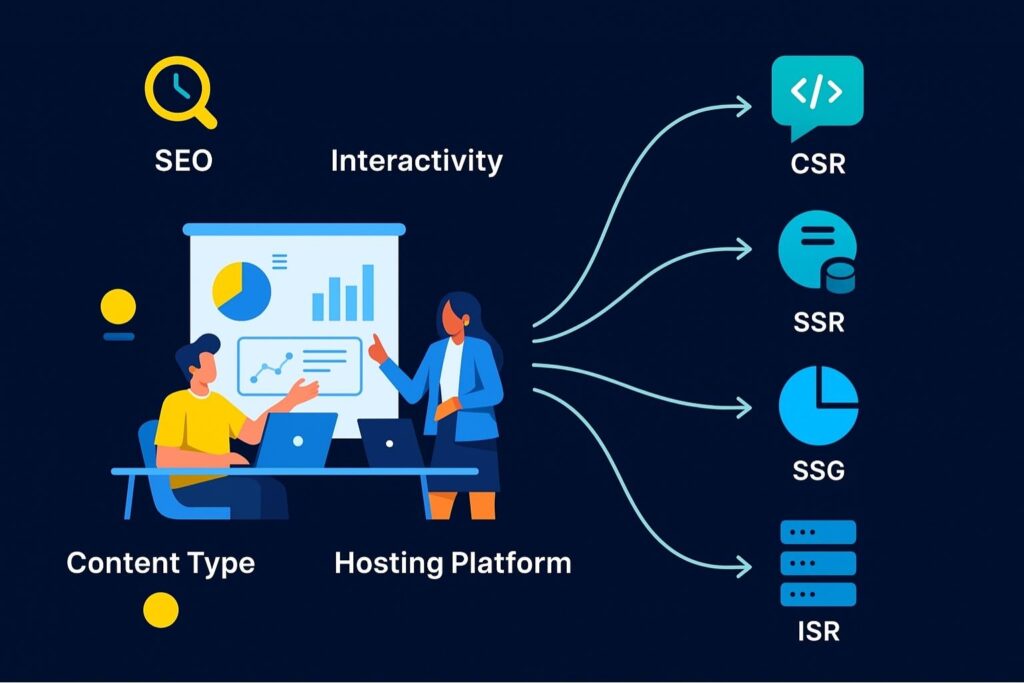
          How to Choose the Correct Web Page Rendering Method?

          Flowchart-style image showing factors like SEO, interactivity, and content type leading to different rendering methods
          Choosing a rendering method depends on several factors, including SEO, interactivity, content type, and infrastructure. The following factors are discussed:

          SEO (as needs/priority)

          If your site heavily relies on organic traffic, such as e-commerce sites, publishing/news sites, or blogs, SEO must be a priority. SSR, SSG, or ISR are better options since you get fully rendered HTML that can be crawled easily by Googlebot. Even though CSR can be SEO optimized, it will often take more work if you want proper results (like dynamic rendering, prerendering).

          Website Functionality/User Value

          Think about what is most important to your users. If they require high interactivity (e.g., dashboards, web apps, or chat platforms), CSR will be better, as it allows for dynamic updates in the browser. If your site delivers content as value to the user (e.g., blogs, portfolios, news), SSR, ISR, or SSG will provide better load times and improved readability.

          Project Type (Dynamic vs Static)

          Dynamic websites that undergo frequent changes or display personalized data, such as eCommerce product pages or booking sites, are a better fit for SSR, ISR, or ESR.
          Static websites that require infrequent updates or changes, such as documentation sites, marketing pages, or blogs, are better suited for SSG, primarily because they can be prerendered and served directly.

          Content Refresh Frequency

          Consider how often your content changes.

          • Frequent changes (daily/hourly): SSR or ISR can ensure that users see your updated content immediately.
          • Occasional changes: You can save on costs using SSG, as it only builds a page when needed.
          • Real-time changes: ESR is your best option as edge servers can deliver fresh data at any moment.

          Tech Stack

          Your decision might change based on your framework; for example, if you’re using Next.js, you could have the flexibility of different options (SSR, ISR, SSG, ESR). Technologies/frameworks like Angular, Vue.js, or React often lean towards CSR, but add-ons can also be integrated for SSR support. Ensure that your tech stack fits your developer skills and ability to host.

          Project Requirements

          If you’re focused on achieving personalization, user-specific content, or A/B testing for your project, SSR or ESR may be a better choice as they serve content dynamically. But if you stress speed and simplicity, SSG or ISR can significantly reduce complexity while still achieving excellence in speed.

          UX

          Rendering affects how fast users view your site. CSR involves a load delay on the first load but provides a seamless, app-like experience later. SSR means you serve your content faster on initial load, so users have a better first impression. However, it is less responsive and will reload the entire page if the navigation is not optimized. The choice of selecting your method will help you strike a balance between the speed and interactivity you can achieve.

          Platform Choice

          Some hosting providers and CDNs are optimized for specific rendering methods. Options like Vercel and Netlify are better for SSG and ISR, while others like Cloudflare Workers are more suited for ESR rendering. The choice of Hosting platform/environment makes a massive difference in performance and scalability.

          Which is Better, SSR or CSR?

          Neither SSR nor CSR is better for everything – it is, like most things, “it depends” on your project. SSR is better for SEO-heavy, content-rich, and dynamic sites. CSR is more suitable for highly interactive applications where user engagement occurs after the initial load has been completed.

          Why is SSR Faster Than CSR?

          SSR always feels faster than CSR since the server sends a fully-formed HTML page immediately. In CSR, the browser first loads various JavaScript bundles, parses and executes them, and then provides an HTML page to the user. SSR reduces the delaying step, leading to a better perceived performance.

          What are the Disadvantages of Client-Side Rendering?

          • Initial load may be slower due to JavaScript-based rendering.
          • Increased load on device resources, leading to poorer performance on lower-tier devices.
          • There could be SEO issues if crawlers are unable to access pages rendered with JavaScript.

          Is Client-Side Rendering Bad for SEO?

          CSR is not inherently detrimental to SEO, but it does have drawbacks. Search engines, such as Google, are capable of indexing CSR, but it is slower and less predictable. If SEO is a priority, SSR, ISR, or SSG is often a safer option.

          Conclusion

          Web pages now employ a combination of methods to display content, ranging from basic HTML to more advanced techniques that enhance performance, SEO, and user experience. Client-Side Rendering (CSR) works well for creating dynamic and interactive web applications. However, it can be difficult to manage SEO and speed when the page first loads. SSR can better support SEO and improve initial load performance through server-based rendering, although it places a greater load on your server. These rendering strategies are often implemented by an offshore software development company in India to balance performance, scalability, and development efficiency.
          Modern rendering methods, such as ESR, ISR, and SSG, provide a more flexible and efficient development experience. Shaligram Infotech knows that choosing a rendering method does not always mean selecting one over the others. Each process can be customized to meet your project’s specific goals, whether those focus on performance, interactivity, SEO, or scalability.
          Categories
          Blog Microsoft

          How Dynamics 365 Enables Remote and Mobile Workforce Efficiency

          Microsoft

          How Dynamics 365 Enables Remote and Mobile Workforce Efficiency?

          Showcasing How Dynamics 365 Enables Remote and Mobile Workforce Efficiency

          GEt in Touch


            The way businesses work has changed over the years. Now, employees are no longer required to be present in an office to be an effective contributor as businesses prefer flexibility, real-time collaboration, and the ability to access information from anywhere.
            Microsoft Dynamics 365 solutions have emerged as an important platform in this space by combining cloud-based access, end-to-end workflows, and specialized mobile applications to maintain secure data access and business continuity, while also enabling organizations to enhance workforce productivity.

            Dynamics 365's Core Capabilities for Remote Workforce Efficiency

            Cloud Access: The Key to Remote Workforce Efficiency

            The most significant factor in remote efficiency is access. Dynamics 365’s cloud-first platform provides secure access for employees anywhere, on any device. With real-time access to data, organizations can avoid bottlenecks associated with outdated and siloed information.
            Whether it is reviewing customer records or updating project progress, or tracking sales opportunities, teams can always access the most accurate data.

            Seamless Communication & Dynamics 365 Mobile Workforce Collaboration

            Collaboration is paramount when teams are distributed. Dynamics 365 offers Microsoft Teams integration, enabling employees to message, video conference, and share files directly within their work environment. Such integration enables sales teams to update opportunities during meetings, customer service professionals to access knowledge bases, and project managers to share dashboards.

            Automated Workflows and Task Management

            Manual processes slow down remote teams. Dynamics 365 utilizes automation and AI to automate repetitive and tedious tasks, such as sending reminders, updating records, or generating invoices. Through automated workflows, companies can release teams from time-consuming administrative tasks, enabling them to focus on value-adding work. Task management features ensure team accountability as everyone knows who is assigned a task, by whom, and how to monitor progress. This approach plays a key role in streamlining operations with Dynamics 365 business process automation.

            Real-time Data Sharing, Insights, and Analytics

            Data-driven decision-making has become even more relevant for remote employees. Dynamics 365 offers AI-powered, real-time reporting and analytics capabilities, providing leaders with visibility into their operations. Internal sales expectations, customer engagement levels, and employee performance can all be monitored and adjusted in real time. Furthermore, organizations can quickly recognize new opportunities, challenges, and trends, as they have visibility, even when teams are dispersed.
            For example, a field technician can use the mobile app to access real-time inventory levels, preventing delays and improving customer satisfaction.

            Enhanced Data Security for Remote Access

            Remote access can raise concerns regarding data security. Dynamics 365 takes care of it, as it comes with enterprise-grade security features, including role-based access, multi-factor authentication, and data encryption. IT teams can manage user permissions precisely, ensuring that technology allows employees access to data relevant to their individual roles. This helps ensure compliance with industry regulations while maintaining a balance between flexibility and security.

            Cost Savings

            Promoting a remote workforce typically results in a decrease in overall costs associated with physical office space, travel, and infrastructure. The combination of Dynamics 365, along with your remote workforce, will amplify these cost savings by enhancing processes, eliminating waste, and dependence on various tools that are not connected together. Using a single application will allow you to scale your organization without increasing your IT costs.

            Dynamics 365's Specialized Support for Mobile Workforce Efficiency

            Central cloud hub connecting business icons on a digital grid background

            Understanding Field Service Management (FSM)

            Dynamics 365 Field Service Management is a comprehensive solution from Microsoft that provides businesses with complete control over managing all their field service operations efficiently. The service offers tools and features to optimize scheduling, work order management, dispatching, and team collaboration, enabling industries to deliver excellent customer service. From a holistic perspective, organizations can manage why and how they get their field service operations up and running.

            Key Capabilities of Dynamics 365 Field Service

            This cloud-based business solution centralizes scheduling & dispatching, work order management, and resource and inventory management. Dispatchers can assign the right technician to the right job based on skills, location, and availability. Technicians will have access to customer data that helps them offer personalized service while recommending additional services. Moreover, businesses will be able to carry out continuous improvement and better decision-making by having access to analytics and reporting tools.

            Mobile Application Capabilities

            The Dynamics 365 Field Service mobile app is a game-changer for both businesses and technicians. It offers an easily customizable, flexible, and secure mobile application for businesses without any coding knowledge. It also offers location-tracking, making it easier to manage the field workforce and field appointments.
            For technicians, Dynamics 365 Mobile helps enhance efficiency and accurate recordkeeping by offering access to customer history, job details, checklists, and step-by-step guides, even offline. They will be able to capture customer signatures, update job status in real time, generate invoices, etc.

            Boosting Productivity in Field Service

            Dynamics 365 Field service helps streamline work order management by scheduling the right technician for the job using AI-driven insights. It also offers tools to track and measure the performance of service operations. Moreover, they will have access to a complete view of tasks and schedules that helps with prioritization and planning. Technicians can be assisted with complex tasks and roadblocks through CoPilot integration.

            Integrations with Microsoft 365 for Field Service

            Dynamics 365 Field service integrates with Microsoft 365 tools like Microsoft Outlook, Teams and Viva Connections seamlessly. Integration with Microsoft 365 tools lets field workers collaborate with their team members through Teams, view all their daily tasks and schedules through Viva Connections, manage schedules through Outlook and share documents through SharePoint.

            Maximizing Business Efficiency with Dynamics 365: General Tips Applicable to Remote/Mobile Work

            Mobile device with Dynamics 365 UI surrounded by tech icons and glowing lines

            Customizing Dashboards for Actionable Insights

            Personalized dashboards in Dynamics 365 are a key way to enhance business efficiency, as they display only the key performance indicators (KPIs) that matter to the business. By designing a custom dashboard, employees will be able to view and analyze data that is relevant to their roles. Such quick and direct access to information will help improve response times and decision-making.

            Ensuring Mobile Accessibility

            Teams can access business-critical data with Dynamics 365 and perform tasks from anywhere, using just a mobile app. Teams will be able to stay connected with the systems and manage all operations in real-time, whether they are working on-site, remotely, or traveling. Having a mobile-friendly D365 ensures business operations are uninterrupted, and flexibility and productivity remain intact.

            Regular System Updates and Maintenance

            To enhance system functionality, performance, and security, Microsoft frequently releases new features and updates. Businesses can leverage new tools and capabilities by staying current with these updates, thereby enhancing their efficiency. Additionally, it becomes possible to identify potential problems before they become critical, thereby preventing operational disruptions and reducing downtime through routine maintenance.

            Training and Support for Users

            One of the most effective ways to enhance the efficiency of Dynamics 365 is to provide comprehensive training. It will become possible to ensure employees can leverage the maximum features and tools of the system through comprehensive training. Well-trained users will be able to perform tasks more effectively, navigate the platform seamlessly, and contribute to the overall success of the business.
            Provide targeted training for different user roles (e.g., sales, service, field technicians) and leverage official resources like Microsoft Learn to ensure proficiency and adoption of new processes.

            Customized Solutions with Dynamics 365 Implementation

            Every organization has differing priorities and follows different workflows. To meet industry-specific needs, Dynamics 365 will offer custom dashboards, modules, and integrations. After aligning the platform with strategic priorities, organizations will provide their mobile or remote employees with the best tools and insights possible while maintaining flexibility and efficiency to be adaptable towards changing business needs.

            Conclusion

            As organizations implement remote and mobile work environments, finding digital tools that work effectively, efficiently, securely, and flexibly is essential. Dynamics 365 is leading the way in providing a single platform that allows organizations to have real-time collaboration, automated data intelligence, and robust security. With Dynamics 365’s Field Service capabilities, mobile teams can execute operations more efficiently and utilize tools to perform successfully in the field. Whether you need to support your mobile technicians or remote employees, Shaligram Infotech, the best software development company in India, will help your organization develop the capabilities to complete work efficiently.
            Categories
            Blog Microsoft

            integrating-ai-machine-learning-smarter-operations-dynamics-365

            Microsoft

            Integrating AI and Machine Learning for Smarter Operations with Dynamics 365

            Abstract AI and machine learning visuals integrated with business operations and Dynamics 365 elements

            GEt in Touch


              The speed of digital transformation has never been so fast as now, and businesses are under immense pressure to improve operations and drive value for customers. Artificial Intelligence (AI) and Machine Learning (ML) have become integral to Microsoft Dynamics 365, helping businesses optimize processes, analyze data more effectively, and make smarter, faster decisions. By choosing Dynamics 365 services enhanced with AI and ML, companies can unlock greater value from their existing operations.

              Organizations can open up newer opportunities for automation, efficiency, and customer engagement with the application of AI in business, especially with Microsoft Dynamics 365. By leveraging Microsoft Dynamics 365 services, they can shift from being reactive to proactive by taking advantage of intelligence and taking the right action at the right time to tackle challenges with precision.

              Why AI and Machine Learning Matter for Modern Business Operations?

              Today, businesses use data to run their organizations. They get to generate meaningful information from each customer engagement, financial transaction, and operational process. However, it is not possible to get maximum benefit from data if it is not used correctly when using the right tools. This is where powerful tools like ML and AI for business operations are used to sift through large datasets, find hidden patterns, and get actionable insights.
              AI and ML capabilities can support an organization by providing predictive insights into customer behaviors, optimizing supply chain opportunities, and enabling data-driven, fact-based decision-making over intuition-based strategies. It is now imperative for organizations to embrace AI and ML technologies to remain competitive in these fast-growing markets.

              Integrating AI into Dynamics 365: What You Need to Know

              Visual of AI integration with Dynamics 365 using neural networks, data flows, and business app icons


              Microsoft Dynamics 365 provides built-in AI capabilities across Finance, Supply Chain Management, Sales, and Customer Service modules. This allows businesses to automate workflows, use predictive analytics for demand planning, and deliver highly personalized customer experiences, all from within the Dynamics 365 platform. Dynamics 365 AI integration offers capabilities not limited to data analysis but extending to intelligent automation, natural language processing, and advanced predictive modeling.

              Integration of AI begins with understanding organizational needs and aligning those needs with the AI-powered modules in Dynamics 365. This also involves considering data readiness, ensuring the data is clean, well-structured, and easily accessible, which enables AI to generate accurate results.

              How Microsoft Dynamics 365 AI Solutions Drive Business Growth

              Artificial Intelligence transforms Dynamics 365’s business solutions into intelligent business ecosystems. In Customer Engagement, for example, AI-driven chatbots can assist customers with simple inquiries, which provides the opportunity for agents to focus on high-level, complex cases. In Finance, anomaly detection tools that use ML help detect fraudulent activity, as well as identify any unusual expenses. In Supply Chain Management (SCM), AI predictions help organizations by proposing optimized inventory levels and identifying procurement and demand fluctuations.
              AI business solutions enhance functions to achieve strategic outcomes, while also automating simple tasks. Dynamics 365 serves as the foundation where AI enhances core processes by introducing smarter, faster, and more reliable decision-making capabilities, empowering organizations to make data-driven decisions with Dynamics 365 services.

              Benefits of AI-Driven Business Solutions in Dynamics 365

              Digital technology project showcase


              The primary value of integrating Microsoft Dynamics 365 with AI and ML lies in its business applications. Companies need to improve operational efficiencies and innovate in customer interactions and business planning. By applying intelligence to day-to-day activities, Dynamics 365 helps organizations work with agility and resiliency. Let’s examine a few of those benefits more closely.

              Improved Operational Efficiency

              Artificial Intelligence in business, along with automation, helps lower the burden of manual processing within routine tasks so that employees can focus on high-value jobs. Dynamics 365 can help automate day-to-day functions that are repetitive, such as data entry, invoice approvals, time and service scheduling. This helps with faster process flow while removing chances of human errors, leading to efficient & smoother operations.

              Enhanced Decision Making

              Leveraging built-in AI for Dynamics 365 lets leaders make data-driven, informed decisions. Instead of waiting for reports on a monthly or quarterly basis, decision makers will have access to dashboards of data and predictive recommendations in real time. This lets organizations have the ability to spot trends, assess risks, and identify new opportunities quickly.

              Cost Reduction

              By integrating AI into Microsoft Dynamics 365, organizations can reduce operational costs through intelligent automation, predictive maintenance, and accurate demand forecasting. This ensures businesses maximize their Dynamics 365 investment while avoiding costly inefficiencies. Automated workflows contribute to reducing manual tasks, predictive maintenance reduces downtimes, and accurate demand forecasts can eliminate inventory spoilage. With time, these processes lead to effective cost reductions within organizations.

              Personalized Customer Experiences

              Customers today expect every interaction to be deeply personalized. Dynamics 365 with AI-based customer insights promotes customer satisfaction by letting businesses analyze customer preferences, gather customer feedback, and learn from user behaviors. Whether through customized marketing campaigns or unique service recommendations, AI can help businesses stimulate a deeper connection to their customer.

              Predictive Analytics

              AI-based predictive analytics in Dynamics 365 represents one of the more profound possibilities for organizations. Machine learning models assess historical data to predict future behavior, customer needs, and operational hurdles. By addressing these situations before they happen, organizations can prepare for market changes, reduce risk, and capitalize on opportunities before their competition.

              Machine Learning in Dynamics 365: Smarter Business Decisions

              Dynamics 365 Machine Learning models can go beyond providing simple analysis of data. They offer improved predictions and recommendations by continuously learning from new datasets. For example, historically, ML models have been able to predict leads with a high chance of converting into sales and check financial data for any warning alerts. Machine Learning helps businesses make more accurate and more intelligent decisions by refining their insights, thereby ensuring long-term strategic success.

              Streamlining Operations with AI and Automation in Dynamics 365

              AI-driven automation is a groundbreaking force for building operational workflows. Dynamics 365 enables businesses to automate case assignments to the appropriate agents, plan delivery routes, and streamline procurement approval processes, thus improving operations through Dynamics 365 business process automation.

              Overcoming Challenges in AI and Machine Learning Integration

              Even with this great potential, there are significant challenges to integrating AI and ML with Dynamics 365. This includes organizational data being in silos, as well as faulty and incomplete data, and overall company unpreparedness. Additionally, employees who fear their jobs will be replaced by AI will resist the change.
              Being successful at overcoming these potential barriers requires an effective change management plan, proper communication about the AI implementation role, and serious work on the data governance area. Apart from that, security and compliance considerations need to be taken into account to ensure sensitive data is used securely by AI models.

              Best Practices for AI and Machine Learning Adoption in Dynamics 365

              Organizations are required to follow best practices to derive maximum value from using AI and ML in Dynamics 365. Establishing clear objectives and setting them within the framework of actual business is one of the best practices rather than creating technology hype. Ensuring that your data infrastructure can accommodate AI and ML technologies is another key thing. You should also work towards training employees to work with AI tools, including the ability to interpret insights, which can be effective.
              Next, accelerate deployment and mitigate AI-related risks in business integration by partnering with experienced Dynamics 365 professionals like Shaligram Infotech. Finally, adopt a phased approach, starting with small AI-driven projects and then transitioning to large-scale initiatives. This approach enables organizations to build confidence and demonstrate a visible ROI for the business.

              Future-Proofing Your Business with AI and Dynamics 365

              Organizations that integrate AI and ML with Dynamics 365 can identify new opportunities for enhanced customer engagement and efficiency. As a leading software development company in India, we understand how it helps businesses understand customer needs, anticipate market shifts, and innovate as needed with confidence.
              Using AI to enhance business operations with Dynamics 365 involves challenges and requires thorough planning. However, those who can embrace them will be able to cope with the rapidly evolving digital space and ensure long-term growth for themselves. Get in touch with us today to explore how Dynamics 365 and AI can transform your business operations.
              Categories
              Blog Microsoft

              Empowering Data‑Driven Decisions with Dynamics 365

              Other Categories

              Empowering Data‑Driven Decisions with Dynamics 365

              Empowering Data‑Driven Decisions with Dynamics 365

              GEt in Touch


                It is a fact that enormous amounts of data are generated across the digital realm every day. According to reports, approximately402.74 millionterabytes of data are generated daily. For decision-makers, this can mean both boon and bane at the same time. On the one hand, businesses have the ease of getting insights and patterns into market trends, customer behavior, and tips to improve their operations. On the other hand, there is a tremendous volume of complex and challenging data.
                To turn this data into meaningful action, organizations are increasingly turning to solutions like Microsoft Dynamics 365 services. These tools help businesses not only collect and manage large volumes of data but also transform it into actionable insights that drive growth, innovation, and smarter decision-making.
                Because of the data deluge, businesses around the world are now having a hard time making the right call and leveraging their potential. This is where data-driven decision-making software like Microsoft Dynamics 365 saves the day! It helps businesses make data-driven decisions by offering transformative solutions.
                Here in this post, we will try to know more about how D365 is playing a key role in helping business leaders make informed and impactful business decisions.

                Building a Single Source of Truth with Dynamics 365

                Uncoordinated and siloed data cripples decision-making, extends business processes, and creates costly inaccuracies. Dynamics 365 eliminates these pain points by serving as your centralized data hub, seamlessly integrating CRM, ERP, sales, marketing, customer service, and supply chain information into a unified platform.
                For example, a retail client reduced reporting time by 65% after consolidating their disparate systems into Dynamics 365.
                This comprehensive view of business data enables leaders and teams to achieve consistent, real-time access to accurate data, eliminating duplication and misalignment. Organizations can determine a “single source of truth” using Dynamics 365 that aligns reporting, drives strategy, and fosters collaboration.

                Analytics & Dashboards in Dynamics 365

                Data is useless if it is not converted into insight. Dynamics 365 offers out-of-the-box dashboards and reporting, powered by Power BI analytics, which enables users to view trends, measure performance, and track KPIs in real-time.
                Whether it is sales forecasting, inventory, or customer behavior, Dynamics 365 dashboards provide teams and organizations with the ability to filter, drill down, and take action on the most important key performance indicators instantaneously. Visual tools like these replace the dependency on IT teams and provide business users the ability to rapidly make decisions confidently.

                Predictive Insights with AI & Machine Learning in Dynamics 365

                Analytics in Dynamics 365 has evolved from descriptive to predictive insights by leveraging Dynamics 365 Machine Learning and AI possibilities. AI-driven forecasting, user sentiment analysis, and next-best action recommendations provide organizations with the tools to predict and prepare for market shifts, customer needs, and production issues.
                For instance, representatives are freed from the task of identifying priorities when any opportunities emerge, as they can use AI-driven insights to know what to focus on on any given day.
                In industries like manufacturing, downtime can be avoided altogether with predictive maintenance alerts. These intelligent capabilities help take your usual, reactive decision-making approach to a more proactive stance. This will help reduce costs, increase revenue, and enhance customer experiences. When combined with tools like Dynamics 365 business process automation, businesses can streamline workflows even further, making operations more resilient and agile.

                Empowering Teams with Dynamics 365

                Showcasing benefits and how empowering teams with Dynamics 365
                The power of the data-driven decision-making process isn’t just something that is reserved for the top-level management. Dynamics 365 allows teams access to the available data, sales, finance, operations, and service, and makes the insights available to them across departments.
                With role-based access, it became possible to ensure that a user only sees the information available that is relevant to their role/responsibility. Dynamics 365 allows teams access to the available data sales, finance, operations, and service, and makes the insights available to them across departments, supporting digital transformationacross the organization.
                By empowering teams, you will have more productive members making faster, smarter decisions while gaining better outcomes, all aligned to the overall business goal.

                Best Practices for Dynamics 365 Rollout & Adoption

                Showcasing best practices for Dynamics 365 rollout & adoption
                Here are some Dynamics 365 best practices that businesses can follow during data-driven decision-making transformation.

                Plan Out the Implementation Meticulously

                Plan out each phase of the implementation by defining clear timelines, specific goals, and well-defined responsibilities. It is possible to ensure smoother transitions and reduce risks by having a well-structured plan in place.

                Choose the Ideal Implementation Partner

                Find a certified Dynamics 365 partner that understands your industry. Having the right Dynamics 365 implementation partners will drive solutions that reflect your business and have a greater chance of providing long-term value.

                Assess Existing Functionalities and Tools

                Look for areas of improvement and identify redundancies by evaluating the existing systems. This will help ensure seamless integration with Dynamics 365 while streamlining processes.

                Analyze Business Requirements

                Collect information from all the stakeholders involved to ensure Dynamics 365 meets proper business needs. It will become possible to ensure better user adoption and ROI through a requirement-driven approach.

                Ensure Effective Resource Utilization

                Plan each stage of implementation by assigning the right tools and team members. Project delays can be minimized and efficiency enhanced through proper resource planning.

                Maintain Clear Communication & Collaboration

                Choose feedback loops and regular updates to keep all stakeholders informed about the implementation. Transparency will encourage user engagement and foster alignment.

                Start Your Data-Driven Transformation Journey with Dynamics 365

                Implementing data-driven decision-making software doesn’t happen all at once, but choosing the right technology partner, like Microsoft Dynamics 365, is the beginning. When supported by the best software developer company in India, it equips you with the tools, infrastructure, and intelligence you need not only to engage users and make informed business decisions faster but also to remove the current barriers to centralizing and maximizing your data.
                By breaking down silos, organizations can enter a future with greater frontiers of data-driven value, and that includes:
                • Data centralization
                • Accessing AI-driven insights
                • Real-time analytical backup
                • Well-defined implementation criteria
                If you’re ready to change how decisions are made in your organization,contact us to get started with your Dynamics 365 pathway.
                Categories
                Blog Microsoft

                Streamline Your Operations with Dynamics 365 Business Process Automation

                Other Categories

                Streamlining Operations With Dynamics 365 Business Process Automation

                Streamline Your Operations with Dynamics 365 Business Process Automation

                GEt in Touch


                  Businesses of today need to be on top of everything to give their best shots. They need to be agile, efficient, and flexible, but manual processes slow them down in many aspects because they are resource-sensitive, leading to errors and increased operational costs. Businesses can surpass these problems and transform their business operations by going for Business Process Automation (BPA) integrated with Dynamics 365, like a robust platform.

                  Here in this post, let’s see how Microsoft Dynamics 365 services can help your organisation have streamlined operations and reach operational excellence by enabling BPA across departments.

                  What Is Business Process Automation?

                  Business Process Automation (BPA) refers to the use of technology in a business setup to take care of recurring processes or tasks to reduce manual efforts. The goal of leveraging such technology is to improve overall performance while reducing costs, increasing efficiency, and minimising errors. Whether it is about handling customer support requests, managing leads, or routing approvals, BPA makes processes scalable and consistent.

                  Why Business Process Automation Is Important?

                  When it comes to small teams, manual work may work; however, as the teams grow, this can turn out to be a problem. With automation, it is possible to ensure improved accuracy, faster turnaround times, increased productivity, real-time operational visibility, and standardised compliance.

                  What Is Business Process Automation In Dynamics 365?

                  Microsoft Dynamics 365 offers a suite of connected applications that focuses on automation and so is considered more than just a CRM or ERP solution. By having features like Power Automate integration, AI insights, business rules, and workflows, D365 helps businesses automate complex processes with maximum flexibility and minimal code.

                  Types Of Workflows In Dynamics 365

                  Showcasing Types Of Workflows In Dynamics 365

                  There are basically 3 types of workflows in Dynamics 365 that help businesses standardise their procedures through automation, and they are:

                  Business Process Flows

                  To automate record updates, task assignments, notifications, and more, Dynamics 365 includes robust workflow engines apart from BPFs. It is possible to get custom workflows done for your business without heavily investing in the development side to meet your specific business logic.

                  Workflows In D365

                  To automate record updates, task assignments, notifications, and more, Dynamics 365 includes robust workflow engines apart from BPFs. It is possible to get custom workflows done for your business without heavily investing in the development side to meet your specific business logic.

                  Actions In Dynamics 365

                  One of the key components of Dynamics 365 is Actions, which helps users to define reusable business logic. They can be called custom operations that let you have deeper customisation across departments and can be triggered from apps or Power Automate.

                  Comprehensive Process Automation Using Dynamics 365 Modules

                  Sales Automation with Dynamics 365 Sales

                  Right from lead scoring to closing deals, Microsoft Dynamics 365 CRM helps automate the complete sales lifecycle. It is possible for the sales representatives to focus more on selling parts and less on data entry by leveraging AI-driven insights, pipeline tracking, and automatic follow-ups.

                  Key benefits:

                  • AI-based forecasting
                  • Smooth proposal and quote generation
                  • Lead-to-opportunity automation

                  Marketing Automation with Dynamics 365

                  With D365 Marketing, different marketing tasks like lead nurturing, segmentation, and campaign management can be automated. It will become possible to ensure the right message reaches the specific target audience at the right time by customising customer journeys.

                  Key benefits:

                  • Lead scoring
                  • Automated email and event marketing
                  • Multi-channel campaign planning

                  Service Automation with Dynamics 365

                  Customer service agents are empowered with automation tools using Dynamics 365 Customer Service for knowledge base suggestions, case routing, and SLA monitoring. This helps the team to ensure consistent customer service is delivered across all channels.

                  Key benefits:

                  • Intelligent chatbot integration
                  • Assigning cases automatically
                  • Proactive service alerts
                  • Finance Automation with Dynamics 365
                  Smarter and faster financial operations can be achieved with Microsoft Dynamics 365 Finance. While maintaining data accuracy, automate compliance reporting, invoice generation, and payment processing.

                  Key benefits:

                  • Real-time forecast and budget tracking  
                  • Automated billing and reconciliations  
                  • Global tax compliance automation  
                  • Operations Automation with Dynamics 365 

                  Dynamics 365 Supply Chain Management automates inventory, procurement, and production planning for supply chain management and manufacturing. This helps improve coordination between departments while reducing delays.

                  Key benefits:

                  • IoT-driven supply chain insights
                  • Predictive maintenance scheduling
                  • Automated purchase requisitions

                  Analytics & Reporting Automation with Dynamics 365

                  Informed decision-making and real-time visibility have become key aspects in today’s data-driven world, as they help businesses stay competitive. Through AI-driven insights, native dashboards, and seamless integration with Power BI, Dynamics 365 offers built-in analytics capabilities that will help businesses turn their data into actionable insights, thereby reducing the dependency on manual reporting.

                  With reporting and analytics automation, businesses will be able to –

                  • Deliver real-time dashboards for sales teams, executives, and finance managers, as well as other key stakeholders.
                  • Based on preset triggers or schedules, auto-generate reports.
                  • Can set KPI-based automated alerts
                  • Predict forecast sales and customer churn, and identify any operational inefficiencies or anomalies using machine learning models and AI.
                  Whether you are tracking financial health or visualising customer journeys, Dynamics 365 ensures you have updated, accurate insights available at your disposal. It completely removes dependency on a manual spreadsheet.

                  D365 Business Process Automation Implementation Roadmap

                  Showcasing D365 BPA Implementation Roadmap
                  It is not just about deploying new tools when we talk about implementing business process automation in Dynamics 365. It is about understanding your strategic goals and aligning technology based on that. It is possible to ensure that measurable ROI is delivered without affecting day-to-day operations by implementing a proper roadmap for automation.
                  The key stages of the roadmap are:

                  1. Process Discovery & Automation

                  Look for business processes that are inconsistent, time-consuming, or error-prone. Involve users to identify pain points and map out current workflows. 

                  2. Automation Strategy Design

                  Plan out the automation goals that you plan to achieve with it. Based on that, select the ideal D365 modules and tools that meet each process need. 

                  3. Solution Configuration & Development
                  Customise processes, rules, triggers, and business process flows with D365. This involves integrating third-party data sources, creating custom entities, or building automation components that can be reused.

                  4. Pilot Testing & Validation
                  Get selected users to run small-scale tests. Now work on improving its performance and usability by gathering feedback, measuring outcomes, and refining the logic of automation.

                  5. Deployment & User Training
                  Deploy the solution across the organisation. Create documentation and conduct hands-on training sessions to ensure smooth end-user adoption.

                  6. Monitoring & Optimisation
                  Continuously monitor automated processes using performance dashboards, audit logs, and user feedback from D365.

                  TLDR

                  Dynamics 365 goes beyond just CRM or ERP; it’s a powerful platform packed with automation features like Power Automate, AI insights, and custom workflows. We explored how it can streamline everything from sales and marketing to finance, customer service, and even supply chain management, helping you reduce errors, cut costs, and improve productivity.

                  Achieve Operational Excellence With Dynamics 365

                  Business process automation has more to offer a business in terms of building a smarter business setup, apart from just saving time. Microsoft Dynamics 365 helps businesses elevate their operations beyond digitizing them. With Dynamics 365, you will be able to automate, analyse, and act quickly and precisely on different aspects of business, whether it is marketing, sales, service, operations, or finance. As a leading software development company in India, we specialize in helping businesses leverage the full potential of Dynamics 365 to drive growth and improve efficiency.

                  GEt in Touch


                    Categories
                    Blog Microsoft

                    How Does Dynamics 365 Support Digital Transformation?

                    Microsoft

                    How Does Dynamics 365 Support Digital Transformation?

                    How Does Dynamics 365 Support Digital Transformation by Shaligram Infotech

                    GEt in Touch


                      Technology plays a critical role in defining how businesses today operate and meet customer expectations. So, when we say this, the role of Microsoft 365 digital transformation is undeniable in this matter. Dynamics 365 is said to influence modern workplaces by offering a set of tools that can enhance customer experience and help them stay resilient with their Microsoft digital strategy.

                      A Brief About Digital Transformation in Business

                      Digital transformation in business is carried out by incorporating digital technologies into every aspect of operations to design more effective processes, improved customer experiences, and evidence-based strategies. Today businesses are left to deal with ineffective operations and separate, independent systems that do not communicate with each other. This causes them a great deal when it comes to meeting customer demands. The unified platform offered by Microsoft Dynamics 365 addressed them well. It offers real-time collaboration, brings together departments, and automates tasks. It encourages teams to work smartly. With Microsoft Dynamics 365 digital transformation, businesses will be able to stay relevant and competitive in the fast-moving market scenario by having access to the right digital tools.

                      Unifying Data Across Silos with Microsoft Dynamics 365 ERP

                      Visual representation of unifying data across supply chain, HR, finance, and operations with Microsoft Dynamics 365 ERP

                      Isolated flow of information between departments and platforms is one of the major digital transformation challenges. Through the implementation of a unified, centralized environment, Microsoft Dynamics 365 ERP eliminates this challenge. It presents an entire business picture to the users by integrating various departments such as supply chain, finance, customer service, and operations. Business owners will be able to make well-informed decisions using precise, real-time data instead of examining distributed sources by having connected systems. Beyond boosting collaboration across departments, it also helps with predictive analytics and intelligent forecasting. Furthermore, Microsoft Dynamics 365 digital transformation helps streamline business operations, reduce redundancies, and respond quickly to changes.

                      Driving Optimisation and Intelligent Automation with Dynamics 365 Digital Transformation

                      Microsoft 365 digital transformation is led by intelligent automation. It makes use of next-gen technologies like Robotic Process Automation, Artificial Intelligence, and Machine Learning to streamline operations and eliminate redundant data. Such integration lets businesses perform efficiently and accurately by automating workflows for inventory management, invoice processing, and customer service. It also monitors processes and offers real-time alarms by managing bottlenecks quickly. This lets firms focus more on the strategic aspects of the business instead of resolving operational issues by reducing human interactions. Moreover, such digital transformation in business helps boost the consistency and speed of critical business components.

                      Increase Customer Engagement through Microsoft 365 Digital Transformation

                      Businesses can enjoy the benefits of digital transformation by adopting Microsoft Dynamics 365 and which includes:

                      • Offer personalised experiences by learning from customer behaviour and preferences, and customise offerings and messages accordingly.
                      • Provide predictive recommendations by leveraging built-in CRM insights and intelligence offered by Dynamics 365 to forecast customer needs.
                      • Establish consistency by delivering omnichannel support by engaging with customers and the target audience across different channels like chat, email, web platforms, and social.
                      • Work on improving the entire customer lifecycle by working on customer journey mapping.

                      Agile Finance & Operations with Microsoft Dynamics 365

                      The Microsoft Dynamics 365 digital transformation initiative primarily revolves around operations and finance. Businesses will be able to have adaptive systems in place with Microsoft Dynamics 365 Services that help them respond to economic shifts and market demands quickly. The team will have better control and visibility by leveraging real-time financial reporting, streamlined workflows, and predictive insights. The dependency on outdated tools and manual spreadsheets can be reduced as the platform automates compliance processes, forecasting, and budgeting. Moreover, such digital transformation in business lets them seamlessly scale their operations and enter new markets without having to make heavy investments in infrastructure.

                      Empowering Your Workforce: Benefits of Digital Transformation

                      Workforce working together and engaging in a collaborative discussion
                      Dynamics 365 digital transformation focuses not just on processes, but significantly on empowering your people. This Microsoft solution provides your workforce with the tools they need for:

                      Enhanced Decision-Making: Employees gain access to AI-powered recommendations and role-based dashboards, leading to better-informed decisions.

                      Increased Productivity: Intuitive interfaces help employees avoid repetitive tasks, allowing them to focus on more critical work.

                      Seamless Collaboration: Integration with Office 365 and Microsoft Teams facilitates cross-functional collaboration and communication, even in remote setups.

                      Ultimately, Dynamics 365 creates an agile, engaged, and empowered workforce by delivering the right tools precisely when needed.

                      Extensibility & Ecosystem: Microsoft Digital Transformation Strategy

                      A key reason businesses prefer Microsoft Dynamics 365 for their digital transformation is its rich ecosystem and extensibility. Built on the scalable and secure Azure cloud, Dynamics 365 offers:

                      Seamless Integration: Easy integration with other Microsoft solutions like Office 365, Power Platform, and various third-party applications. This allows businesses to tailor workflows without building from scratch.

                      Low-Code/No-Code Development: Non-technical users can achieve app development and custom automation using tools like Power Apps and Power Automate.

                      Pre-Built Solutions: The AppSource marketplace provides pre-built solutions for a wide range of industries, eliminating the need to start from scratch.

                      This extensible architecture ensures that the Microsoft digital transformation strategy supports continuous evolution, whether you’re scaling operations or enhancing customer experiences. This makes it an ideal solution for robust digital transformation.

                      Security, Compliance & Governance in the Digital Transformation Process

                      For a business that deals with intellectual property, financials, and customer data, compliance and security is key for Dynamics 365 digital transformation. To make sure sensitive data is secure, Microsoft comes with role-based access controls, identity management, and enterprise-grade security. Moreover, we ensure the business adheres to regulatory norms by following global compliance standards like HIPAA, GDPR, and ISO certifications. To tackle any risks, it comes with advanced threat protection, audit logging, and data loss prevention features. It also comes with automated compliance checks and centralized policies to simplify governance. This way businesses can be protected from regulatory penalties and cyber threats as the business scales.

                      Measuring Transformation Success: Digital Transformation Roadmap

                      It is crucial to recognize that establishing a future-proof digital transformation roadmap is an iterative and continuous process that requires ongoing metric measurement and refinement.
                      Microsoft Dynamics 365 significantly supports organizations in this journey by providing the necessary tools to track and manage progress:

                      Integrated Performance Monitoring: The platform includes built-in dashboards, analytics, and Key Performance Indicators (KPIs) that can be customized to align with specific business goals. This allows administrators to monitor real-time performance across all departments, identifying areas of success and those requiring adjustment.

                      Comprehensive Metric Analysis: Within the platform, businesses can analyze a range of critical metrics, including operational efficiency, financial performance, employee productivity, and customer satisfaction.

                      Data-Driven Decision Making: By leveraging Power BI and embedded analytics, organizations can effectively assess adoption rates, set strategic milestones, and accurately calculate the Return on Investment (ROI) of their digital transformation initiatives.

                      Ultimately, implementing Dynamics 365 enables businesses to advance towards a smarter, more connected operational future.

                      TLDR: Key Takeaways on Dynamics 365 and Digital Transformation

                      Unifying Operations: Breaks down data silos for integrated, real-time business insights across departments.

                      Automating & Optimising: Uses AI and automation to streamline processes, boost efficiency, and reduce manual tasks.

                      Enhancing Customer & Employee Experiences: Delivers personalized customer interactions and empowers employees with smart tools for productivity and collaboration.

                      Ensuring Agility & Security: Offers flexible, scalable solutions with robust security and compliance, enabling businesses to adapt and grow securely.

                      Conclusion

                      Today, going for Microsoft 365 digital transformation is no longer an option. Businesses will be able to empower their employees, modernise their operations, and deliver excellent customer experiences by going for Microsoft Dynamics 365. At Shaligram Infotech, we understand each business is unique and so are their needs, and thereby customise and implement Dynamics 365 solutions that meet set expectations. From strategising to final execution, our team will ensure you have a smooth digital transformation experience.

                      Categories
                      Case Studies Retail & Ecommerce industry

                      Retail Stock Supplier

                      Retail & Ecommerce industry

                      Retail
                      Stock Supplier

                      Platform that lets grocery retailers buy their stock
                      Artificial intelligence solutions for smart applications

                      Overview

                      It is an Israel-based online B2B supplier that serves retailers, restaurants and others with high-quality grocery items. Their inventory ranges from fresh produce, dairy products, meat, fish, poultry to packaged items along with non-food items.
                      Mobile application design sample
                      Mobile app user interface example

                      Challenges

                      The client was running a traditional wholesale grocery business. They were finding it difficult to manage their inventory, orders, and customers. Again, their ordering process was complex & manual leading to many errors and consuming more time.

                      Analysis

                      After carefully analyzing their business, we suggested coming up with a B2B eCommerce application that can let them connect with retailers and other businesses with ease.

                      Mobile application interface preview
                      Shaligram Infotech

                      Modern Technology Solutions for Scalable Success

                      Our team delivered custom software and digital solutions that combine scalable technology, intelligent automation, and data-driven insights to help businesses grow. Optimising workflows and improving decision-making to enable seamless integrations and future-ready infrastructure, we create solutions that drive measurable results and support long-term digital transformation.

                      Solution

                      To meet the requirements of the client, we came up with a tailor-made, robust B2B eCommerce mobile application using Flutter. This user-friendly app was available both for Android and iOS platforms. Here businesses can create their profile, add sub-users, add money to their wallet and view the monthly spending graph apart from placing orders.

                      Key Features

                      • Bar code scanner to check product availability
                      • Bulk order processing
                      • Notifications can be set for sale, out of stock
                      • Automated invoice generation
                      • Automated ordering system

                      Tech Stack

                      • Application: Flutter
                      • Backend: Node

                      Summary

                      Building a B2B eCommerce application helped the client to transform their business operations significantly. Right from enhancing efficiency to boosting sales, it helped them touch different aspects of business seamlessly.

                      Solution

                      To meet the requirements of the client, we came up with a tailor-made, robust B2B eCommerce mobile application using Flutter. This user-friendly app was available both for Android and iOS platforms. Here businesses can create their profile, add sub-users, add money to their wallet and view the monthly spending graph apart from placing orders.

                      Key features

                      • Bar code scanner to check product availability
                      • Bulk order processing
                      • Notifications can be set for sale, out of stock
                      • Automated invoice generation
                      • Automated ordering system

                      Technology Stack

                      • Application: Flutter
                      • Backend: Node

                      Summary

                      Building a B2B eCommerce application helped the client to transform their business operations significantly. Right from enhancing efficiency to boosting sales, it helped them touch different aspects of business seamlessly.