Categories
Blog Software Development

Modern Web App Architecture: Types, Patterns, Layers & Best Practices

Software Development

Modern Web App Architecture: Types, Patterns, Layers & Best Practices

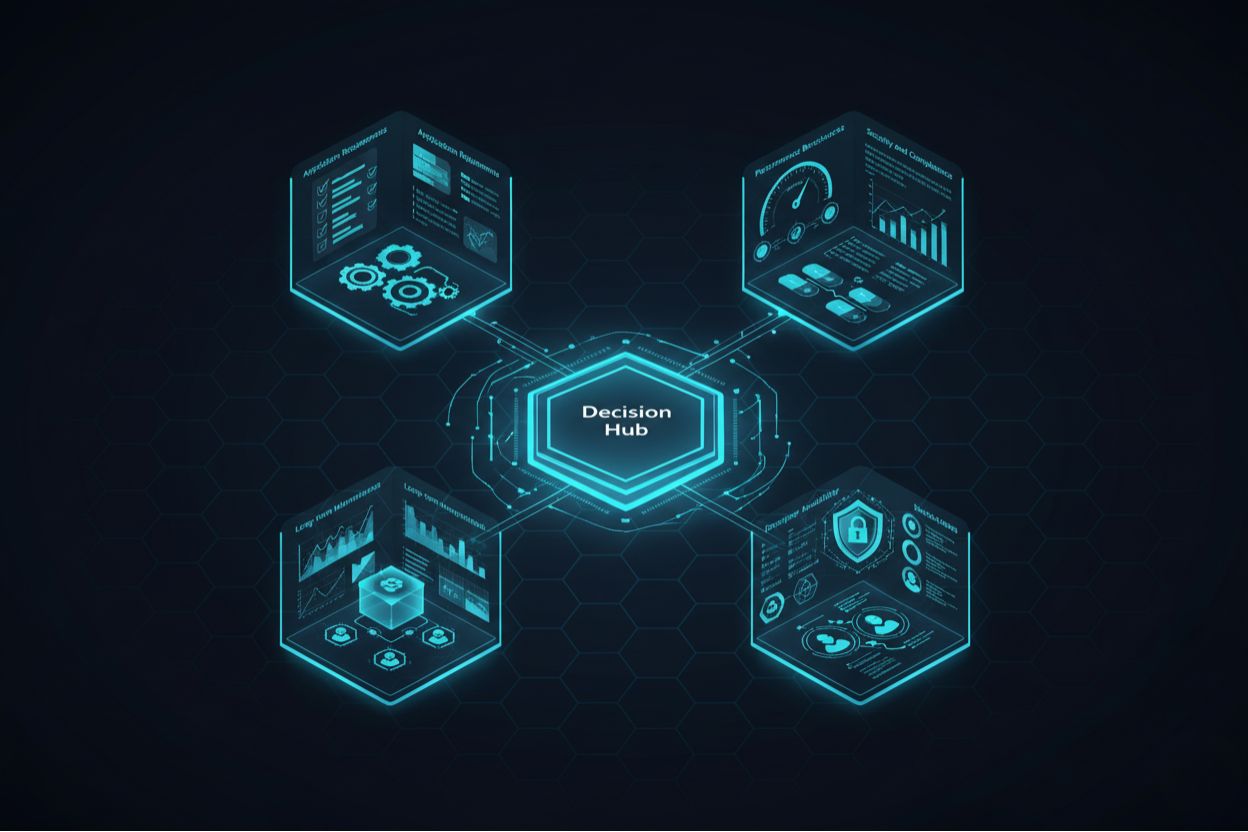
Modern web application architecture and scalable cloud backend

GEt in Touch


    What Defines a Modern Web Application Architecture?

    Modern web application architecture is a structural approach that prioritizes modularity, cloud-native scalability, and component isolation. Unlike legacy systems, it utilizes microservices, serverless functions, and containerization to ensure that frontend, backend, and data layers can evolve and scale independently. Thus, the independent evolution of these areas is allowed. APIs serve as the primary mode of communication, enabling loose coupling of components and making integration with external services easier.
    Being cloud-native is a key feature of the new architecture. Presently, technologies leverage virtualization, third-party services, automated deployment, and monitoring tools to support rapid change and continuous operation. The elements of stateless services, non-blocking communication, and fault tolerance have become the system’s fundamental concerns rather than secondary aspects. Google Cloud’s architecture patterns explain cloud-native practices that support modern, scalable systems.

    However, the most significant thing then is the adaptability of modern architecture. It is intended to adapt to changes in business needs, traffic loads, and technology, ensuring the system will not become obsolete in the long run.

    Types of Web Application Architecture

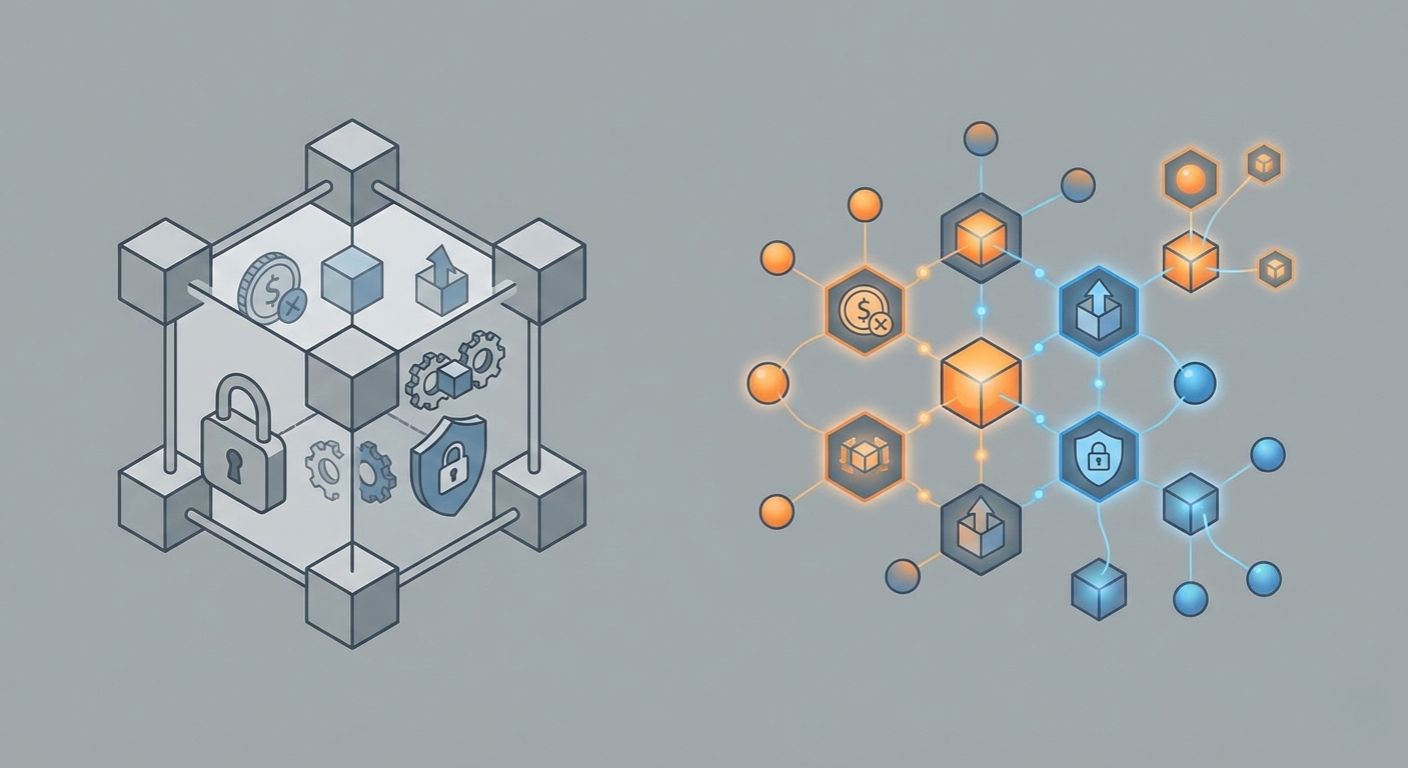
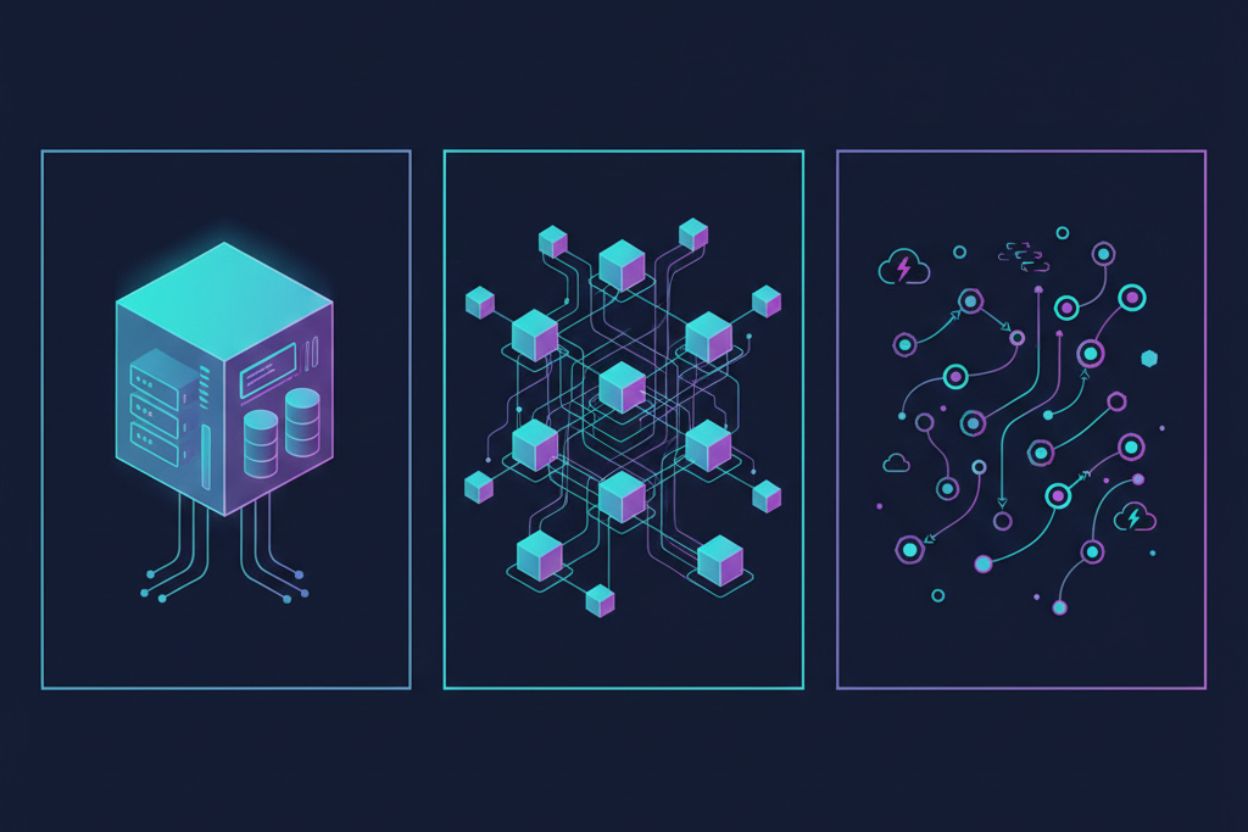
    Monolithic, microservices, and serverless architecture comparison
    Selecting the right architectural approach is a critical part of custom software development services, as it directly impacts scalability, performance, security, and long-term maintainability of web applications.

    Monolithic Architecture

    Monolithic architecture consolidates the whole web application, UI, business logic, and data access into one single unit that can be deployed. All the parts use the same code and runtime environment, which makes development and deployment easy at the beginning.
    This straightforwardness elevates monoliths’ attractiveness to small teams, MVPs, and apps with small-scale usage. Nevertheless, as the application expands, close interdependence among parts can slow development, increase risks during releases, and make scaling inefficient, since the entire system must scale at once.

    Microservices Architecture for Web Applications

    Microservices architecture breaks an application into independent services, each responsible for a specific business function. APIs or messaging systems are the means through which these services communicate, and they can be developed, deployed, and scaled independently.
    The parallel development and fault isolation made possible by this method allow large teams and intricate systems to work smoothly together. Nevertheless, it still raises difficulties for a distributed system, particularly in service coordination, data consistency, and operational complexity. Microservices practice is most productive when coupled with proper DevOps and strong engineering processes.

    Serverless Architecture

    Serverless architecture eliminates the need for infrastructure management, allowing developers to run scripts in response to events without managing servers. Backend processing is handled by serverless cloud functions that automatically scale up or down based on load.
    This approach, in addition to reducing operational costs, is ideal for event-driven workloads, APIs, and fluctuating traffic patterns. Nevertheless, serverless solutions can be subject to cold-start delays and increased reliance on cloud vendors, making them inappropriate for some scenarios. AWS Lambda documentation provides practical guidance on building event-driven, serverless backends.

    Hybrid Architecture Models

    Hybrid architectures combine various architectural styles into a single system. For instance, microservices can be used alongside a core monolithic application or serverless components for background processing.
    This method allows firms to gradually modernize, thereby maintaining a balance between stability and innovation. Hybrid models are prevalent in corporate settings, where integrating modern platforms with legacy systems is a necessity.

    Monolithic Architecture vs Microservices: A Practical Comparison

    Aspect Monolithic Architecture Microservices Architecture
    Scalability
    Scales as a single unit
    Scales individual services
    Deployment
    Simple but risky at scale
    Frequent, isolated deployments
    Operational Complexity
    Low
    High
    Performance & Latency
    Low internal latency
    Network latency between services
    Best Fit
    Small or early-stage applications
    Large, complex platforms

    Scalability & Deployment Trade-Offs

    Monolithic applications primarily scale via vertical scaling (adding CPU/RAM) or horizontal scaling (replicating the entire application behind a load balancer). While effective, this is often resource-inefficient because you must scale the entire application even if only one specific function (e.g., image processing) is experiencing high load. On the contrary, microservices offer fine-grained scaling, enabling high-demand services to scale independently. Deployment of monolith-based applications becomes riskier as applications grow, whereas, conversely, microservices’ use of continuous delivery is less impactful.

    Operational Complexity

    Microservices require more infrastructure, monitoring, logging, and orchestration, making them more complex than monoliths, which are simpler to operate but, over time, become riskier for safe application modification.

    Performance & Latency Impacts

    As a result, monolithic architectures take full advantage of in-process communication and exhibit lower latency. Microservices, on the other hand, need to make network calls that naturally introduce latency, but this can be partly offset by caching, optimized APIs, and asynchronous communication.

    When Monoliths Still Make Sense

    The monolithic approach is still applicable to areas of the product lifecycle where small teams work on it, or when the application is simple, and the scaling requirements are either limited or highly predictable.

    Web Application Architecture Layers Explained

    To build a scalable and user-centric presentation layer, many businesses choose to hire dedicated frontend developers who specialize in modern frameworks, performance optimization, and seamless user experiences.

    Presentation Layer

    The presentation layer is responsible for the interaction between the user and the system and for visual rendering, meaning the user will see and interact with the data via a browser, frontend frameworks, or UI components that display the data and collect user input.

    Business Logic Layer

    The business logic layer includes application rules, workflows, and validations. It is the one that manages operations, establishes policies, and ensures the system behaves uniformly.

    Data Layer

    The data layer oversees the persistence, retrieval, and integrity of application data. It consists of databases, caching systems, and data access mechanisms that are optimized for different workloads.

    Presentation Layer, Business Layer, and Data Layer in Practice

    In practical applications, these layers communicate via well-defined interfaces. Proper separation enhances maintainability, testability, and scalability even as the system expands.

    Frontend-Backend Architecture in Modern Web Apps

    Today’s web applications are, to a large extent, divided into frontend and backend systems. The frontends focus on user experience and rendering; the backends handle business logic, authentication, and data processing.
    Such a separation enables teams to work autonomously, use heterogeneous technologies, and adjust component scale based on usage trends. To ensure robust APIs, secure data handling, and scalable business logic, many organizations choose to hire dedicated backend developer talent to strengthen and future-proof their application architecture.

    Frontend Backend Architecture Patterns

    Standard models cover client-server architecture, backend-for-frontend architectures, and micro-frontend techniques. Every model accommodates unique team organization and scalability needs.

    Frontend Rendering Strategies

    The rendering strategies determine where content is created. Client-side rendering is more interactive, server-side rendering improves SEO and initial load performance, and hybrid approaches combine the two for the best outcome.
    API Layer Architecture & API Gateway Design

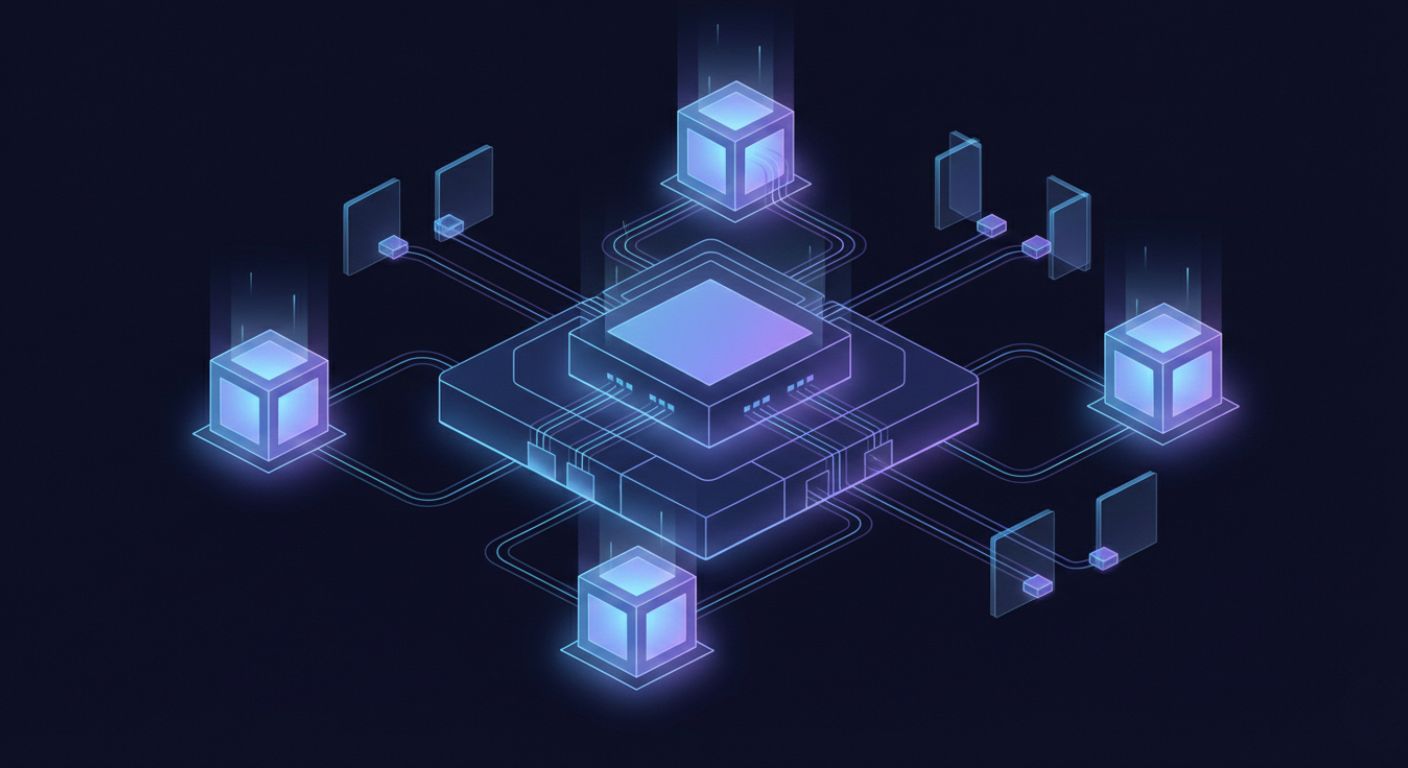
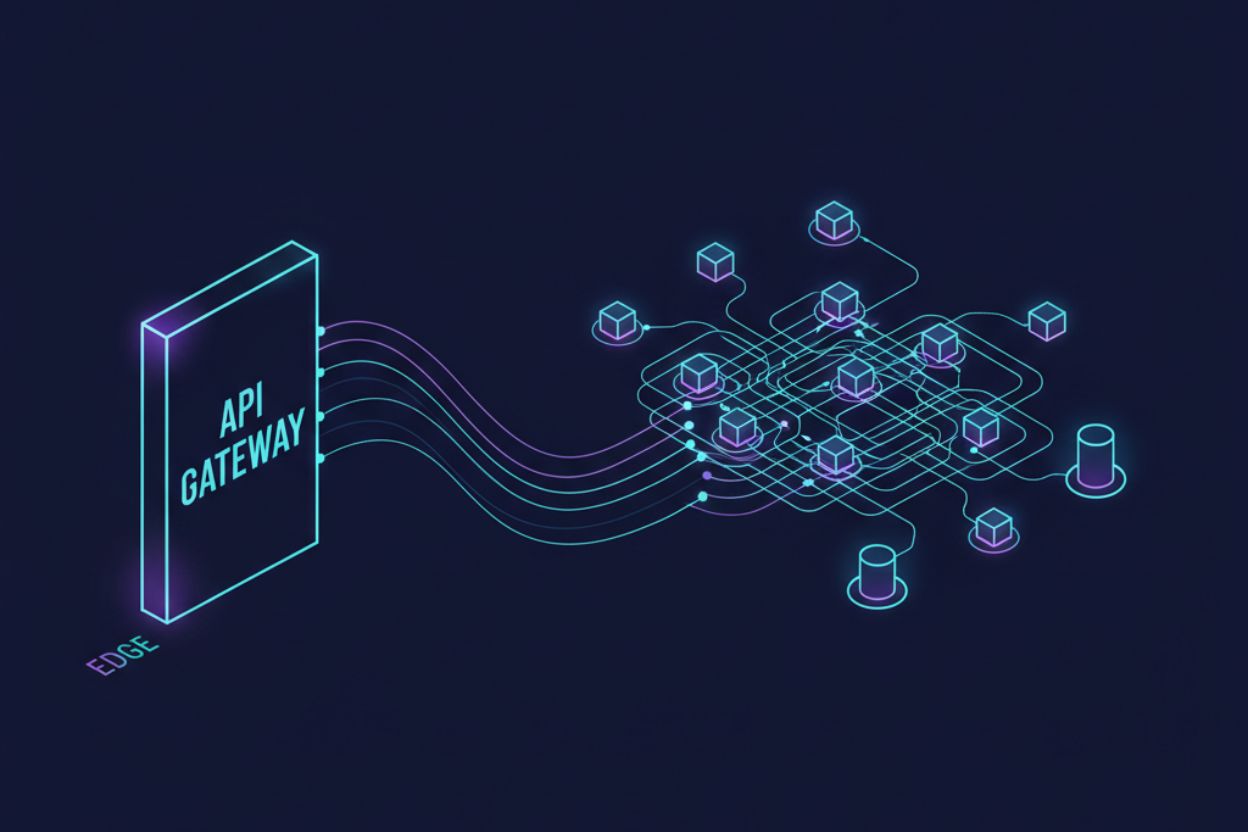
    API gateway routing and service mesh for microservices

    API Layer Architecture in Scalable Systems

    The API layer guarantees a uniform point of access for all clients and backend services. It hides the complexity of the internal systems and allows the backend to change without affecting the users.

    API Gateway Architecture

    An API Gateway acts as the single entry point for all client requests, handling routing, authentication, and rate limiting. In modern API layer architecture, this is often augmented by Edge Computing, where caching and request processing happen closer to the user to minimize latency before hitting the main backend services.

    Why API Gateways Matter for Large Web Platforms

    API gateways make it easier for clients to interact with the system, provide greater security, and enable better monitoring; thus, they become indispensable for large-scale, distributed applications.

    Database Layer Architecture & Scaling Strategies

    Database Layer Architecture Models

    A blend of relational databases, NoSQL stores, and in-memory caches is common practice in modern applications. The performance of different data access patterns is guaranteed by this polyglot persistence method.

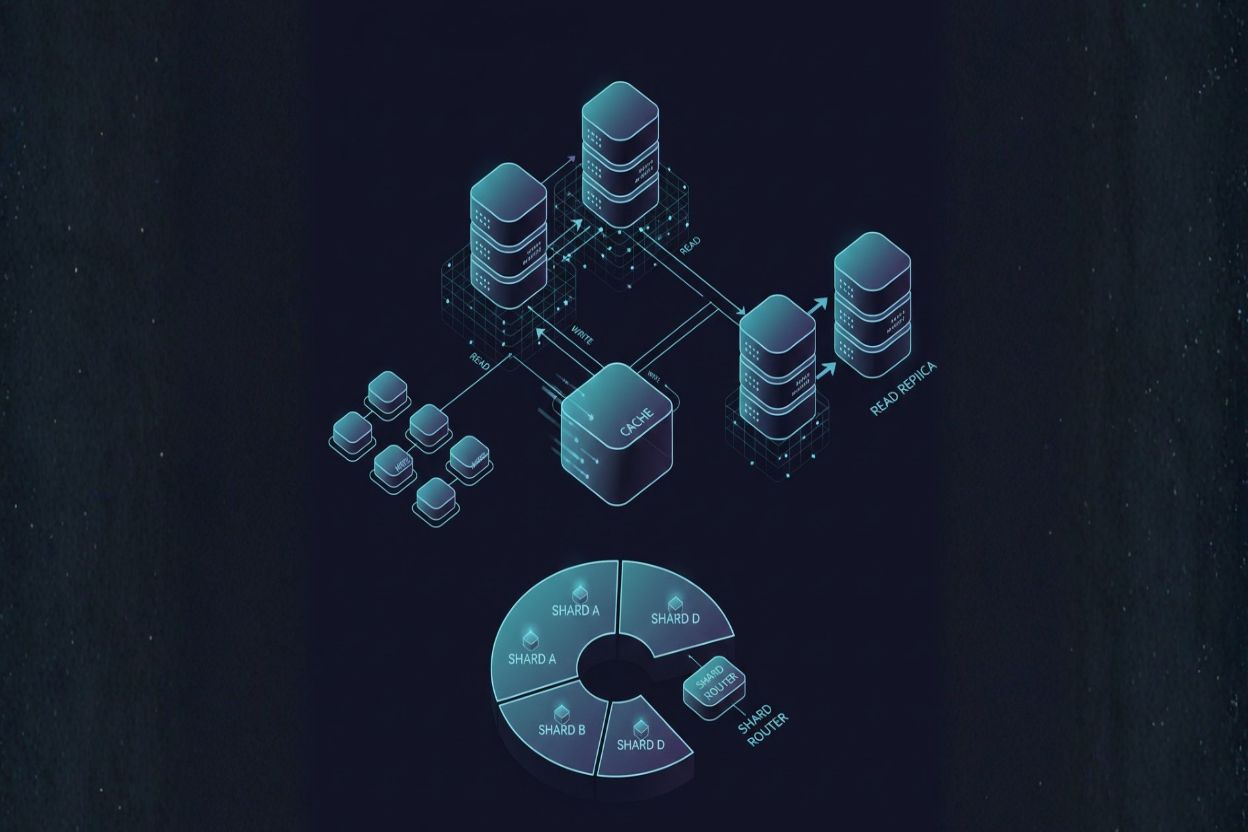
    Database Scaling Strategies

    Vertical scaling, read replicas, sharding, and distributed databases are among the scaling strategies. The most suitable method is determined by the needs for consistency and the nature of the workload.

    Event-Driven Architecture for Web Applications

    Event-driven architecture with producers, event bus, and consumers

    How Event-Driven Architecture Web Apps Work

    Event-driven architecture allows services to interact via events instead of direct method invocations. Event producers send events while event consumers process them asynchronously, reducing coupling and improving scalability.

    Use Cases for Event-Driven Systems

    Event-driven architectures are perfect for instant notifications, off-main processing, data analysis pipelines, and connecting different services.

    Web Application Architecture Patterns

    Architectural patterns are solutions that have been tested and found to be faithful to the design issues encountered repeatedly. Patterns like MVC, CQRS, and event sourcing help organize applications based on their size and complexity.
    Many of these patterns are implemented and standardized through modern Web App Development Frameworks, which provide structured conventions to translate architectural principles into scalable, maintainable codebases.
    Domain-driven design for web applications benefits from a clear separation of business domains and technical responsibilities. By aligning architectural boundaries with fundamental business concepts, teams can reduce complexity, improve communication, and build systems that scale more predictably as requirements evolve.

    Web Architecture Patterns Comparison

    Pattern Scalability Performance Development
    Complexity
    Operational
    Overhead
    Best Use Cases
    MVC
    Moderate
    High
    Low
    Low
    Simple web apps
    Microservice
    Very High
    Moderate
    High
    High
    Large platforms
    Event-Driven
    High
    High
    High
    Moderate
    Real-time systems
    CQRS
    High
    High
    High
    High
    Complex domains

    Load Balancing & Performance Optimization in Web Applications

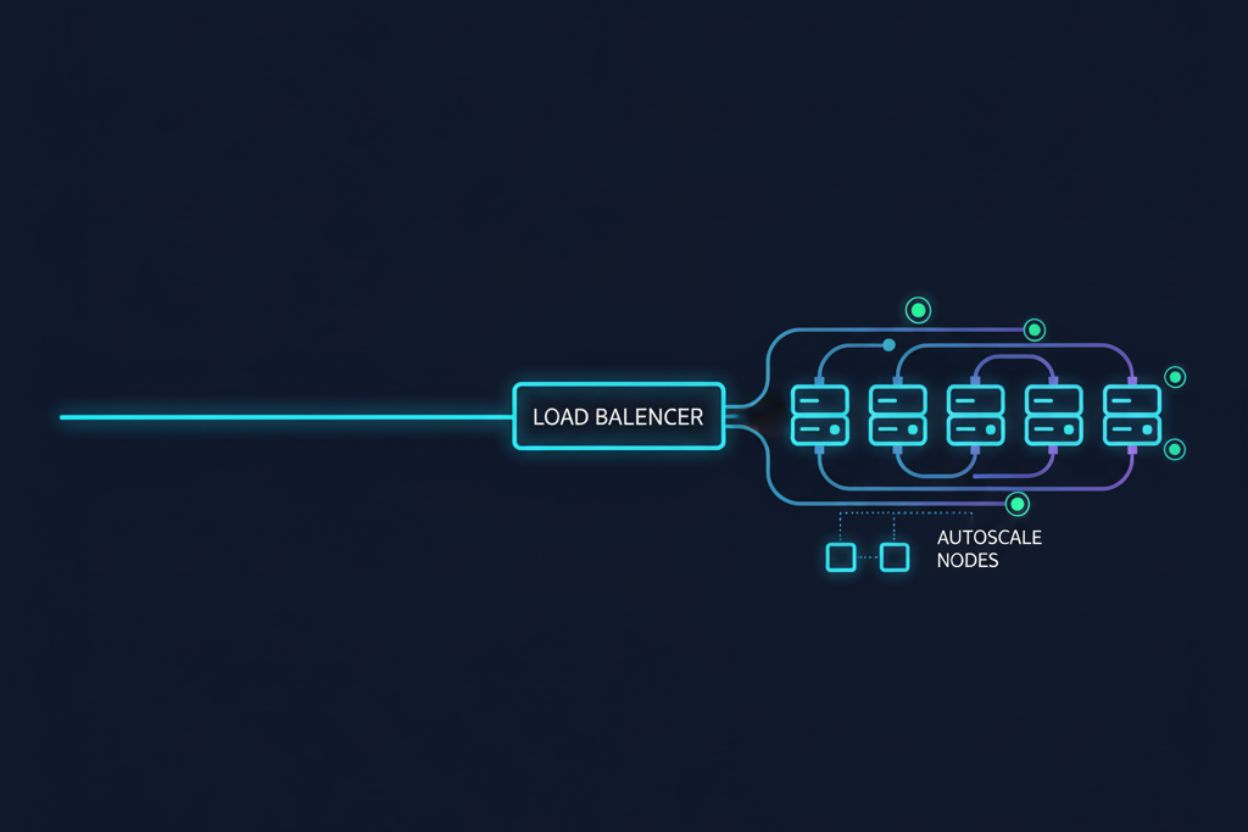
    Load balancing and autoscaling in scalable web applications

    Load Balancing in Web Applications

    Load balancing is a technique that ensures the high availability and fault tolerance of modern web applications by distributing incoming traffic across multiple backend instances. It also allows the application to scale horizontally, enabling it to add or remove servers as demand changes dynamically. While load balancers do not eliminate latency, they manage it by directing requests to healthy, less-loaded instances. They also introduce complexity into the development process, since applications must be designed to be stateless or to manage shared state externally. There are still some overheads related to configuration and monitoring on the operational side, but the managed cloud services have greatly reduced this effort. The most suitable scenarios are for high-traffic platforms, SaaS products, and microservices-based systems where uptime and elastic scaling are crucial.

    Web Application Performance Optimization Techniques

    Performance optimization includes caching strategies, database indexing, asynchronous processing, efficient frontend rendering, and continuous monitoring. Applications can grow traffic and stay responsive thanks to these methods working together.
    These techniques, together, form the foundation of effective web application performance optimization in high-traffic environments.

    Scalable Web Application Architecture Best Practices

    Scalable architectures focus on modularity, stateless services, automated deployments, monitoring, and security-first practices. Planning for scalability from the start avoids costly architectural rework later. When evaluating Progressive Web Apps vs Native Apps, scalability considerations such as performance, offline support, update cycles, and cross-platform reach play a key role in selecting the right architectural approach.

    Framework Choices & Architecture Alignment

    The choice of framework should align with architectural objectives. Microservices and APIs benefit from lightweight frameworks, whereas full-stack frameworks adequately serve monolithic applications. The proper selection strengthens maintainability and scalability for the future.

    Common Architecture Mistakes That Limit Scalability

    The most prevalent errors are interdependence among components, optimization too early, ignoring visibility, and the complexity of operations not fully appreciated. Preventing such problems requires deliberate architectural planning.

    Conclusion

    Shaligram Infotech helps businesses architect and build modern web applications that support millions of users, provide real-time interaction, and enable rapid feature changes. Modern web application architecture is no longer about picking a single “best” model, but about combining the right patterns, layers, and practices to meet business needs. By working with the best software development company in India, companies can create web platforms that scale reliably and evolve with confidence over time.

    Ready to build? Contact our global teams:

    🇺🇸 USA: +1 (919) 629-9671
    🇬🇧 UK: +44 20 3581 6366
    🇮🇳 India: +91 99099 84567
    🇦🇺 AUS: +61 07 3121 3147

    💬 Interested in Regular Insights on Web Application Development?

    📲 Follow Shaligram Infotech on LinkedIn
    Let’s build the future of applications together.

    FAQs

    What are the main types of web application architecture?

    Monolithic, microservice, serverless, and hybrid architectures are the most recognized architectural styles. Looking to implement the right architecture for your project? Contact our experts today to design a scalable, high-performance web application tailored to your business needs.
    No option is universally the best; the decision is made based on factors such as team size, application complexity, and scalability requirements.
    The presentation, business logic, and data layers form the core of a web application architecture.
    API gateways are suited for cases where a single entry point is needed for multiple backend services and various client types.
    Domain-driven design helps build technical architecture aligned with business domains, improving understanding and scalability.
    Categories
    Blog Mobile App Development

    Mobile Apps vs Web Apps Explained

    Mobile App Development

    Mobile Apps vs Web Apps Explained

    Mobile app vs web app comparison for custom software development

    GEt in Touch


      Custom Software Development: Choosing Between Mobile Apps and Web Apps

      Difference between mobile applications and web applications
      The selection of a mobile app or a web app is not a decision based on technology first; it is a decision based on business strategy. Mobile apps are installed on user devices and are developed for repeated, personalized interactions. The web applications run on browsers, and their focus is on accessibility, speed of deployment, and cross-platform compatibility.
      From the point of view of custom software development, web apps are generally the choice for early-stage products that allow businesses to test their ideas quickly with little friction. Mobile apps are usually the ones that come into the picture when the product has been developed to a certain level that requires deep user engagement, device-level features, or frequent interactions. It is very important to know how users will be accessing and interacting with the product before a decision is made regarding either approach.

      Development Cost: Mobile App vs Web App

      Mobile app vs web app development cost comparison

      Cost of Development for Web Applications

      Web applications usually need less investment at the beginning because users of different devices and operating systems can use the same application. Developers only have one codebase to manage, which cuts time for engineering tasks and simplifies testing. The updates and new features can be released at the same time for all users, and no user action is required, thus making the maintenance costs remain stable.
      Web applications are a great choice for startups and businesses that are still validating their ideas since they are cost-effective, while the flexibility to change according to the feedback is still available. In addition, cloud infrastructures allow for controlled scaling without the need for significant upfront investments.

      Cost of development for Native Mobile Applications

      The development of native mobile applications involves the creation of different applications for various platforms, such as iOS and Android. Each platform possesses its own development environment, design guidelines, and testing processes. This results in the need for greater effort, more time, and higher costs in the development process.


      Besides the actual development, companies must also budget for app store fees, compliance obligations, device testing, and continuous updates necessitated by operating system changes. Read this article on the cost of mobile app development. Mobile applications, in general, require a much bigger investment. To manage these costs without sacrificing quality, many strategic founders choose to hire mobile app developers from India. Despite the higher initial outlay, apps often turn that investment into profit when high engagement, offline access, or device integration become the core value of the product.

      Web App vs Mobile App Cost Comparison

      To give a better understanding of cost implications, the upcoming table illustrates the comparison of web apps and mobile apps from the viewpoint of custom app development. Even though the real costs depend on the development scope and complexity, such comparisons depict the most common industry situations.
      Cost Factor Web Application Mobile Application
      Initial development cost
      Lower due to a single browser-based codebase
      Higher due to platform-specific development
      Design complexity
      Moderate with responsive layouts
      High with device-specific UI/UX
      Development timeline
      Shorter and faster to launch
      Longer due to multi-platform builds
      Maintenance effort
      Easier with centralized updates
      More complex with app store submissions
      Update deployment
      Instant for all users
      Requires user downloads and approvals
      Long-term cost impact
      More predictable and scalable
      Increases with OS and device changes

      Time-to-Market: Which Gets Your MVP Live Faster?

      Web Application Development Timeline

      Web applications are usually quicker in getting to the market as the development teams can just work on the main features without caring about the limitations of specific platforms. Testing environments are not as complex, and deployment does not require the approval of third parties. Right after the app is live, users can immediately reach it via a browser.
      For the majority of MVPs, businesses can go from idea to launch much faster with web applications.

      Mobile App Development Timeline

      Mobile applications necessitate the extra development cycles for platform compatibility, comprehensive device testing, and app store reviews. Even the smallest updates must go through the approval processes, which can delay iteration. The use of cross-platform tools helps to cut down on timelines; however, mobile development is still much longer compared to web applications.
      Web apps are the obvious choice for businesses that focus on quickness.

      User Retention & Engagement: Where Do Users Stick Longer?

      Mobile Apps: High Retention, High Commitment

      Mobile applications usually have a higher retention rate compared to other platforms as they are always present on the user’s device and provide personalized communication. Push notifications along with offline capabilities and smooth operation invite users to come back again. Generally, the users who have the app installed show more intent; thus, mobile apps are perfect for the products that need regular interaction.
      Sectors like Fintech, healthcare, and on-demand services depend heavily on mobile apps for cultivating long-term user relationships.

      Web Apps: Lower Friction, Easier Access

      The web apps get through installation requirements and so they are very accessible. Users can instantly access them through a link, which greatly increases their reach and at the same time reduces the friction for the user. This is the reason why web apps are preferred for use on occasional or broad audience platforms.
      Nevertheless, if users are not present on their devices all the time, the web apps will have lower retention rates than mobile apps unless strong re-engagement strategies are in place to support them.

      Technical Performance vs Practical Performance

      Native Mobile Application Performance

      Performance-wise, native mobile applications are superior since they directly engage with the hardware of the device. This is a critical distinction in the native vs cross platform apps debate, as native builds deliver quicker response times, more fluid animations, and better accessibility to sensors, cameras, and offline storage. Applications that require complex interactions or real-time processing thrive on this native performance.

      Browser-Based Web Application Performance

      The performance of modern web technologies is as good as that of most business use cases. Nevertheless, web apps are limited in their performance by the conditions of the network and the capability of the browser, which is problematic, especially in interactive scenarios. Web apps are perfect for dashboards, SaaS platforms, and portals, while they are still not as responsive as native mobile apps in case of resource-consuming tasks.

      Scalability & Maintenance: What Happens After MVP Success?

      Scaling Web Applications

      Scaling web applications is generally easier since updates are deployed through a central system, and infrastructure can be extended using cloud services. Features can be rolled out, performance optimized, and security updated instantly without disrupting the user experience.

      Scaling Mobile Apps

      Mobile applications are capable of scaling up to millions of users, but the maintenance gets complicated as the updates have to be delivered through the app stores. Compatibility with various OS versions and devices results in long-term overheads that make scaling more resource-intensive than web applications.

      Web App or Mobile App for Startup MVP?

      When a Web App Is the Better MVP Choice

      Web apps are perfect when the aim is quick validation, managing the budget, and having flexibility. Such platforms provide a range of functionalities for startups to conduct the whole process of feature experimenting, collecting opinions, and changing direction without having to pay for a very expensive development process.

      When a Mobile App Makes More Sense

      Mobile applications tend to be more appropriate for MVPs relying on the characteristics of the device, the availability of offline access, or the need for real-time interaction. If the main benefit of the product cannot be communicated through a browser, developing a mobile app might be a reasonable approach.

      Progressive Web Apps for Startups: A Cost-Effective Middle Ground

      Progressive web apps as a bridge between mobile and web apps

      Scaling web applications is generally easier since updates are deployed through a central system, and infrastructure can be extended using cloud services. Features can be rolled out, performance optimized, and security updated instantly without disrupting the user experience.

      Why Progressive Web Apps Are Popular for Startups

      PWAs, or Progressive Web Apps, are browser-based apps that are like native ones, and they come with features such as offline access and push notifications. Besides, these apps are developed at a faster rate and less cost than that of native mobile apps, thus becoming a suitable option for startups that want a gradual approach.

      When PWAs Are NOT Enough

      PWAs could be inadequate in situations where the applications require close hardware integration, very good graphics, or high-performance animations. In such cases, native mobile development will still be the best choice.

      Decision Matrix: Mobile App vs Web App for Business

      The decision to go for mobile or web applications is mainly based on business priorities. Web apps will give you speed, accessibility, and cost efficiency while mobile apps will give you engagement, performance, and user loyalty. By aligning your choice of platform with the product goals, you are guaranteed sustainable growth.

      How to Choose the Right Custom Software Development Approach

      • Identify the main issue for your primary user
      • Grasp users’ actions and gadgets
      • Establish a feasible budget and timeframe
      • Rank MVP educational objectives
      • Think about the possibility of expansion for future
      Our Shaligram team partners with organizations to ensure tech choices are in sync with actual business results.

      Common Founder Mistakes When Choosing Between Mobile and Web Apps

      A lot of startup owners dive into mobile app development without first checking if there’s any demand. They also fail to factor in the maintenance costs while making the choice of platforms and tend to base their choice on the current user trend instead. All these errors lead to later launches, bigger budgets, and poor adoption.

      Conclusion

      There is no absolute answer to the question of whether mobile apps or web apps are better. On one hand, web applications provide speed, flexibility, and lower prices which make them suitable for MVPs and testing in the early stages. On the other hand, mobile apps ensure higher user engagement and performance, so they are considered a necessity when the product has already attracted demand.
      At Shaligram Infotech, we are a software development company with a team of mobile app developers always ready to assist companies in selecting platforms based on strategies, scalability, and actual usage, thus guaranteeing that each product is constructed for long-term success.

      Ready to build? Contact our global teams:

      🇺🇸 USA: +1 (919) 629-9671
      🇬🇧 UK: +44 20 3581 6366
      🇮🇳 India: +91 99099 84567
      🇦🇺 AUS: +61 07 3121 3147

      💬 Interested in Regular Insights on Web App Development?

      📲 Follow Shaligram Infotech on LinkedIn
      Let’s build the future of applications together.

      FAQs

      What is the difference between mobile apps and web apps?

      Mobile apps must be installed on the device and utilize native hardware functionality. In contrast, web apps run in a browser, allowing users to access them without installation.
      MVPs are usually best done in the form of web apps on account of quicker development and cost efficiency.
      A web app is commonly the least costly option.
      Absolutely, PWAs are characterized by app-like capabilities but come with a more reasonable development cost.
      Web apps typically require lower initial investment and lower ongoing maintenance costs.
      Yes. This is a phased approach that many successful startups have adopted.
      Mobile apps are typically more successful in retaining users because they utilize native features for engagement.
      Categories
      Blog Mobile App Development

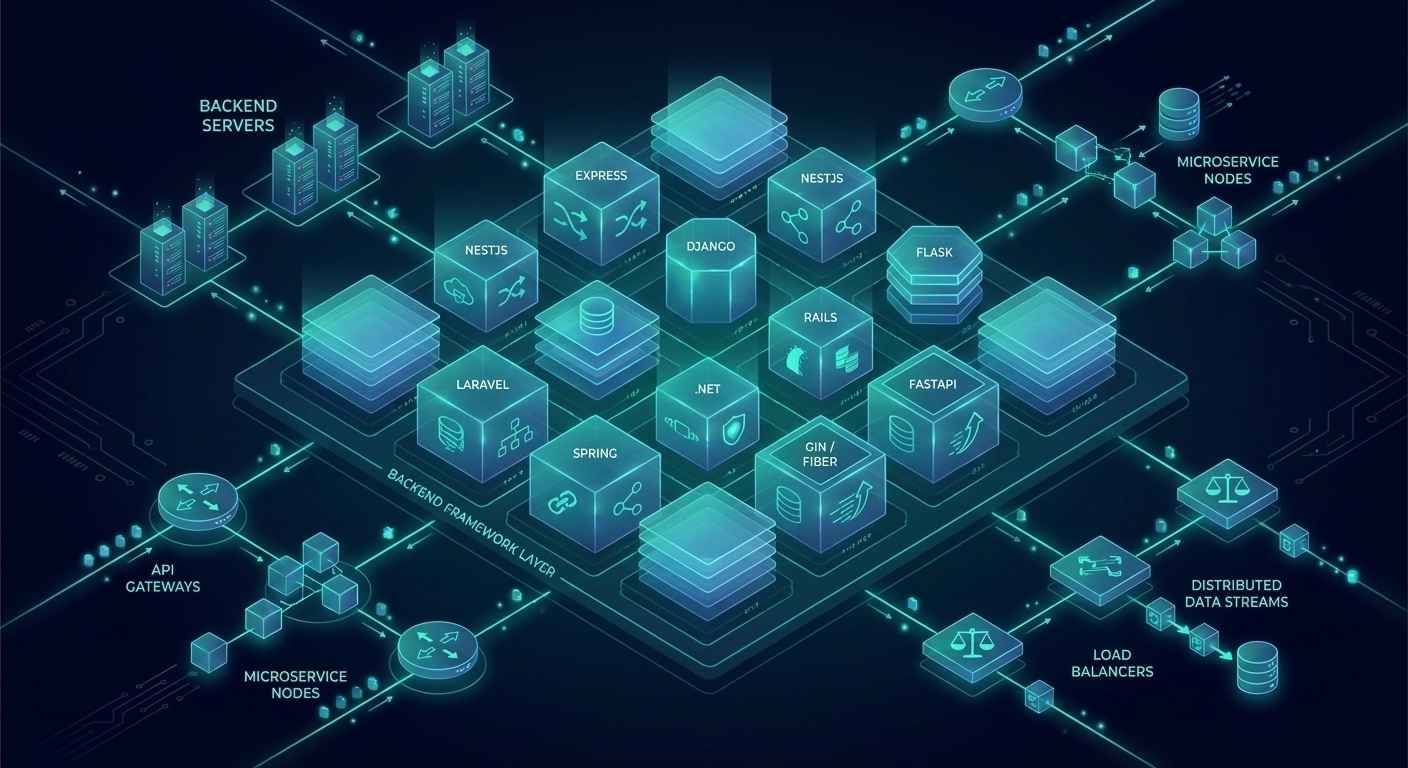
      Top Backend Technologies for Scalable Web Apps

      Mobile App Development

      Top Backend Technologies for Scalable Web Apps

      Scalable backend system connected to databases, APIs, cloud, and security

      GEt in Touch


        Why Backend Technologies Matter for Scalable Web Apps

        Backend technologies form the foundation of any scalable application. They power business logic, databases, APIs, authentication systems, and third-party integrations. When applications grow from hundreds to millions of users, backend decisions determine whether scaling remains smooth or becomes costly and unstable.
        A well-designed, scalable backend enables:
        • Efficient handling of concurrent user requests
        • Horizontal and vertical scaling without major rewrites
        • Faster feature releases and easier maintenance
        • Secure data processing and compliance readiness
        • Cost-efficient infrastructure usage
        Poor backend choices often result in degraded performance, frequent downtime, rising infrastructure costs, and long-term technical debt. Selecting the right server-side technologies is essential for sustainable growth.

        Backend Development: What It Includes

        Backend development covers all server-side operations required to keep a web application functional, secure, and scalable. For a deeper technical understanding of server-side development fundamentals, MDN Web Docs provides detailed explanations of backend logic, APIs, and data handling.
        Key components of backend development include:

        Server-side logic

        Business rules, workflows, validations, and processing logic that control application behavior.

        Database management

        Schema design, data storage, query optimization, and maintaining data integrity.

        APIs and integrations

        Development of REST or GraphQL APIs and integration with payment gateways, CRMs, analytics platforms, and messaging services.

        Authentication and authorization

        Secure user identity management, role-based access control, and permissions.

        Performance optimization and scalability

        Caching, load balancing, asynchronous processing, and efficient resource utilization.

        Security and compliance

        Data protection, vulnerability mitigation, and compliance with standards such as GDPR, HIPAA, or SOC 2.

        A strong backend is not just about writing code but about building a system that adapts and scales under real-world conditions.

        Backend Languages for Web Development

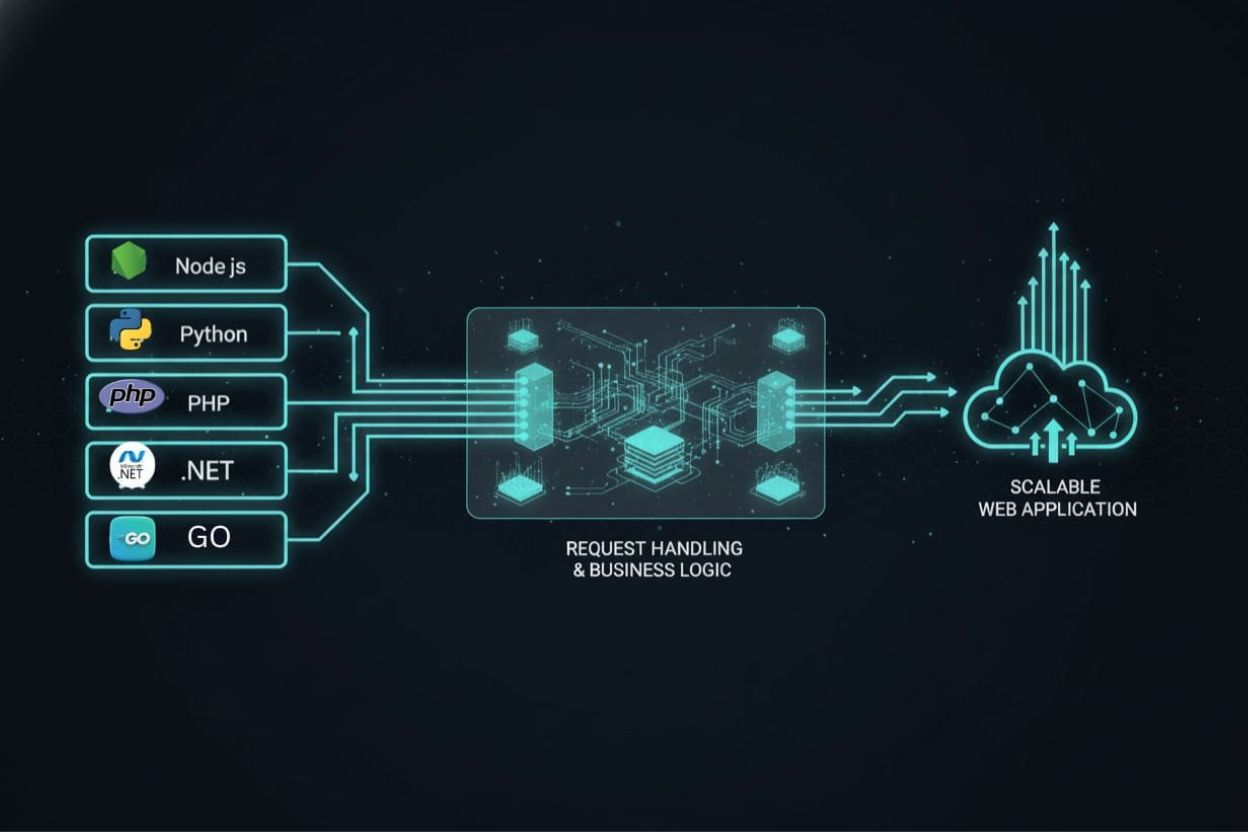
        Popular backend programming languages used in web development

        Choosing the correct backend language for web development affects scalability, ecosystem support, and long-term maintenance. The backend developer roadmap by roadmap.sh outlines how backend languages, frameworks, and system design skills evolve as applications scale.

        JavaScript (Node.js)

        Node.js uses a non-blocking, event-driven architecture that handles concurrent requests efficiently. It is widely used for APIs, microservices, and real-time applications.
        Using JavaScript across both frontend and backend reduces context switching for teams, while the large NPM ecosystem supports rapid and scalable development, making it a strong choice for businesses looking to hire Node.js developers in India for building high-performance web applications.

        Python

        Python is valued for its simplicity and fast development cycle. It is widely used in data-driven applications, AI systems, and SaaS platforms.
        Although Python is not the fastest at runtime, modern frameworks, async support, and horizontal scaling make it a strong choice for scalable web apps.

        Java

        Java remains a leading backend language for enterprise systems. Its performance, strong typing, and mature ecosystem make it ideal for high-traffic and mission-critical applications.
        Java is commonly used in industries such as finance, telecom, and large SaaS platforms where reliability and long-term support are required.

        PHP

        Modern PHP, combined with frameworks like Laravel, delivers improved performance and security. PHP remains relevant for content-driven platforms, SaaS applications, and projects requiring fast development.

        Go

        Go (Golang) is designed for high performance and concurrency. Its lightweight nature and built-in support for parallel execution make it ideal for cloud-native and microservices architectures.
        Go is often used for high-speed APIs and backend systems with strict latency requirements.

        Ruby

        Ruby emphasizes developer productivity and clean syntax. With proper architecture and scaling practices, Ruby remains a viable backend option for startups and SaaS applications.

        C# (.NET)

        C# with .NET and ASP.NET Core provides excellent performance, cross-platform support, and strong scalability. It is widely used in enterprise systems and cloud-native applications, particularly within the Microsoft ecosystem.

        Top Backend Frameworks for Scalable Web Apps

        Popular backend frameworks used in web development

        Frameworks provide structure and best practices that simplify building scalable backends. These backend solutions are a critical subset of modern web app development frameworks, helping teams accelerate development while maintaining performance, security, and scalability.

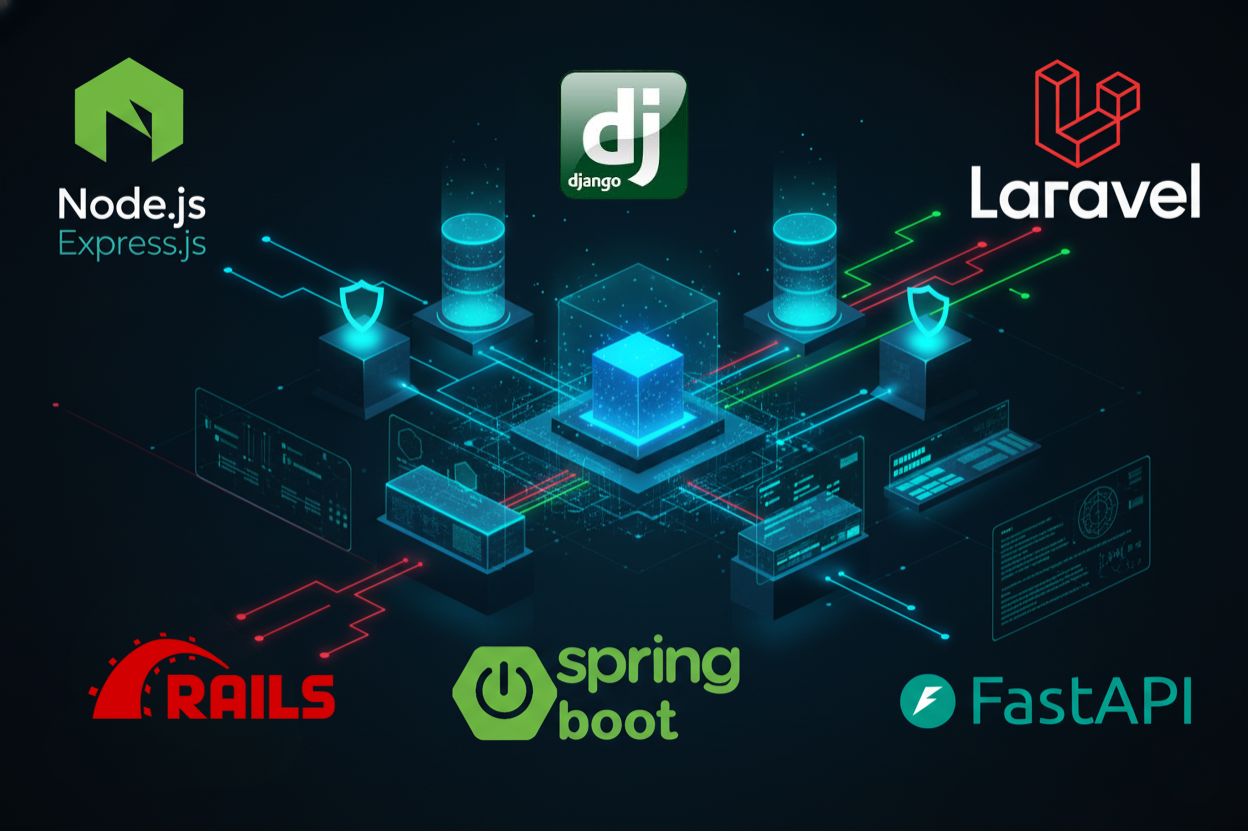
        Node.js + Express.js

        Express.js is a minimalist framework that provides developers with great flexibility and control. It is a preferred choice for the creation of REST APIs and microservices, especially for teams looking to hire dedicated Express JS developers for custom backend solutions.
        Its lightness implies that when properly architected and layered with middleware, it can handle a large number of users or transactions.

        NestJS

        Built with Node.js and TypeScript, NestJS employs a modular structure inspired by Angular. Unlike unopinionated frameworks, NestJS enforces an architectural pattern, making it ideal for maintaining consistency in large enterprise teams. It is perfect for large-scale projects where maintainability and scalability are of utmost importance.

        Django (Python)

        Django is a framework that comes with everything needed to build the most secure, scalable, and quickest applications possible. It automatically provides you with an ORM, authentication, and administration tools as part of the package.
        Django is a powerhouse solution designed to handle complex applications requiring a stable, secure, and highly organized development environment.

        Flask (Python)

        Flask is a very small microframework, which, although it uncouples its features, still maintains its simplicity. It can be beneficial for applications requiring different scaling, like microservices and web APIs.

        Laravel (PHP)

        Laravel gives developers a modern PHP experience along with ORM, queues, caching, and authentication as its significant features.
        The combination of cloud infrastructure and load balancing still makes it a good choice for scalable architecture.

        Ruby on Rails

        Rails is all about convention over configuration, and the result is a fast development cycle. Still, with the right caching, background jobs, and scaling strategies, Rails can take on large audiences.

        Spring Boot (Java)

        Spring Boot is a crucial technology that makes the Java backend development process smooth, and at the same time, it supports the scalability of enterprise-grade applications. Its implementation is predominant in microservices and large distributed systems.

        ASP.NET Core (C#)

        ASP.NET Core presents remarkable performance, along with its built-in dependency injection, and is able to work with cloud applications. It is an excellent choice for large, safe backend systems.

        Go (Golang) Frameworks (Fiber / Gin)

        Gin and Fiber are well-known Go frameworks that prioritize quickness and ease of use. These frameworks are the top choice for creating high-performance APIs and lightweight microservices.

        FastAPI (Python)

        FastAPI is becoming increasingly popular for its high speed, automatic generation of API documentation, and asynchronous support. It is the right choice for scalable APIs and modern backend architectures.
        Framework Language Scalability Best For
        Express.js
        JavaScript
        High
        APIs, microservices
        NestJS
        JavaScript
        Very High
        Enterprise Node apps
        Django
        Python
        High
        Complex web apps
        Flask
        Python
        Medium–High
        Lightweight APIs
        Laravel
        PHP
        High
        SaaS platforms
        Ruby on Rails
        Ruby
        High
        Rapid SaaS development
        Spring Boot
        Java
        Very High
        Enterprise systems
        ASP.NET Core
        C#
        Very High
        Cloud-native apps
        Gin / Fiber
        Go
        Very High
        High-performance APIs
        FastAPI
        Python
        High
        Async APIs

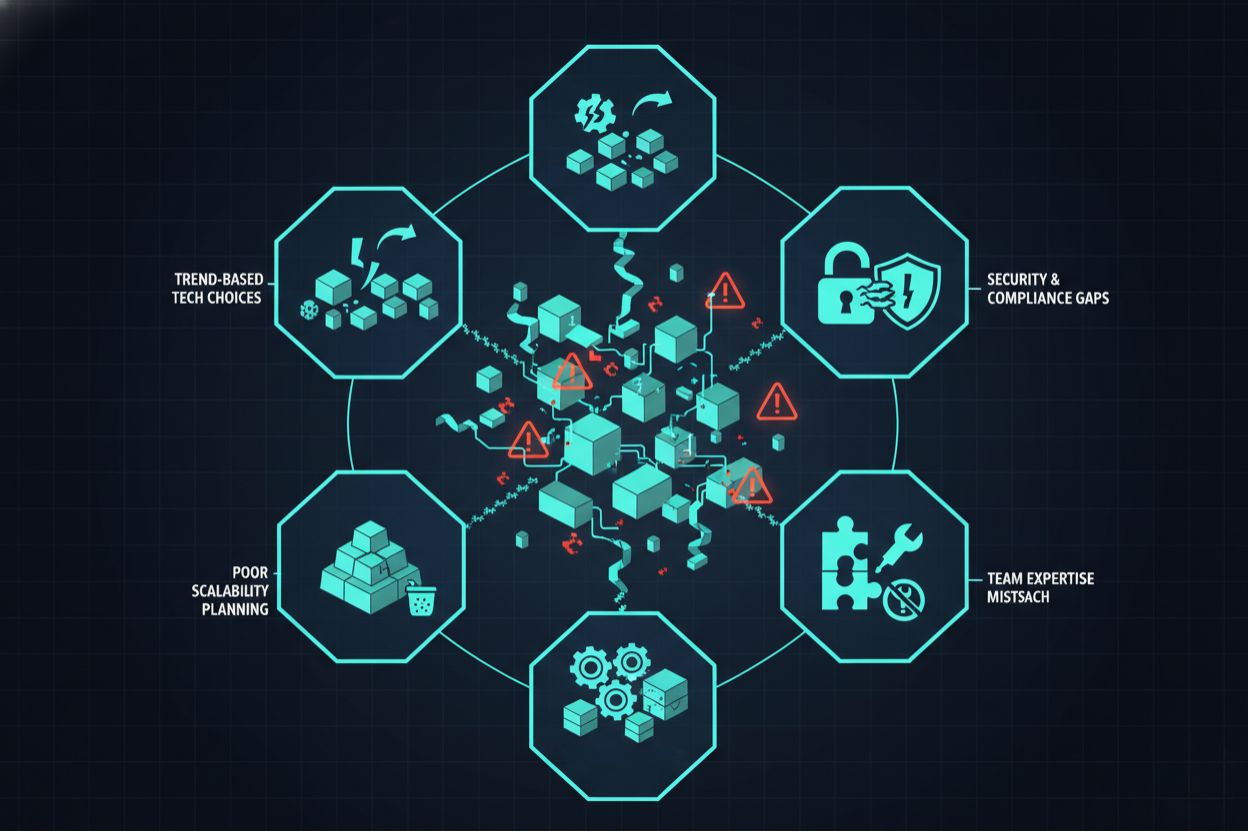
        Common Mistakes When Selecting Backend Technologies

        Common mistakes made when choosing backend technologies
        • Choosing technologies based on trends rather than requirements
        • Ignoring long-term scalability and maintenance
        • Overengineering early-stage applications
        • Underestimating team expertise
        • Overlooking security and compliance needs

        Future of Backend Development: Trends to Watch

        • Increased adoption of serverless and edge computing
        • Growth of API-first and event-driven systems
        • AI-assisted backend development
        • Security-first architecture design
        • Expansion of microservices and platform engineering

        Conclusion

        Selecting the right backend stack is a strategic decision that directly affects scalability, performance, and long-term growth for any software development company in India building modern, scalable web applications. There is no single best backend for every project. Success depends on aligning backend technologies, frameworks, and architectures with application requirements, team expertise, and future goals.
        By understanding backend frameworks, backend languages, and modern backend technologies, businesses can build scalable and resilient web applications that evolve smoothly over time with the support of experienced partners like Shaligram Infotech.

        Ready to build? Contact our global teams:

        🇺🇸 USA: +1 (919) 629-9671
        🇬🇧 UK: +44 20 3581 6366
        🇮🇳 India: +91 99099 84567
        🇦🇺 AUS: +61 07 3121 3147

        💬 Interested in Regular Insights on Web App Development?

        📲 Follow Shaligram Infotech on LinkedIn
        Let’s build the future of applications together.

        FAQs

        What is the best backend technology for scalable web apps?

        There is no universal best option. Node.js, Java, Python, Go, and .NET are all widely used depending on scalability requirements. Need help choosing the right backend for your project? Contact our experts for a tailored recommendation.
        Spring Boot, NestJS, Django, ASP.NET Core, and Laravel remain among the most popular backend frameworks.
        JavaScript, Python, Java, Go, and C# are the most commonly used backend languages.
        Node.js, Java, Python, and .NET, combined with cloud-native or microservices architectures, work well for SaaS platforms.
        Evaluate scalability needs, traffic patterns, team expertise, ecosystem maturity, security requirements, and long-term maintenance.
        Categories
        Blog Software Development

        Choosing the Right Architecture for SaaS Products

        Software Development

        Choosing the Right Architecture for SaaS Products

        SaaS architecture showing application layers and cloud infrastructure

        GEt in Touch


          Why Choosing the Right Architecture for SaaS Products Matters

          SaaS products differ fundamentally from traditional software. They must serve multiple users simultaneously, deliver updates without downtime, and remain available at all times. As usage grows, the system should scale automatically without degrading performance or reliability.
          Poor architectural decisions often result in slow feature releases, frequent outages, rising cloud costs, and security risks. In contrast, a well-designed SaaS architecture enables faster development cycles, better fault isolation, regulatory compliance, and the ability to respond quickly to market demands. Ultimately, architecture has a direct impact on customer satisfaction, operational efficiency, and long-term profitability.

          What Is SaaS Architecture?

          SaaS architecture is a software delivery model where a single, centrally hosted application serves multiple customers (tenants) over the internet. It governs how components interact, ensures secure data isolation, and utilizes cloud-native infrastructure to scale resources dynamically based on demand.
          Unlike on-premises software, SaaS applications must support multi-tenancy, automated deployments, high availability, monitoring, and disaster recovery. A strong architectural foundation allows a SaaS platform to grow without constant reengineering.

          Different Types of SaaS Architecture

          There is no universal architecture that works for every SaaS product. The right approach to SaaS product design depends heavily on architectural decisions that strike a balance between scalability, security, and long-term maintainability.
          Common architectural decisions include choosing between monolithic and microservices designs, deciding how tenants share infrastructure, and selecting communication and data storage models. Each option involves trade-offs that must be evaluated against business goals.

          Monolithic vs Microservices Architecture for SaaS

          Monolithic vs microservices SaaS architecture comparison

          Monolithic Architecture

          A monolithic architecture packages the entire application into a single unit. In recent years, many startups adopt a Modular Monolith approach, organizing code into distinct modules within one codebase. This provides the simplicity of a monolith for early validation while allowing an easier transition to microservices later.

          Monoliths enable faster iteration for MVPs and early validation. However, as the product grows, scaling becomes inefficient and changes in one area can affect the entire system.

          Microservices Architecture

          Microservices architecture breaks the application into independent services that communicate through APIs or events. Each service can be developed, deployed, and scaled independently.

          This approach improves scalability, resilience, and release velocity for mature SaaS platforms, but it introduces operational complexity. Microservices require strong DevOps practices, service orchestration, and monitoring.

          Microservices are best suited for SaaS products that have outgrown monolithic limitations and require long-term scalability. Cloud providers such as Google Cloud explain how microservices architecture enables independent scaling, fault isolation, and faster release cycles for growing SaaS platforms.

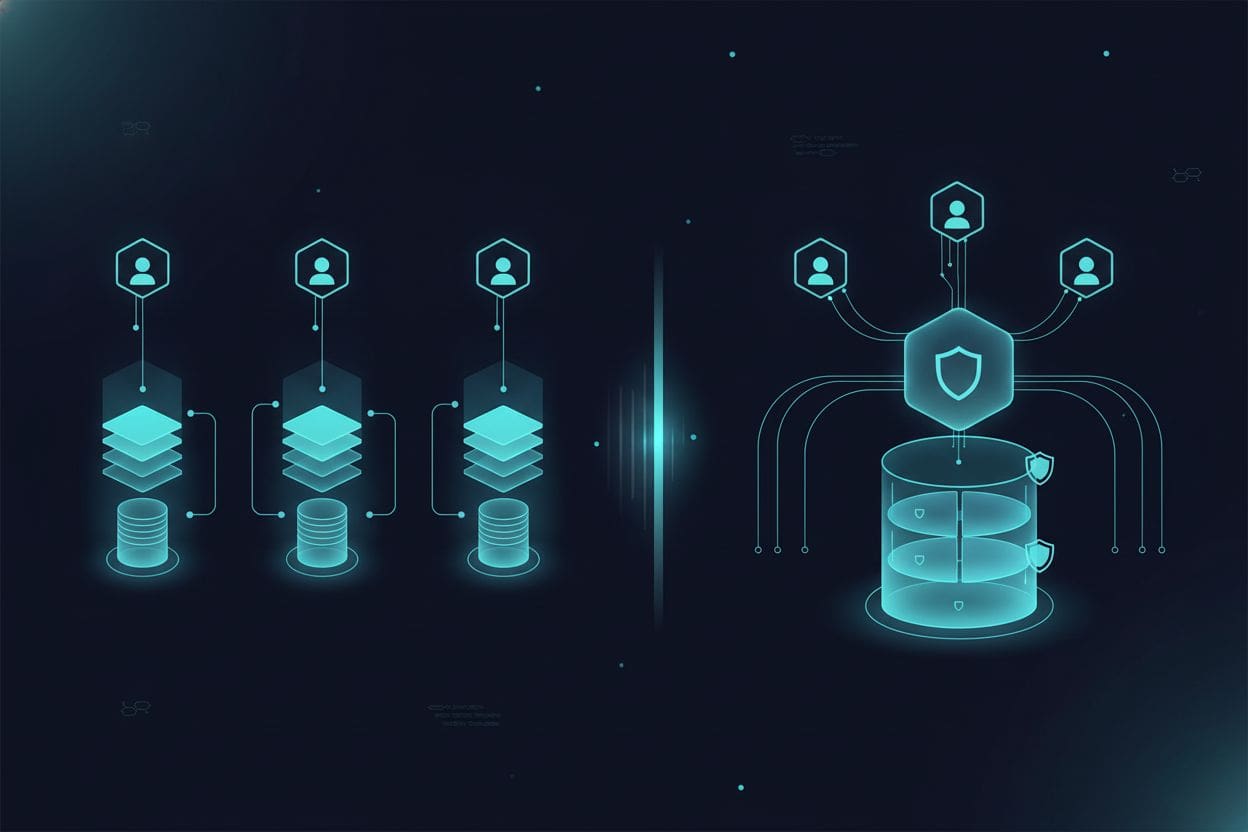
          Single-Tenant vs Multi-Tenant Architecture

          Single-tenant and multi-tenant architecture models for SaaS systems

          Single-Tenant Architecture

          In a single-tenant model, each customer has a dedicated application and database instance. This provides strong data isolation and customization, making it suitable for regulated industries such as healthcare and finance.
          The trade-off is higher infrastructure and maintenance costs, along with increased operational overhead as the number of customers grows.

          Multi-Tenant Architecture

          Multi-tenant architecture allows multiple customers to share the same application instance while keeping data logically isolated. This model is widely used in modern SaaS platforms due to efficient resource utilization and simplified updates.
          The main challenge is ensuring strong security, tenant isolation, and consistent performance across customers. When implemented correctly, multi-tenancy offers significant scalability and cost advantages.

          SaaS Database Architecture: Choosing the Right Data Model

          Database Options for SaaS Products

          SaaS platforms often use a combination of relational and NoSQL databases. Relational databases handle structured data and transactions, while NoSQL databases support flexible schemas and horizontal scaling.
          Many modern SaaS products adopt a hybrid approach based on workload requirements.

          Data Isolation Models in SaaS

          Data isolation can be implemented using shared databases with tenant identifiers, separate schemas, or dedicated databases per tenant. Each approach balances cost, complexity, and security differently.

          Strong access controls and encryption are essential regardless of the chosen model.

          Best Practices for SaaS Data Architecture

          Effective SaaS data architecture emphasizes horizontal scaling, efficient querying, backups, disaster recovery, and governance. Planning for data growth early avoids costly redesigns later.

          Cloud Architecture and Infrastructure for SaaS Applications

          Cloud architecture and infrastructure supporting scalable SaaS applications

          Cloud Deployment Models

          Public cloud platforms are the most common choice for SaaS deployments, though some organizations adopt hybrid or multi-cloud strategies. Public cloud environments provide scalability, global access, and managed services. In complex environments, cloud consulting services in India help SaaS businesses design secure, scalable cloud architectures while aligning infrastructure decisions with long-term growth plans.

          Cloud-Native Architecture Components

          Cloud-native SaaS platforms rely on containers, orchestration tools, managed databases, and CI/CD pipelines. These components enable automated scaling, high availability, and continuous delivery.

          Key Cloud Infrastructure Considerations

          Availability, security, monitoring, and cost optimization are essential. Observability tools help teams monitor performance and usage while controlling infrastructure expenses. Leading cloud providers such as AWS outline proven SaaS architecture patterns that emphasize scalability, availability, and cost optimization across cloud-native environments.

          SaaS Platform Design: Architecture Patterns to Consider

          Established patterns such as layered architecture, domain-driven design, and event sourcing help manage complexity and improve maintainability. Selecting appropriate patterns ensures the platform remains adaptable as business requirements evolve. The choice of web app development frameworks significantly impacts how SaaS platforms manage performance, scalability, and integration with cloud infrastructure.

          Scalable SaaS Architecture Best Practices

          • Stateless services for horizontal scaling
          • Caching to reduce latency and load
          • Automated infrastructure provisioning
          • Proactive monitoring and observability
          • Failure-aware design for resilience

          Common Mistakes When Choosing SaaS Architecture

          Many teams overengineer early by adopting complex architectures too soon. Others underestimate data isolation, security, or monitoring requirements. Ignoring future growth during early design often leads to expensive refactoring later.
          Aligning architectural decisions with realistic growth plans helps avoid these issues.

          How to Future-Proof Your SaaS Software Architecture

          Future-ready SaaS architecture emphasizes modular design, cloud-native technologies, automation, and continuous evaluation. Flexible systems adapt more easily to changing technologies and market demands.

          Conclusion

          Choosing the right SaaS architecture is a long-term commitment to scalability, performance, and business resilience. While no single model fits every product, thoughtful architectural decisions aligned with business goals create a strong foundation for sustainable growth. Many organizations partner with a software development company in India to design robust SaaS architectures that support long-term growth and operational stability.
          At Shaligram Infotech, we design SaaS architectures that are secure, scalable, and future-ready, enabling organizations to build platforms that grow confidently and adapt without unnecessary complexity.

          Ready to build? Contact our global teams:

          🇺🇸 USA: +1 (919) 629-9671
          🇬🇧 UK: +44 20 3581 6366
          🇮🇳 India: +91 99099 84567
          🇦🇺 AUS: +61 07 3121 3147

          💬 Interested in Regular Insights on SaaS Product Development?

          📲 Follow Shaligram Infotech on LinkedIn
          Let’s build the future of applications together.

          FAQs

          What is the best architecture for SaaS applications?

          The best architecture depends on scalability needs, complexity, compliance requirements, and long-term goals. Talk to our experts to identify the ideal SaaS architecture tailored to your business and growth plans.
          Most startups benefit from starting with a monolithic architecture and transitioning to microservices as the product matures.
          It allows multiple customers to share the same application instance while keeping data logically isolated.
          Public or hybrid cloud platforms with cloud-native designs are commonly preferred for scalability and flexibility.

          Relational databases work well for structured data, while NoSQL databases support scalability and flexibility.

          No. Microservices offer scalability but add complexity and are best suited for mature products.

          Categories
          Blog Software Development

          Top Web App Development Frameworks

          Software Development

          Top Web App Development Frameworks

          Modern web application architecture showing frontend, backend, and framework layers

          GEt in Touch


            Why Choosing the Right Web App Framework Matters

            The framework you choose defines how your web application is built, scaled, secured, and maintained. A well-chosen framework accelerates web app development, improves performance, and supports future enhancements without notable rework.

            On the other hand, selecting the wrong web development frameworks can lead to slower delivery, limited scalability, higher technical debt, and increased long-term costs. With modern web development moving toward microservices, API-first architectures, and compliance-driven systems, framework selection plays a critical role in project success.

            Front-End vs. Back-End Frameworks: What’s the Difference?

            Visual showing interaction between frontend user interface and backend server architecture
            Understanding frontend vs. back-end frameworks is fundamental to building modern web applications.
            Frontend frameworks handle the visual and interactive elements of a web application. They control layouts, navigation, animations, and how users interact with the interface.
            Backend frameworks manage server-side logic, databases, APIs, authentication, and integrations. Together, frontend and backend frameworks form the foundation of any scalable web application. Some teams prefer separate frameworks for each layer, while others choose full-stack solutions that support both frontend and backend development.

            Frontend Frameworks

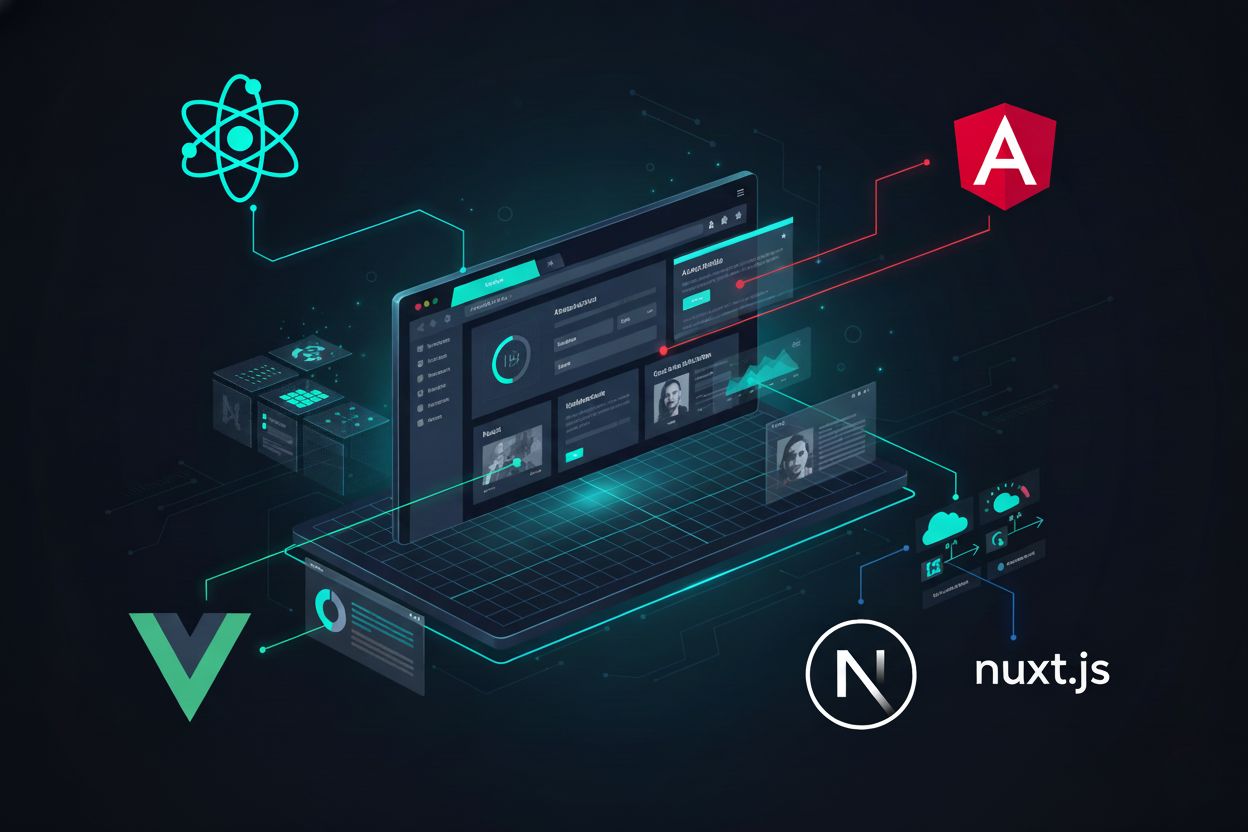
            Frontend frameworks simplify UI development by offering reusable components, routing systems, and performance optimizations. These frameworks directly influence how fast, responsive, and intuitive a web application feels to users.
            Strong frontend frameworks are essential for delivering modern website app development experiences across devices and browsers. To build visually engaging, high-performing interfaces, many businesses hire dedicated frontend developers who specialize in the latest frontend frameworks and best practices.

            Backend Frameworks

            Backend frameworks provide the infrastructure needed to build secure, scalable, and reliable server-side systems. They handle data processing, API management, authentication, and integration with external services.
            Choosing the proper backend framework ensures that web application development remains stable even as traffic and feature complexity grow. Organizations often prefer hiring a dedicated backend developer to deliver robust architecture, seamless integrations, and long-term application scalability.

            Top Frontend Web Development Frameworks in 2026

            Top frontend web development frameworks for 2026

            React

            React remains one of the most popular web development frameworks due to its component-based architecture and massive ecosystem. It enables efficient UI updates and works seamlessly with tools like Next.js for server-side rendering.
            React is widely used for scalable web applications, including SaaS platforms, dashboards, and enterprise portals.

            Angular

            Angular is a full-featured frontend framework with built-in routing, form handling, validation, and dependency injection. Its structured approach makes it suitable for large-scale enterprise web applications where consistency and long-term maintainability matter.

            Vue.js

            Vue.js is valued for its simplicity and flexibility. Its gentle learning curve and reactive core make it a preferred choice for startups and teams building lightweight web applications that still require performance and scalability.

            Next.js / Nuxt.js

            Next.js (React) and Nuxt.js (Vue) extend frontend development with server-side rendering, static site generation, and API support. These frameworks are commonly used for SEO-focused and high-performance web application development.

            Top Full-Stack Web Frameworks in 2026

            Top full stack web development frameworks for 2026

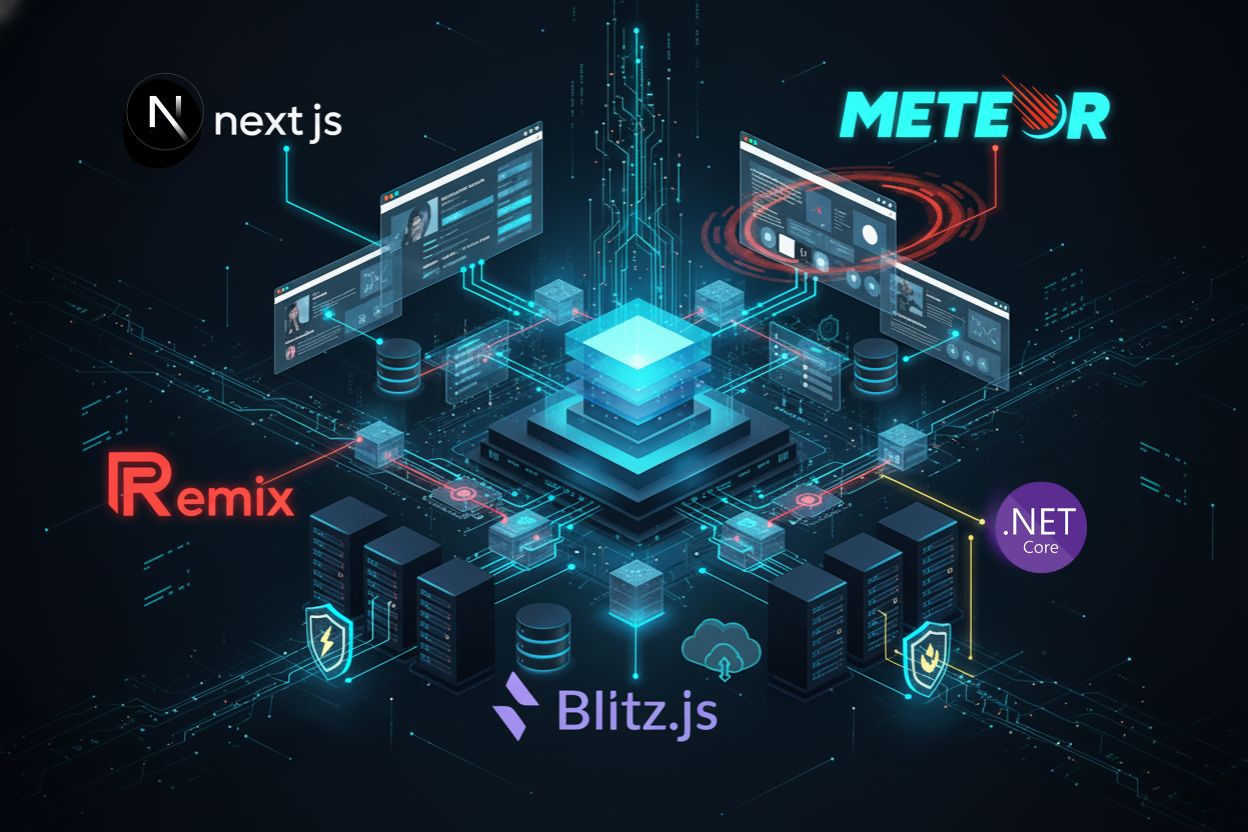
            Next.js

            Next.js has evolved into a full-stack solution by supporting frontend rendering, backend APIs, middleware, and edge functions within a single framework. Its hybrid capabilities allow developers to easily bridge the gap in the SSR vs CSR debate, offering the best of both worlds for performance and SEO.

            Meteor.js

            Meteor enables real-time web application development with built-in data synchronization between client and server, making it suitable for collaborative tools and rapid prototypes.

            Remix

            Remix focuses on performance and server-side rendering using modern web standards. It provides structured data loading and routing patterns that improve reliability.

            Blitz.js

            Blitz.js extends Next.js by simplifying data access through a zero-API approach. It is commonly used for SaaS products and internal tools that require fast development cycles.

            ASP.NET Core

            ASP.NET Core is a high-performance framework from Microsoft for secure, enterprise-grade web applications. Its cross-platform support and scalability make it a reliable full-stack choice.

            Web Frameworks Comparison: How They Differ

            Criteria Key Insights
            Performance & Speed
            Next.js, FastAPI, and Spring Boot perform well in high-traffic environments. React and Angular are frontend frameworks with strong UI rendering capabilities, while Vue offers lightweight and fast frontend performance. Node.js is widely used for real-time communication and event-driven applications.
            Scalability & Architecture
            Django, Spring Boot, and Node.js support microservices and modular scaling. Angular provides a stable and structured architecture for large enterprise applications. Next.js and other full-stack frameworks work efficiently in serverless and edge-based deployments.
            Learning Curve & Developer Availability
            React and Vue are easier to learn and adopt. Angular, Spring Boot, and Ruby on Rails require deeper technical expertise. Node.js has a large global developer base, making skilled resources easier to find.
            Security & Compliance
            Django and Spring Boot include strong built-in security features suitable for enterprise systems. Laravel and Rails offer secure defaults for application development. Node.js security largely depends on package management and development best practices. x`
            Ecosystem & Community Support
            React, Node.js, and Laravel have large and active communities. Django and Vue continue to grow with regular updates. ASP.NET Core is backed by Microsoft, offering long-term stability and enterprise support.

            How to Choose the Right Framework for Your Web Application

            The proper framework depends on project goals, scalability needs, team skills, and security requirements. Businesses should evaluate whether their web application requires real-time features, SEO support, enterprise compliance, or rapid development.

            Steps to Evaluate a Web Development Framework

            Framework evaluation process showing performance, security, scalability, and maintenance factors
            1. Define Application Requirements Clearly
            2. Evaluate Real-World Performance Benchmarks
            3. Review Security and Compliance Support
            4. Assess Developer Availability
            5. Analyze Ecosystem Maturity and Integrations
            6. Consider Long-Term Maintenance and Updates

            Common Mistakes When Choosing a Web App Framework

            • Choosing frameworks based only on popularity
            • Ignoring scalability and future requirements
            • Selecting tools without internal expertise
            • Underestimating maintenance costs
            • Overlooking security and compliance needs

            Conclusion

            The modern web development landscape offers a wide range of web app frameworks, each suited to different use cases and business goals. Selecting the best web development framework requires balancing performance, scalability, security, and long-term maintainability.
            As a trusted software development company in India, we help businesses choose and implement the right web application frameworks based on real project requirements. Shaligram Infotech brings deep technical expertise and industry experience to support scalable, secure, and future-ready web application development.

            FAQs

            What is the best framework for web development in 2026?

            There is no single best option. The best framework depends on project needs, but React, Next.js, Django, Node.js, and Spring Boot are widely used.
            React offers flexibility, Angular suits enterprise architecture, and Vue provides faster adoption for smaller teams.
            Frontend frameworks manage UI and interactions, while backend frameworks handle server logic, databases, and APIs.
            Spring Boot, Django, FastAPI, and Node.js are strong options for scalable web applications.

            Evaluate performance, scalability, security, team expertise, and ecosystem support. Connect with us to get expert guidance and choose the right web framework for your project.

            React, Vue, and Laravel are beginner-friendly and well-supported by strong communities.
            Laravel, Node.js, and Vue.js are commonly used for small to mid-sized website app development projects.

            Ready to build? Contact our global teams:

            🇺🇸 USA: +1 (919) 629-9671
            🇬🇧 UK: +44 20 3581 6366
            🇮🇳 India: +91 99099 84567
            🇦🇺 AUS: +61 07 3121 3147

            💬 Interested in Regular Insights on Web Application Development?

            📲 Follow Shaligram Infotech on LinkedIn
            Let’s build the future of applications together.
            Categories
            Blog Microsoft

            NAV to Business Central Migration

            Microsoft

            NAV to Business
            Central Migration

            Futuristic digital migration concept showing transition from legacy NAV system to modern Dynamics 365 Business Central cloud

            GEt in Touch


              Why Businesses Are Moving Away From NAV to Business Central?

              Visual representation of NAV ERP limitations with warning icons and modern cloud technology in the background
              There are several reasons for the move, mainly related to efficiency and long-term growth. First of all, Microsoft ended mainstream support for older NAV versions, meaning no new features, limited patches, and increasing compatibility issues.
              This poses a higher operational risk, particularly for companies that are heavily dependent on integrations and custom workflows. Moreover, on-premises NAV deployments require regular hardware and infrastructure maintenance, as well as manual upgrades, which are costly liabilities. In contrast, the Microsoft Dynamics 365 Business Central cloud model does not incur any of these expenses.
              Another factor contributing to this trend is the shift to remote work and international operations. MS Business Central provides browser-based access, mobile support, and seamless cloud integration that Navision software was never designed to support. Apart from access, Business Central presents a modern user interface, automation, AI-driven suggestions, and easier workflows. Microsoft’s deep integration with 365, Power BI, and Teams has been a significant factor in collaboration.
              Finally, automatic biannual updates ensure your ERP system never gets outdated, unlike NAV, where each upgrade was expensive. Organizations seeking expert guidance often collaborate with a custom erp software development company in india to ensure a smooth and future-ready migration journey.

              Business Central: What's Actually Different

              MS Business Central, even though it evolved from Microsoft Dynamics NAV, is an entirely different, more sophisticated product. Its cloud-native architecture ensures it leverages Azure’s secure, scalable infrastructure to the fullest. Moreover, the interface is sleek and user-friendly, which allows users to enjoy organized workspaces and customized dashboards.
              The overall performance boost across finance, supply chain, and inventory management enables faster operations. Along with these advantages, D365 Business Central also uses an extension-based AL development model that fully resolves upgrade issues caused by NAV’s code-level customizations. Real-time data analysis takes a giant leap forward with the integration of Power BI, enabling more profound insights and better decision-making. The combined effect of enhanced automation, improved reporting, and regular updates has transformed Business Central 365 into a ‘future-ready’ ERP that adapts to your business needs rather than holding it back. For businesses looking to maximize these capabilities, hiring a Dynamics 365 Business Central developer ensures expert customization and a smoother adoption.

              Migration Options: Which Path Fits Your Business?

              Three migration strategy paths illustrated as futuristic holographic routes for Business Central upgrade
              Organizations today usually consider three different strategies for their migration.
              • A Complete Reimplementation (Start Fresh)
                This approach provides a clean slate. It is recommended for companies on very old NAV versions (pre-2013) or those with heavily customized systems that no longer align with standard workflows. By migrating only master data and opening balances, you eliminate legacy code debt and maximize the standard capabilities of Business Central.
              • A Technical Upgrade (Lift and Shift)
                This method migrates your entire database, including historical data and compatible customizations, directly to Business Central. This path ensures full data continuity but is recommended only for stable, well-maintained NAV instances, typically NAV 2015 through NAV 2018. It is not suitable for systems with corrupted data or unstable architecture.
              • Hybrid Migration
                A balanced approach that selectively migrates essential historical data while redesigning outdated customizations. This strategy involves modernizing specific add-ons to use AL extensions while discarding redundant code, offering a middle ground between continuity and modernization.
              Your NAV version, database quality, business goals, and future digital roadmap determine the right option. Organizations migrating to Dynamics 365 should prioritize understanding security, compliance, and data governance to maintain a protected and compliant environment. Microsoft provides detailed guidance on upgrade paths in its official Business Central upgrade and migration overview, which helps businesses evaluate the most suitable approach.

              How to Choose the Right Business Central Migration Partner

              Partner selection is essential for a successful migration. It is advisable to look for a team with experts in NAV and Business Central certification, backed by a strong portfolio of successful migrations across various versions and industries. Microsoft also outlines partner capabilities and solution guidance within its Dynamics 365 Business Central documentation, which can help organizations set clear expectations when choosing a migration partner.

              Additionally, ensure the partner can handle complex customizations, data transformations, and modern integration design. It is necessary to have a structured migration methodology, transparent costing, and a strong post-go-live support model. The right partner will guide you through each step, ensuring your system not only migrates smoothly but also gains performance, visibility, and scalability. With expert guidance, organizations can also unlock stronger data-driven decisions with Dynamics 365, maximizing the value of their modern ERP environment.

              Conclusion

              Migrating from Navision to Business Central is more than a software update; it is a necessary step to secure your business against the risks of unsupported legacy systems. By moving to the cloud, you not only eliminate infrastructure costs but also unlock next-generation capabilities like Dynamics 365 Copilot (AI) and advanced analytics.

              If you stay on-premise with NAV, the cost of doing nothing will keep rising each year. Whether you decide to upgrade your current system or start fresh, strategic planning with an experienced partner can help you succeed during this transition to the cloud. A well-managed migration can lead to a more connected, efficient, and modern business.


              As a leading software development company in India, we guide businesses through this change with clarity and confidence. Shaligram Infotech makes migration easy, leading to better efficiency and updated cloud operations.

              Ready to build? Contact our global teams:

              🇺🇸 USA: +1 (919) 629-9671
              🇬🇧 UK: +44 20 3581 6366
              🇮🇳 India: +91 99099 84567
              🇦🇺 AUS: +61 07 3121 3147

              💬 Interested in Regular Insights on Microsoft Dynamics 365?

              📲 Follow Shaligram Infotech on LinkedIn
              Let’s build the future of applications together.
              Categories
              Blog Mobile App Development

              Progressive Web Apps vs Native Apps

              Mobile App Development

              Progressive Web Apps
              vs Native Apps

              dual tech worlds showing pwa vs native app concept

              GEt in Touch


                Web App vs Native App: What They Mean

                minimal tech shapes comparing web app and native app
                A web application runs in a browser and does not require installation. It is easy for users to access, but it has some limitations due to browser rules.
                A native application is installed from an app store and built for a single operating system. Native apps offer faster performance, access to device sensors, secure local storage, and access to system features.
                PWAs sit between these two. They bring the speed and access of the web with the look and feel of a native interface.

                What Is a Progressive Web Application (PWA)

                multi-device hologram showing progressive web application concept
                A progressive web application is a modern type of web app that feels like a mobile app. It uses HTTPS, service workers, and web manifests. Progressive web apps support offline access, quick loading, smooth navigation, and home screen installation. They work on any device with a modern browser.
                The principal value is progressiveness. The app grows based on device power without breaking older setups. This helps businesses reach users with simple access and low friction. As per this resource, PWAs can reduce load time and improve engagement, as shown in several case studies listed on PWA Stats.
                Teams that want to compare broader approaches can also review our guide on Native vs Cross-Platform Mobile Apps, which explains how both methods fit different product goals.

                Native Apps: Strengths and Limits

                Native mobile app performance utilizing device hardware
                Native apps are known for strong performance. Since they run with direct access to device hardware, they support real-time actions, gaming, advanced animation, multimedia, and full offline features. They align with platform guidelines and feel natural to users.
                The challenge is cost and time. Native apps need two separate builds for iOS and Android. Updates go through app stores, which can delay releases. Some users stop during installation because they must open the store and complete steps before using the app.
                For a deeper look at platform-level performance, check out our detailed breakdown of why native app development delivers the best user experience.

                PWA vs Native App Performance

                Performance Area PWA Native App
                Loading Speed
                Very fast for daily tasks through caching and service workers
                Fastest because it runs directly on the device
                Heavy Processing
                Limited: Relies on browser rendering (WebGL/WebGPU); struggles with high-fidelity 3D gaming
                Best option for gaming, AR, VR, and high-intensity tasks
                Offline Support
                Works offline with cached content
                Full offline access with complete device support
                Resource Usage
                Light and efficient
                Uses device hardware for maximum power
                Smoothness
                Good for regular tasks and simple flows
                Best for transitions, gestures, and real-time actions
                Stability
                Dependent on browser capability
                Highly stable with system-level support
                Multitasking
                Limited background activity
                Strong background processes, threads, and system actions

                PWA vs Native App User Experience

                User experience plays a big role when choosing a mobile app type. Native apps support gestures, smooth transitions, widgets, notifications, and biometric login. They feel stable and connected to the device.
                Progressive web apps now offer clean interfaces, fast load times, offline support, and full-screen views. For many business apps, the experience is close to native. Native is still better for complex motion and advanced sensor actions.

                PWA vs Native Experience and Features

                pwa vs native app feature comparison infographic
                PWAs now support offline use, push notifications, background sync, and home screen installation. The quality of these features depends on the browser.
                Native apps provide the most complete set of features. They support Bluetooth, NFC, secure storage, sensors, background tasks, multithreading, and system actions.
                As browsers improve, the gap gets smaller.
                If you are also comparing modern mobile frameworks, our guide to Flutter vs React Native provides a clear view of how each supports different features.

                PWA Advantages

                Here are essential PWA advantages for companies:

                • One build for all platforms
                • Lower cost and faster updates
                • No store approvals
                • Instant release through URL
                • Easy onboarding without installation
                • Good reach for global markets
                PWAs are a good option for teams that want fast updates and simple user access.

                Native App vs PWA: Security and Trust

                Security plays a big role when choosing between a native app and a PWA. Industries such as banking, healthcare, and insurance handle sensitive data and require strong controls. Native apps use OS-level encryption, secure local storage, and app store checks. This makes them a trusted option for high-risk sectors.
                PWAs utilize HTTPS and standard browser sandboxing, making them secure for general enterprise use. However, for banking-grade security requiring deep biometric integration (FaceID/TouchID at the OS kernel level) or strict data isolation, Native Apps remain the superior choice due to stricter App Store vetting and OS-level encryption standards.

                PWA vs Native: SEO, ASO, and Reach

                PWAs appear in search results, making them easy to reach via links, search results, QR codes, and social channels. This helps content platforms and e-commerce stores.
                Native apps appear in app stores. They grow through ASO, reviews, categories, and store visibility. The store helps build trust, but also adds steps to the installation.
                PWAs do not get store presence unless packaged for listings.

                Use Cases by Mobile App Type

                Each mobile app type is best suited to specific needs.

                Best for PWAs

                • Content Platforms & News Sites: (Instant loading and offline reading increase retention).
                • Online Stores (E-commerce): (Discoverable via Google Search, lowering the barrier to entry for first-time shoppers who don’t want to download an app).
                • Booking and Reservation Tools: (Users often need these services infrequently and quickly; a browser-based experience removes the friction of installation).
                • Customer Portals: (Cross-platform accessibility ensures customers can log in from any device: desktop or mobile without compatibility issues).
                • Internal Business Tools: (Bypasses App Store approval processes, allowing for immediate updates and rapid deployment to employee devices).
                • MVPs (Minimum Viable Products): (Faster development cycles and lower costs allow startups to test market fit before investing in expensive native development).

                Best for Native Apps

                • Gaming: (Direct access to the device’s GPU and hardware ensures high frame rates and smooth 3D rendering that browsers cannot match).
                • Social media
                • Fitness and tracking
                • Banking and finance
                • Apps that require sensors
                • Apps with heavy visuals or fast actions

                Decision Matrix for PWA vs Native

                The choice between PWA vs native depends on priorities.
                Pick a PWA if your goals include reach, fast delivery, simple access, and lower cost. Pick a Native app if you need advanced device features, high performance, smooth visuals, or secure storage.
                Many companies use both. A PWA offers reach, and a native app supports users who want deeper features.

                Implementation Steps

                minimal tech shapes comparing web app and native app

                PWA Implementation

                • Service workers
                • Offline support
                • Responsive interface
                • Home screen setup
                • SEO support
                • HTTPS

                Native App Implementation

                • Architecture planning
                • UI and UX design
                • Device feature integration
                • Performance tuning
                • App store preparation
                Both need strong QA, device testing, and CI CD pipelines.

                Conclusion

                Both progressive web apps and native apps are strong choices for modern products. A PWA offers fast access, broad reach, and lower cost. Native apps provide top performance, richer features, and strong security. The right choice depends on your goals, your target users, and your long-term plan. Shaligram Infotech, a leading software development agency in India, helps teams evaluate PWA and native app solutions so they can choose the platform that fits their technical and business needs.
                PWA vs. Native App comparisons help teams choose a setup that aligns with the product vision and delivers a smooth, reliable user experience.

                Ready to build? Contact our global teams:

                🇺🇸 USA: +1 (919) 629-9671
                🇬🇧 UK: +44 20 3581 6366
                🇮🇳 India: +91 99099 84567
                🇦🇺 AUS: +61 07 3121 3147

                💬 Interested in Regular Insights on Mobile Development?

                📲 Follow Shaligram Infotech on LinkedIn
                Let’s build the future of applications together.

                FAQs

                Is a PWA better than a Native App for performance?

                Yes and no. For initial loading and lightweight tasks, PWAs are often faster because there is no download required. However, for heavy processing and complex animations, Native Apps are significantly faster because they utilize the device’s GPU and hardware directly. Not sure which fits your use case? Schedule a quick consultation.
                PWAs install directly from the browser and open from the home screen.
                PWAs appear in search results and links. Native apps rely on app store visibility.
                PWAs have limits with sensors, Bluetooth, NFC, background tasks, and deep system actions.
                Pick native apps for fast product browsing, deeper personalization, and higher trust through the store.
                Categories
                Blog Mobile App Development

                Flutter vs React Native: Which Cross-Platform Framework Should You Choose?

                Mobile App Development

                Flutter vs React Native: Which Cross-Platform Framework Should You Choose?

                Neon tech split-banner comparing Flutter and React Native with glowing framework logos

                GEt in Touch


                  What Is Flutter App Development?

                  Neon tech diagram showing Flutter’s rendering engine, widgets, performance, and multi-platform output
                  Flutter is a UI toolkit of Google that enables teams to build stunning and speedy applications for mobile, web, desktop, and even embedded devices with only one codebase. Flutter uses its own rendering engine to paint every pixel on the screen. In 2026, the Impeller engine is now the standard for both iOS and Android, replacing the legacy Skia renderer. Impeller pre-compiles shaders, effectively eliminating the “jank” (stutter) that plagued early cross-platform apps and ensuring buttery smooth 60/120 FPS performance.
                  This choice of architecture helps Flutter apps enjoy excellent uniformity. The UI will act just as the developer envisioned it, whatever the device or OS version may be. Flutter is based on Dart, a language that is specially made for Ahead-of-Time (AOT) compilation, thus giving applications high-speed startup time, predictable performance, and a native feel. The combination of a custom rendering engine, a structured widget system, and strong performance has made Flutter a good choice for the most design-heavy consumer applications, animation-rich interfaces, and multi-platform product suites where consistency matters.

                  What Is React Native Development?

                  React Native development architecture for mobile applications

                  React Native, conceived and brought to life by Meta, offers a JavaScript or TypeScript solution to the use of the world’s most popular UI library, React, for mobile application development. Modern React Native has moved beyond the traditional “bridge.” By leveraging the New Architecture (Fabric and TurboModules) and JSI (JavaScript Interface), JavaScript code now communicates directly with native components in C++. This eliminates the serialization “toll” of the past, allowing React Native apps in 2026 to handle complex gestures and high-frequency updates with near-native efficiency. React Native provides a faster and more unified path by blending performance with a shared JavaScript codebase, aiming to close the gap on the superior UX delivered by native applications.

                  For web teams already proficient in using React, React Native becomes a smooth and spontaneous extension of their skills. Consequently, it is particularly appealing to startups, companies with excellent front-end personnel, and any product that desires to bring web and mobile development together in one technology ecosystem with the same technology stack.

                  React Native vs Flutter Performance: Benchmarks & Reality

                  Neon tech comparison of Flutter and React Native rendering pipelines with performance KPIs

                  Rendering Paths & Engines (Dart AOT + Skia/Impeller vs RN w/ Fabric & Hermes)

                  Flutter’s rendering pipeline employs Skia and Impeller to produce the pixels in a direct manner. This ensures that no discrepancies arise from the different OEM UI components and that behavior is the same across all devices. Since Flutter is responsible for all the drawing, it is inevitable that the animations will be smooth, transitions more natural, and the performance will be predictable across all devices, whether they are low-end or high-end.
                  With the new Fabric architecture of React Native, the data flow between JavaScript and native layers has been improved significantly. The apps are experienced as if they are affected by the platform’s aesthetics, transitions, and behaviour in a very natural way. So, React Native becomes even more appealing for enterprise products that depend on system API, native gestures, or extensive OS-level cooperation. On the downside, however, complex animations may sometimes need extra libraries, especially if the target is 60fps performance under load.

                  Practical KPIs to Track

                  Performance evaluation of engineering teams should be based on user-experience KPIs instead of synthetic benchmarks. Among these are time to interactive, memory usage during heavy scrolling, first frame render time, consistency of animation frame rates, list rendering speed, and the effect of reduced CPU power on app behaviour.
                  In 2026, Flutter issues a wide gap in performance for applications with heavy animations, and at the same time, React Native might be very useful for apps that are based on native UI paradigms or for those that might need advanced system-level features. What to choose is dictated by the kind of user experience you are going to create.

                  React Native Single Code Base: How Much Do You Really Share?

                  React Native’s claim of having a single codebase is largely correct but comes with several caveats. Native distinctions are still there, although a lot of the application of logic, state management, network integration, and reusable UI components can be used on both platforms.
                  A lot of teams report that they share between 70% and 85% of their code. The rest usually goes to the management of native modules, UI adjustments for specific platforms, device integrations, and sometimes performance enhancements. On the other hand, Flutter generally gets a higher code-sharing rate as all the UI is constructed with the help of widgets rather than the controls of the platforms. Hence, it becomes possible to keep a completely similar experience while reducing the number of platform-dependent branches in the code.

                  Flutter vs React Native Advantages by Use Case

                  Neon split-view showing when Flutter suits design-heavy apps and when React Native fits JS-driven teams
                  The app’s objectives and limitations often disclose the most appropriate framework more lucidly than merely the technological architecture.

                  Design-Heavy Apps

                  Flutter app development is the undisputed champion for aesthetic-driven applications like fintech dashboards, lifestyle apps, eCommerce platforms, and other motion-centric applications due to a very stable rendering pipeline. The custom UI can be executed with less effort, and there is no question about being consistent.

                  Teams with JS expertise, Web + Mobile Alignment

                  On the other hand, React Native is the best option when the development teams are from a JavaScript background. If web development with React is already happening, the possibility of sharing patterns, architecture, and mental models can significantly shrink the time and resources needed for the project, as well as make team management easier. React Native is also preferable when it comes to the integration of native SDKs, hardware modules, and device-specific features.

                  Choose

                  • Flutter if: You are building a banking app or bespoke e-commerce store where “pixel-perfect” design across iOS/Android is non-negotiable.
                  • React Native if: You are a startup with existing React.js developers, or your app relies heavily on native integrations (e.g., complex Bluetooth or background location services).

                  Choose a Mobile App Framework by Constraints (Decision Matrix)

                  To make the decision easier:

                  Go for Flutter in case you require ultra-perfect images, very fast animations, or a multi-platform approach to be followed for a long time, which also includes the desktop or the web.
                  Opt for React Native if your team is already working with JavaScript, you need close interaction with web development, or you expect a lot of native integrations. For comparison of the individual features, this matrix quite often points out the best pick sooner than they do.

                  React Native vs Flutter for Mobile Apps: Real-World Scenarios

                  Think about the application of each framework in actual business scenarios. A fintech app that uses complex charts and animations will probably take advantage of Flutter’s rendering consistency. A React-skilled startup that is releasing its first mobile application can reduce the timelines significantly by opting for React Native due to the tooling and web development shared understanding being so familiar. React Native’s native-first method is often preferred by businesses developing applications that require heavy OS integration, device-level features, and hardware modules. Lastly, companies that are creating a multi-screen ecosystem, mobile, desktop, kiosk, and web, usually choose Flutter because of its consistent rendering approach. As a top mobile app development company India, we often guide businesses in selecting the right framework based on their product vision and long-term scalability needs.

                  Cross Platform App Delivery Playbooks

                  Flutter Development Checklist

                  • Select an architectural pattern: BloC, Riverpod, MobX, or Redux.  
                  • Establish CI/CD pipelines with Codemagic or GitHub Actions.  
                  • Reduce the number of redundant widget rebuilds.  
                  • Activate Impeller for more fluid rendering.  
                  • Implement a uniform design system.  
                  • Perform asset and image size optimisations.  
                  • Conduct thorough testing on budget Android devices.  
                  • Leverage DevTools for memory and CPU profiling.  

                  React Native Development Checklist

                  • Set TypeScript as the language of choice   
                  • Modern navigation libraries are to be adopted   
                  • Enable the Hermes engine as the default   
                  • Library support for Fabric is preferred   
                  • UI performance can be achieved using tools like Reanimated or FlashList   
                  • OTAs can be updated through Expo or CodePush   
                  • Launch testing for platform-specific edge cases early  

                  Cost, Team & Hiring: Flutter Development vs. React Native Development

                  Neon tech comparison of team availability, hiring costs, and delivery efficiency for Flutter vs React Native
                  From a talent point of view, React Native benefits from the huge global JavaScript ecosystem. With this, teams can onboard faster, attract more talent easily, and exchange knowledge between web and mobile teams. This scenario usually leads to a decrease in the overall costs for companies that are developing several applications or building large-scale digital ecosystems.

                  On the other hand, Flutter might be a more financially viable option from a delivery standpoint, especially for applications with a lot of design work or for products that are aimed at multiple platforms. The reason is that Flutter’s UI is so uniform that programmers spend less time solving the issues that come with different platforms, which speeds up the development of new features and, at the same time, reduces the errors that occur during regression testing. The StackOverflow Developer Survey highlights how widely JavaScript and Dart are adopted globally.

                  Conclusion : Picking the Right Cross-Platform Mobile Apps Strategy

                  The decision of whether to go for native or cross-platform development is based on the project goals, performance needs, and budget, in the end. Native applications provide the fastest speed and the best user experience, while cross-platform applications offer quicker delivery and reduced costs with some quality loss, but not too much. Through grasping these dissimilarities, companies can make wiser technology investments that are aligned with their digital strategy in the long run. At Shaligram, we assist organizations in assessing both strategies and crafting solutions that offer the perfect mix of performance, scalability, and value. As a leading software development company in India, Shaligram Infotech assists organizations in assessing both strategies and crafting solutions that offer the perfect mix of performance, scalability, and value.

                  Ready to build? Contact our global teams:

                  🇺🇸 USA: +1 (919) 629-9671
                  🇬🇧 UK: +44 20 3581 6366
                  🇮🇳 India: +91 99099 84567
                  🇦🇺 AUS: +61 07 3121 3147

                  💬 Interested in Regular Insights on Mobile Development?

                  📲 Follow Shaligram Infotech on LinkedIn
                  Let’s build the future of applications together.

                  FAQs

                  Is Flutter faster than React Native in 2026?

                  In 2026, Flutter generally edges out React Native for animation-heavy and brand-centric apps due to its Impeller rendering engine. However, React Native’s New Architecture has closed the gap for standard utility and information-based applications. Connect with our Flutter team.
                  Generally, the code sharing is about 70-85% among the teams working on the same project. It is, however, common for different teams to handle UI tweaks, platform-specific functions, and native features separately.
                  In the case of animations, Flutter is the clear winner. For long, complex lists (e.g., social feeds), React Native often outperforms competitors when using the FlashList library (by Shopify). FlashList leverages advanced cell recycling that can sometimes beat Flutter’s standard ListView in memory efficiency on low-end devices. On the other hand, Flutter is device consistent.
                  In case you are going to develop an app that is mainly focused on the design, a product that is going to be used over multiple platforms, or one that just needs to have nice-looking visuals, then you should go for Flutter. If your tech stack is mainly JavaScript and you have the talent pool with React Native experience, then you should definitely choose that route; moreover, if the product will benefit from the web-mobile architectural alignment, then React Native is the way to go.
                  Categories
                  Blog Mobile App Development

                  Why Native App Development Still Delivers the Best User Experience

                  Mobile App Development

                  Why Native App Development Still Delivers the Best User Experience

                  3D visualization of mobile phones displaying native app high-frame-rate performance and code elements

                  GEt in Touch


                    What Is Native App Development?

                    Showcasing native app development ios android minimal
                    Native mobile application development is the building of apps for one mobile operating system, iOS or Android, in the OS platform-specific programming languages, using the development environment that the platform specifies.
                    • iOS development relies on Swift (and the modern SwiftUI framework) within Xcode.
                    • Android development primarily uses Kotlin (and Jetpack Compose) inside Android Studio.
                    Unlike native apps, hybrid or cross-platform approaches utilize one codebase and additional layers to translate before the app runs, meaning they cannot interact with the device hardware and OS APIs directly. When native apps speak directly to device hardware and the OS APIs, performance is generally faster, animations are smoother, and the interfaces simply feel more natural when engaging with the app.

                    iOS Development

                    Native iOS apps are made for the complete Apple ecosystem: iPhones, iPads, and Apple Watches. To create this seamless experience, developers utilize Swift and SwiftUI alongside Apple’s Human Interface Guidelines (HIG). This ensures that navigational patterns, font scaling, and animations behave exactly as loyal iPhone users expect. Many businesses also choose to hire iOS app developers in India to build high-quality native iOS apps that align perfectly with Apple’s design and performance standards.
                    The major UX benefits of the native iOS approach are:
                    • Close integration with the use of SiriKit, ARKit, HealthKit, and Face ID
                    • The compatibility with features such as haptic feedback, widgets, and gesture-based navigation
                    • High performance throughout Apple’s highly regulated device ecosystem
                    Each aspect, including animations and touch responses, is made to suit the hardware and software of iOS perfectly. As a result, a smooth and coherent experience is produced that matches the expectations of the users perfectly.

                    Android Development

                    Native Android applications are done with Kotlin or Java, and that too by following Google’s Material Design for aesthetic uniformity. Android programmers get the chance to explore more through Jetpack and Google Play Services, which are already equipped with loads of APIs and libraries; hence, creating applications with great personalization and extensibility is easier. Because of this flexibility and deep ecosystem support, many businesses prefer to hire Android app developers in India to build scalable and highly customized native Android apps.
                    The User Experience that Android native development offers contains:
                    • Specific experiences for all possible screen sizes and resolutions
                    • Strong connection with Google Maps, Firebase, and Play Billing
                    • Plenty of customization and adaptive UI layout possibilities
                    • Smart controlling of background activities, notifications, and data synchronization
                    It is native development that allows Android applications to deliver swift responses and different types of experiences, at the same time across various kinds of hardware.

                    Why this matters for UX

                    The perfect UX is not only about the aesthetics of an app, it is also about the experience it provides. The user will rate the product based on responsiveness, reliability, and intuitiveness. Native apps have the following advantages:
                    They…
                    • Mount the fastest performance using platform-specific APIs.
                    • Immediately give any feedback to the user’s actions.
                    • Keep the same UI patterns that the users are familiar with.
                    • Take away the offline unreliability and provide smooth data synchronization.
                    All these things combined to make native apps seem like a part of the user’s natural environment, and they operate without any effort on the user’s part; these are the most important factors in users’ retention and happiness.

                    Key Benefits of Native App Development (UX-First)

                    native app development benefits minimal icons

                    Super-Speed Performance

                    Because native applications work directly with the operating system through compiled code, they enjoy speedy load times.

                    Smooth UI and Animations

                    The rendering engine is fine-tuned for the GPU of the device, which results in quick and soft transitions as well as touch responses.

                    Consistent User Experience Over Different Platforms

                    The design of every UI component corresponds to the principles of the respective platform design standards, such as Apple’s HIG or Google’s Material Design.

                    Functionality without Connectivity

                    The use of native caching and local storage APIs makes it possible for apps to be very effective even in the absence of an internet connection.

                    Top-notch Security

                    The use of secure APIs like Keychain, Secure Enclave, and SafetyNet for integration guarantees data security.

                    Long-Term Scalability

                    Native architectures easily adapt to the new operating system features and the changes in business requirements.

                    Advantages of Native Mobile Apps (vs Alternatives)

                    Three factors, like Performance, Development Cost & Time, and Scalability, have to be considered when you compare native apps and cross-platform or hybrid methods.

                    Performance

                    Native applications provide the ultimate performance due to the fact that they are executed right on the operating system without any middleware or code translation. It guarantees:
                    • Faster startup times
                    • Stable frame rates
                    • Lower battery consumption
                    • Fewer crashes
                    While cross-platform frameworks are improving, they rely on non-native rendering engines or communication bridges (like the JS bridge in React Native). These abstraction layers can introduce latency, causing “jank” in complex animations that native code handles effortlessly. Thus, if an app is dealing with real-time interactions, 3D graphics, AR/VR, or video processing, then native performance is definitely the best option.
                    In the end, the smoother the app, the stronger the emotional users’ connection, and that’s the area where native development excels.

                    Development Cost & Time

                    Cross-platform frameworks claim that sharing the same code for both iOS and Android would result in quicker delivery to market. But, in the long run, native apps might have better cost efficiency.
                    Here are the reasons:
                    • Maintenance hours are cut down as the native app faces fewer bugs that are unique to the platform.
                    • With OS releases, updates are rolled out more accurately.
                    • Native frameworks decrease reliance on third-party plugins, resulting in smaller technical debt.
                    Investing money at the beginning may be higher, but the total cost of ownership (TCO) of the app during its lifetime is usually lower, particularly for apps that need constant updates, high UX quality, or advanced integrations.

                    Scalability

                    Scalability is not only measured by the number of users but also by the application, creating no hassle for the users as it becomes more complicated. So, native architectures can scale up effectively by doing the following:
                    • They can take advantage of multithreading and background services.
                    • Integration with various cloud platforms such as AWS, Azure, and Firebase is hassle-free.
                    • They can adopt a modular development approach and a microservices-based architecture.
                    Cross-platform frameworks sometimes cannot keep up with the demand for more features or changes in the OS, which often leads to the need for extra workarounds. On the contrary, native apps are getting better together with platform innovations, thus they are a future-ready investment.

                    App Performance in Native Apps

                    Native applications performed faster and smoothly as they were made with platform-dependent code, which was completely optimized for the device. They had direct access to hardware resources such as CPU, GPU, and sensors, which, besides eliminating the delays caused by cross-platform layers, also gave a faster load time. Such performance stability and even fluid animations during heavy usage were the result of the native applications.
                    Native APIs enabled developers to choose memory and caching in such a way as to provide an always responsive experience, one that feels easy for users and builds trust in the application’s quality.

                    Mobile UX: Why Native Apps Win

                    The user experience is connected to emotions, and the users relate the responsiveness, speed, and design quality to the brand’s trustworthiness. Native applications have a constant lead over others because they:

                    • React without delay to finger movements and words
                    • Render clean and lively pictures and transitions
                    • Combine perfectly with system gestures and haptics
                    • Keep the look and feel the same during updates
                    All these not so obvious but very important factors contribute to the app being alive, which in turn, user engagement, retention, and app store ratings, all become better.

                    iOS Development vs Android Development: What Changes for UX?

                    iOS vs Android user experience comparison illustration
                    Although native development ensures both platforms provide excellent experiences, they are still separated by design philosophy and technical ecosystems.

                    1. Design Language

                    • iOS → clarity, depth, motion, simplicity
                    • Android → flexibility, customization, adaptable components

                    2. Ecosystem Control

                    • iOS → limited devices = consistent experience
                    • Android → many device types = customization with complexity

                    3. UX Outcome

                    • iOS → more uniform
                    • Android → more personalized
                    The best outcome is achieved when the successful applications adapt their UX strategy to every platform rather than impose a universal approach.

                    Cross Platform App Development: Pros, Cons & When It Fits

                    Cross-platform development comes with its pros and cons, especially around speed and code sharing. It is a good choice when:
                    • The project is an MVP or prototype
                    • The target audience is small or limited
                    • The performance of UX is still of no critical concern.
                    Nonetheless, cross-platform frameworks might not be able to deliver the same level of smoothness as native applications that need very high interactivity, offline performance, or even native-level animations. Companies have to decide if getting the product to market quickly or providing a top-notch user experience over the long haul is their primary concern.

                    Mobile App Performance Optimization (Native Playbook)

                    There is one thing to develop a native application and another thing to maintain its speed and efficiency. Developers use proven methods to keep the user experience performance at its best:
                    • Regularly profile using Xcode Instruments and Android Profiler.
                    • Reduce the number of layers drawn and layout complexity for faster rendering.
                    • Apply lazy loading techniques to reduce cold start times.
                    • Store assets so they are accessible without glitches during offline periods.
                    • Conduct A/B tests to refine interaction paths and increase customer retention.
                    Data drives these optimizations in native frameworks and can be measured directly, thus making sure that the UX grows alongside the user habits.

                    Mobile App Development Decision Framework (TCO & Roadmap)

                    mobile app development decision roadmap minimal
                    Although native development ensures both platforms provide excellent experiences, they are still separated by design philosophy and technical ecosystems.
                    Choose native development when:
                    • UX is a core business priority
                    • You need advanced hardware integrations
                    • The app will scale to a large user base
                    • The product roadmap includes long-term updates
                    Native apps cost more early on but deliver better ROI through:
                    • Lower crash rates
                    • Higher retention
                    • Longer lifespan
                    • Fewer maintenance issues

                    Team Structure, Tools & CI/CD for Native Development

                    native development team tools cicd diagram

                    Team Needed

                    • iOS developers
                    • Android developers
                    • UI/UX designer
                    • QA engineer
                    • DevOps engineer
                    • Product manager

                    Tech Tools

                    • iOS: Xcode, SwiftUI
                    • Android: Android Studio, Jetpack, Firebase

                    CI/CD Tools

                    • GitHub Actions
                    • Bitrise
                    • Jenkins
                    These provide smooth releases and consistent app quality.

                    Conclusion

                    Cross-platform technologies are getting better, but native app development remains the ultimate standard for delivering the user experience users expect. It merges raw power, platform mastery, and artistic precision to produce intuitive, reliable applications that feel like a natural extension of the user’s device.
                    Shaligram Infotech brings this philosophy to every project, empowering Healthcare, Fintech, and E-commerce businesses with future-ready native solutions backed by our reputation as the best software development company in India. For companies that view UX as a competitive edge, native development is the proven strategy for long-term brand loyalty and growth.

                    Ready to build? Contact our global teams:

                    🇺🇸 USA: +1 (919) 629-9671
                    🇬🇧 UK: +44 20 3581 6366
                    🇮🇳 India: +91 99099 84567
                    🇦🇺 AUS: +61 07 3121 3147

                    FAQs

                    Is native or cross-platform better for mobile UX?

                    The most incredible user experience is given by native apps through their very access to the hardware, OS-level APIs, and design guidelines that align with users’ expectations.
                    They not only make the app more interactive and immersive, but also increase the user’s connection to the app, thus improving the user’s joy and satisfaction.
                    Native application programming interfaces take care of the work and ensure the performance is not affected by the cache or sync operations.
                    The initial cost of native applications is higher, but the total cost of ownership is lower due to bugs, maintenance, and user retention being the factors.
                    • Cold start time
                    • Crash-free rate
                    • Frame time
                    • User satisfaction scores
                    Native apps consistently outperform cross-platform apps in all these metrics.
                    Categories
                    Blog Mobile App Development

                    Native vs Cross-Platform Mobile Apps: Which One is Ideal

                    Mobile App Development

                    Native vs Cross-Platform Mobile Apps: Which One is Ideal?

                    Native vs Cross-Platform Mobile Apps Showcasing with smartphones and digital tech graphics

                    GEt in Touch


                      What is Native App Development?

                      showcasing native app development
                      Native app development is the process of building apps specifically for one OS: Android or iOS. Using the OS’s own programming languages and development environments, developers construct their applications:
                      • iOS Uses: Swift or Objective-C, functionally using Xcode.
                      • Android Uses: Kotlin or Java, functionally using Android Studio.
                      Since such applications utilize the native tools and frameworks of the platform, they very closely integrate the features of the device, such as the camera, GPS, push notifications, and sensors. Direct access lets us have excellent performance, outstanding responsiveness, and platform-consistent UI/UX. If you are planning to hire a dedicated Android developer or a dedicated iOS developer for one‑platform optimization, native development gives you complete control.
                      Apps like Spotify, Instagram, and WhatsApp are the ones that are the most used, and they are all native-built and make use of the native APIs to provide users with perfect multimedia experiences, fast and fluent navigation, and development of interaction in real-time. Native apps use platform-specific languages and environments, like Swift for iOS and Kotlin for Android. If you’re considering building a native app, you can read more about the technical differences in Android Vs iOS App development.

                      Centralized Guest Database

                      Better Performance

                      Native applications are compiled directly into machine code specific to their respective platforms, thus removing the performance bottlenecks that are usually caused by the abstraction layers. They can perform very smoothly and process complex animations, graphics, and big data operations without any difficulties.
                      This is a reason why the native option is the only one for applications where speed and responsiveness are the main criteria, such as gaming, video streaming, and financial platforms, where even a tiny delay can affect user experience.

                      Better User Experience

                      Native development gives the designers the chance to be in perfect sync with each platform’s user interface guidelines – for Android, it is Google’s Material Design, and for iOS, it is Apple’s Human Interface Guidelines.
                      It is like providing users with a consistent, intuitive, and familiar experience. The buttons, gestures, and layout behaviors feel nice and smooth, like the very nature of the respective operating system, which results in user satisfaction and a less steep learning curve.

                      Enhanced Capability

                      The scalability of Native apps is remarkable; their capability to adjust available resources based on business needs is also tremendous. Developers can, without any performance or compatibility issues, create new modules, integrate APIs, or even system functions.
                      Moreover, the applications manage large numbers of users, multiple sessions, and complicated backend connections simultaneously, which makes them the best fit for big corporations and long-term growth plans.

                      Ease of Maintenance Stability

                      Native apps are powerful in the area of support from both the vendor and the community. Apple and Google give the developers regular SDK updates, performance improvements, and security patches.
                      Thanks to this, the applications are guaranteed long-term usability, lower crash rates, and even a constant update with OS-level innovations such as biometric authentication, app widgets, and AI-driven services.

                      Better Customization

                      Native development provides complete command over the application in terms of its behavior and design. Developers can create very customized features that utilize the highest level of device capabilities – such as AR/VR, machine learning, or low-level hardware functionalities.
                      For example, a natively developed camera app that can tap into the full potential of the device’s lenses and sensors, resulting in a super professional and fast user experience. If you’re looking to create a highly customized and high-performance mobile app, it might be time to hire mobile app developers. Our developers bring specialized expertise to build native applications that take full advantage of the platform’s capabilities.

                      What is Cross-Platform App Development?

                      Cross platform app development showcasing unified experience
                      Cross-platform application development is all about the seamless running of apps on different operating systems, primarily iOS and Android, through the use of a single and shared codebase. For many businesses wanting to reach both iOS and Android quickly, the option to hire dedicated mobile app developers experienced in cross‑platform frameworks is a strong strategy.
                      Developers do not need to write different code for every platform; instead, they will make use of frameworks like:
                      • React Native (JavaScript)
                      • Flutter (Dart)
                      • Xamarin (.NET)
                      • Ionic (HTML, CSS, JavaScript)
                      The frameworks will compile or bridge the shared code into the native components, which will result in the apps being almost indistinguishable in terms of look and behavior from the native applications. Companies are considering cross-platform development because of the advantages it offers in terms of speed, cost-effectiveness, and an established, broader user base without the need to have two development teams for two different platforms.
                      Notable companies that have gone for cross-platform technology are Airbnb, Pinterest, and Skype, whose experiences with these tools have always been high-quality user experiences alongside the company’s broad reach.

                      Key Benefits of Cross-Platform App Development

                      Code Reusability

                      Using a single codebase, developers have the possibility of writing once and deploying it everywhere. This not only cuts down on the amount of effort spent but also makes sure that the platform’s apps are all very similar to each other, and leads to shorter development periods. In case a bug is found or a change in a feature is desired, it will only take an update that becomes visible on all platforms, which implies lower maintenance costs and fewer mistakes.

                      Consistency Across Apps

                      Cross-platform frameworks are the ones that support companies in providing their customers with the same experience, no matter what device they are using. Users who move from one device to another are less likely to get confused because of the brand’s consistency and the simplified user journey.

                      Faster and Cheaper

                      The time and money for developing two separate native apps can be equal to that of one native app multiplied by two. Cross-platform frameworks help companies cut down on their development time by up to 50% while retaining the functionality that is still quite strong.
                      The said method is particularly advantageous for startups, small and medium-sized businesses, or any organization that wants to quickly launch an MVP (Minimum Viable Product) for market testing.

                      Enhanced Audience Reach

                      Simultaneous launch on iOS and Android platforms allows companies to connect with a larger user base instantly. This strategy enhances the visibility, the number of users, and the revenue potential from the very start.

                      Code Reusability

                      A shared codebase equates to one testing procedure only. The quality assurance (QA) teams can conduct the tests once rather than doing the same thing for every platform, which speeds up the release process and makes the product more reliable.

                      Key Differences Between Native and Cross-Platform App Development

                      showcasing native vs cross-platform comparison infographic

                      Native vs Cross-Platform Mobile App Development: A Complete Comparison

                      Performance

                      Native applications, due to their close association with the platform, provide a degree of performance that is hard to beat, practically no lag at all, plus they can communicate directly with the APIs. They can perform activities demanding a lot of system resources, like 3D graphics, videos, and vast amounts of data interaction, and at the same time, the user can be unaware of it.
                      Using cross-platform apps, although there is a gradual improvement by means of technologies like Flutter’s Skia engine or React Native’s bridge architecture, there is still a little bit of overhead. Learn more about its capabilities in Flutter Docs. For regular applications, the difference will be hardly noticeable to users; however, for the demanding apps, the native platform is still the winner.

                      Development Cost and Time

                      Native application development entails working with two separate codebases, thus increasing the number of developers, extending the timeline, and increasing the budget. Yet, it guarantees much deeper integration and stability that lasts for a long time.
                      However, cross-platform development streamlines the process and consequently lowers the costs, making it a good option for startups and businesses that want to be the first to the market and thus have speed as their main priority.

                      Scalability

                      The very nature of native apps makes them more scalable as each platform can be updated independently, thus taking care of the risks associated with large-scale updates. Also, they tend to be more compatible with new OS updates.
                      On the other hand, cross-platform apps can still scale, but the process is mainly dependent on the chosen framework’s abilities and the support from the community. Sometimes, the release of updates for frameworks is behind that for OSes, resulting in new features being a bit delayed.

                      Choosing the Best Approach for Mobile App Development

                      Best mobile app development approach illustration

                      How to Choose Between Native and Cross-Platform Apps

                      If your application requires high interaction levels with the device type, a high UX level, a tightly integrated hardware aspect, or relies on large data volumes, handle it; make it a native app. If you are using limited resources and time to reach multiple platforms, a cross-platform approach will maximize your efficiency.

                      Key Considerations for Selecting Native or Cross-Platform Development

                      • Budget: Native applications come with a larger initial investment; cross-platform is more cost-effective.
                      • Timeline: It typically takes longer to develop a native product; instead, a cross-platform product will deliver faster time to market.
                      • App Complexity: If the application has a lot of complex interaction (AI, AR/VR, advanced APIs), native can be the best bet.
                      • Target Audience: A cross-platform app can be developed at once for the target audience on both Android and iOS.
                      • Future Scalability: Native will be the best approach for future growth of the product or complex updates.

                      TL;DR - Which is better?

                      If peak performance, advanced hardware access, or complex graphics matter, choose native. If speed to market and lower cost across iOS and Android are priority, choose cross-platform. For most MVPs and consumer apps, cross-platform delivers faster ROI.

                      Cross-Platform vs Native: Which Approach is Better for Your Mobile App?

                      Before you can make a choice, understanding each app type in terms of its benefits is essential.

                      Benefits of Native App Development

                      The native approach gives the best performance, a lot of stability, and a unique experience of the platform. Companies that prioritize offline functionality, data protection, and the factors mentioned above find this method more appropriate.
                      This also gives more room for the UI control to be set, so it is perfect for applications where the user experience is an aspect of competition.

                      Advantages of Cross-Platform Development

                      Cross-platform is king in terms of quickness and productivity. It’s an excellent option for startups or small and medium-sized enterprises that want to rapidly test their ideas and not spend much while reaching different user groups.
                      The modern frameworks have become so good that they can deliver near-native app performance; hence, they are a strong player in the majority of the mainstream app categories.

                      Difference Between Cross-Platform and Hybrid Apps

                      cross-platform vs hybrid apps infographic

                      With so much buzz in the market surrounding the terms ‘cross-platform’ and ‘hybrid’, knowing how they differ from each other is key.  

                      Cross-Platform Apps vs Hybrid Apps: What’s the Difference?

                      Even though they are frequently considered the same, there is a difference between them.

                      Cross-Platform Apps

                      Those are developed with the help of frameworks that turn the code into native binaries. They can run quite fast, and, at the same time, native APIs (like React Native, Flutter) can be used.

                      Hybrid Apps

                      They are nothing more than web technologies (HTML, CSS, JS) that have been embedded into a native wrapper and thus run within a webview. The development of these apps is faster; however, they are still usually slower and less responsive. Besides that, hybrid apps can be used for content-heavy or simpler applications, but cross-platform apps come out as the better option for scalable, performance-driven mobile experiences.

                      When Should You Choose Native vs Cross-Platform for Mobile App Development?

                      Best Use Cases for Native App Development

                      • AR/VR Applications
                      • Enterprise Applications
                      • Audio & Video Streaming
                      • AI/ML Applications
                      • Gaming Applications
                      • ECommerce Applications

                      Best Use Cases for Cross-Platform App Development

                      • Social Networking Applications
                      • E-Learning Systems
                      • Utility Applications
                      • Startups and Minimum Viable Products

                      Conclusion

                      Both Native and Cross-Platform App Development methodologies offer significant advantages. If you value performance, scalability, and long-term extensibility, native development is the safer bet. If you value development speed, budget, and broad usability, cross-platform frameworks are your friend.
                      At Shaligram Infotech, our skilled developers work in both native and cross-platform technologies and map them back to business needs, helping businesses build beautiful, user-friendly apps with high performance. Whether you’re building an MVP or a fully-fledged enterprise-grade solution, our team will help make sure your app does something special; it’s built to be an agile powerhouse and prepared for new technologies for ever-expanding features. Partnering with the best software development company in India gives you access to the entire lifecycle, from strategy and design to deployment and post-launch support.

                      💬 Want regular insights on mobile app development?


                      Follow Shaligram Infotech on LinkedIn

                      Let’s redefine guest experiences with smart technology.

                      FAQs

                      What is the difference between native and cross-platform mobile app development?

                      Native applications are developed specifically for one operating system in its official programming languages, while cross-platform applications use a single codebase that can be executed over multiple operating systems. Contact us to choose the best approach for your mobile app development project.
                      For complex applications that require high performance, native is the best option. If you are a business and your priorities are to have a broader reach and a faster time-to-market, then expect to develop your app as a cross-platform app.
                      Cross-platform applications compile down to native code, while hybrid applications are built as code and run as a web-based approach within a native shell.
                      React native provides a faster time to market, a lower cost, and performs natively, while native applications give developers complete control and optimization.
                      Flutter offers faster development, a single codebase for multiple platforms, and near-native performance, while native app development provides greater flexibility, platform-specific optimization, and deeper integration with device features.